CivicScience engages directly with consumers, collecting over one million survey responses daily, to turn real-time insights into high-performing advertising campaigns. See how leading brands use CivicScience to drive campaign performance here.
As stress runs high and Americans cope with heavy headlines, many are embracing small, intentional ways to cope and treat themselves.
According to a new CivicScience survey, 45% of U.S. adults 18+ say they seek comfort media (such as watching a favorite show) as a “small win.” Notably, comfort media outpaces all other types of mental resets by seven percentage points, followed by resting, spending time in nature, connecting with friends or family, and sensory retreats (excluding none of the above).
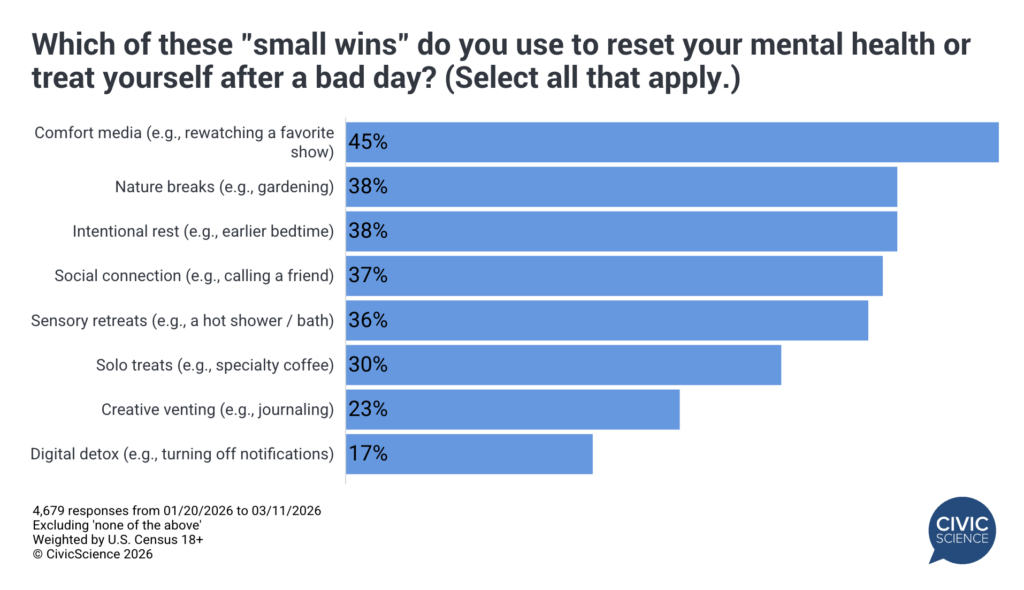
This reliance on ‘comfort media’ suggests that digital consumption has become a primary coping mechanism. But what exactly are people watching to find relief? CivicScience took a closer look at the content types that provide the most effective mental breaks.
The Top Types of Content for Relieving Stress
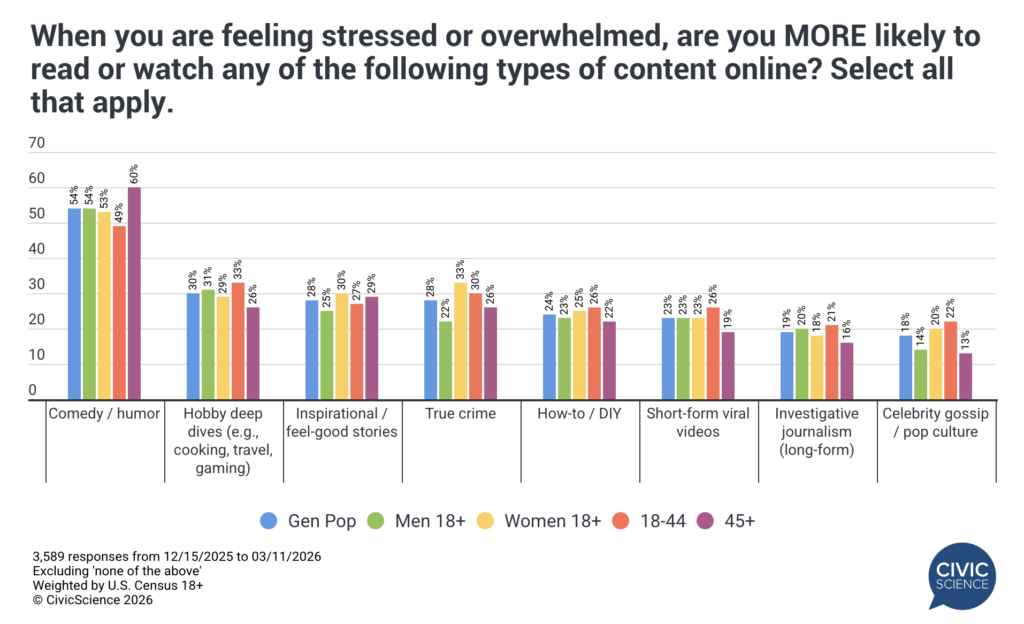
Among the types of online content studied, comedy and humor unsurprisingly stand out, with 54% of Americans saying they read or watch this type of content when they need an emotional lift.
Beyond the expected comedic lift, Americans turn to a diverse mix of immersive and specialized content to reset. Nearly one-third of U.S. adults seek out hobby-related media such as cooking or travel, while another 28% find relief in true crime or inspirational stories. This suggests that for many, a mental break requires more than just a laugh – it requires engaging with specific personal interests or deep storytelling.
Comfort content choices fragment further across demographic lines. Women are more likely than men to turn to true crime content, pop culture, and feel-good stories, while men are more likely to gravitate toward personal hobby-related content and investigative journalism.
Adults 45 and older are more than 10 percentage points more likely than those aged 18-44 to turn to comedy content, while adults under 45 lead in most other categories studied, except for feel-good stories.
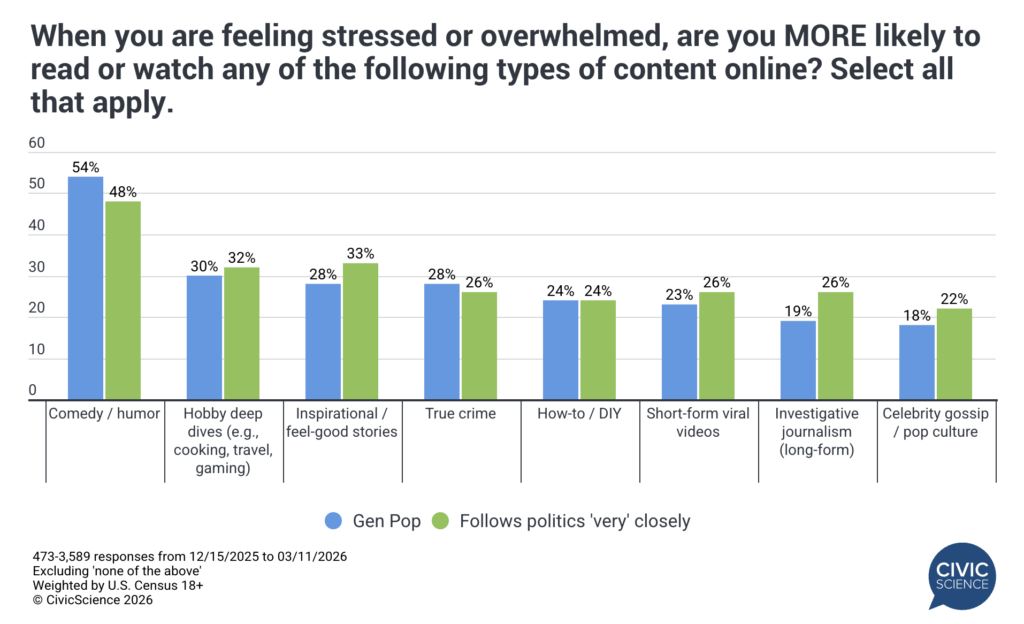
There’s also a notable distinction among those who follow politics ‘very’ closely. While comedy is the top choice for this group when feeling stressed as well, they are six percentage points less likely than the average American to turn to humorous content (48% vs. 54%).
Instead, these consumers lean more heavily into investigative journalism and inspirational stories. They also show a higher-than-average interest in short-form viral videos and hobby-related content.
This suggests that Americans who closely follow politics may turn to a broader mix of content – balancing lighter entertainment with deeper reporting – when seeking a mental break.
These findings underscore that there is no “one-size-fits-all” approach to the digital mental reset. From the gender divide in true crime interest to the investigative leanings of the politically engaged, Americans are curating their content to meet specific emotional needs. Far from being a mere distraction, media consumption has become a key coping mechanism, providing a necessary bridge between the weight of daily headlines and the need for a psychological reprieve.