CivicScience has the world’s largest proprietary database of real-time declared intent, allowing brands to activate high-performing advertising that drives up to 80% better performance. See how our partners achieve superior marketing outcomes here.
Staying culturally relevant has become a priority for brands, and companies like Duolingo have helped pave the way using casual, Gen Z-focused marketing. What once lived primarily on niche TikTok feeds is now mainstream, showing up everywhere from Super Bowl commercials to major retailer campaigns.
But as more brands lean into Gen Z-focused campaigns, not all audiences feel equally represented. Consumers report mixed reactions, and notably, Americans aged 55+ say they don’t feel their age group is accurately reflected in marketing. This disconnect serves as a critical signal for marketers, as recent CivicScience data shows that representation is a key driver of brand loyalty.
This tension between staying current and inclusive creates a difficult path for marketers to navigate. A closer look at current consumer sentiment, directly from consumers themselves, highlights exactly where that balance lies.
Cool or Cringe?
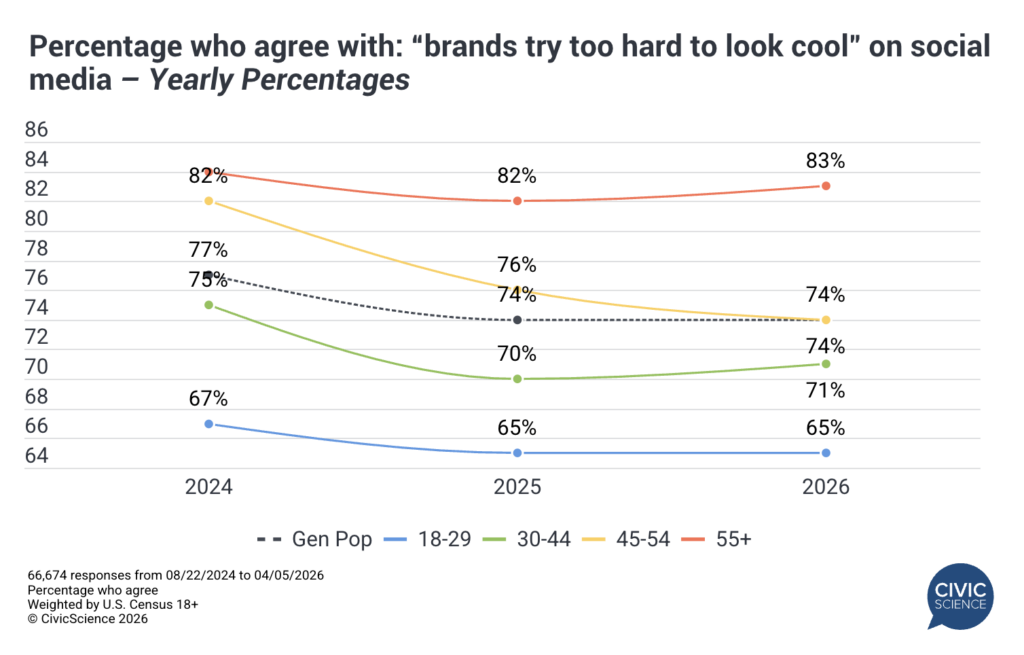
While some brands have successfully struck a balance between staying culturally relevant to Gen Z and differentiating themselves from others jumping on the same trends, most Americans remain skeptical. Nearly three-quarters of U.S. adults (74%) agree that brands try too hard to act cool on social media.
This sentiment is consistent with last year’s findings, though slightly down from 77% in 2024, suggesting a gradual shift toward acceptance with increased exposure. The trend holds across all age groups, but skepticism remains widespread.
Influencing Purchase Decisions
Sentiment is only part of the equation, but does using Gen Z and Gen Alpha slang actually influence purchasing behavior?
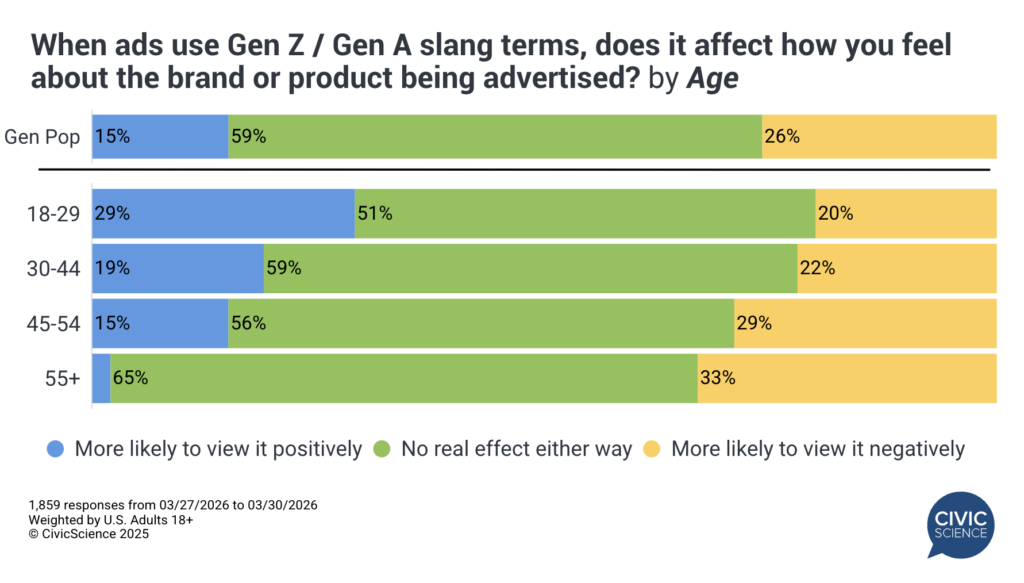
For most consumers, the answer is no. Nearly 60% say Gen Z/Gen A “slang” has no real effect on how they feel about the product or service being advertised. Among those who are swayed, negative reactions (26%) outweigh positive ones (15%), though that gap has narrowed compared to two years ago (34% negative vs. 10% positive).
Across generations, the majority also say Gen Z slang has no real impact, though receptiveness has grown across all age groups. Gen Z (18-29) unsurprisingly stands out as the most likely to view it positively (29%, up from 19% in 2024). At the same time, they’re nearly as likely as Millennials (30-44) to react negatively (around 20%), highlighting a more nuanced response even among the target audience.
As expected, positive sentiment declines significantly with age. Just 2% of adults aged 55+ say this type of advertising has a positive effect, though older age groups have grown more neutral over the past couple of years.
The Authenticity Factor
Success in modern marketing relies heavily on authenticity, as there is a fine line between a brand being “in” on the joke and appearing desperate for attention. Additional consumer-declared data show that consumers who appreciate Gen Z/Alpha-coded advertising are also more likely to research a company’s social positions or switch brands based on their own moral compass. This connection implies that resonance goes beyond surface-level slang and is instead rooted in whether a brand’s identity feels truly earned.
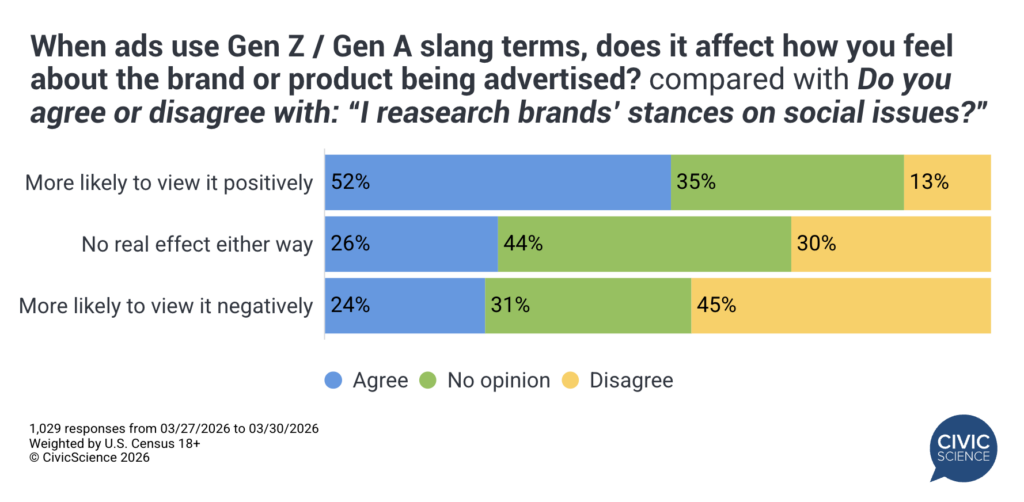
The rise of Gen Z-driven marketing reflects a broader shift toward staying relevant in real time, but relevance alone isn’t enough. While younger audiences may be more receptive to slang and trend-based messaging, most consumers remain indifferent, and older generations continue to feel overlooked and misrepresented. In the end, a brand’s impact is determined by how well it understands its true audience and whether it can communicate in a way that feels genuinely authentic rather than desperate to be liked.