CivicScience engages directly with consumers, collecting over one million survey responses daily, to turn real-time insights into high-performing advertising campaigns. See how leading brands use CivicScience to drive campaign performance here.
The news media landscape enters 2026 with shifting trust dynamics and changing consumption habits. New CivicScience data highlights which outlets Americans favor, how engagement is evolving across news categories, and the role the upcoming midterms could play in shaping these trends.
Local TV News Continues to Be Americans’ Most-Trusted Source
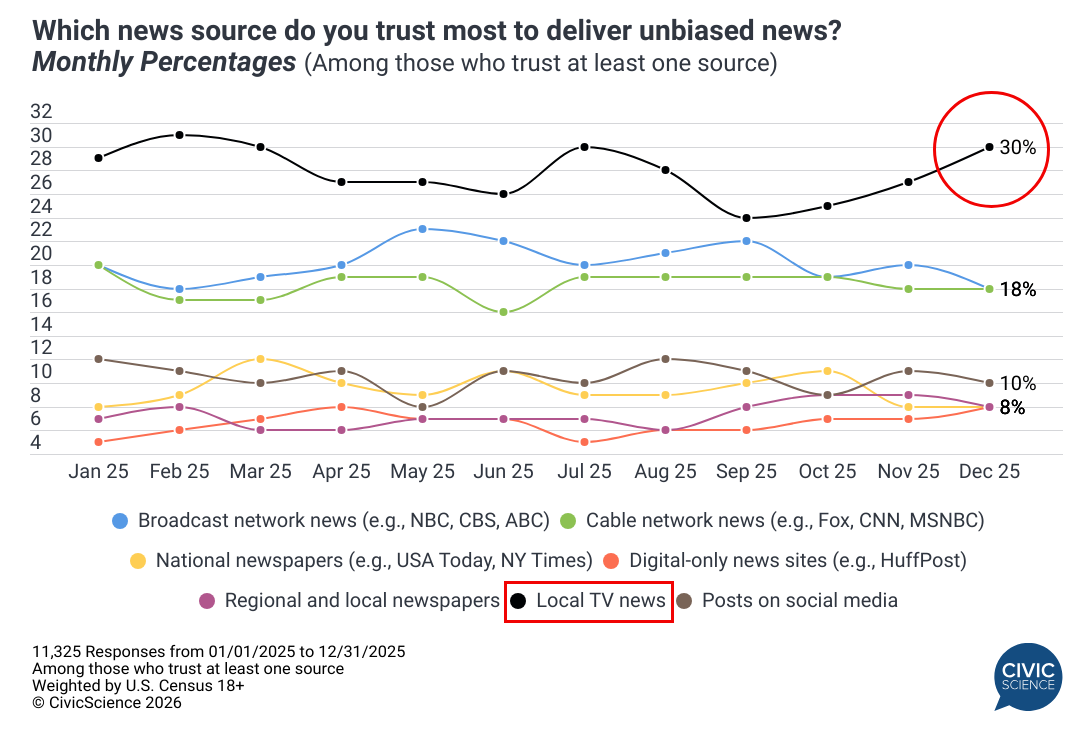
Local TV news as an ‘unbiased’ source for news finished Q4 on an upward trend, extending its lead over other news sources (among those who trust at least one news source). On the other hand, trust in broadcast network news and social media is declining. Local TV news is also the most trusted source across nearly every age bucket, except those 65 and over, who are more likely to trust broadcast cable news.
Midterm Voting Intent Shapes Trust
The upcoming midterms complicate the media trust landscape. Among voting-age adults, 66% say they do plan to vote in the November midterm elections, while 21% say they will not vote, and 12% remain unsure, according to early CivicScience data. These groups show distinct media preferences for whom they trust: likely voters trust broadcast network news, national newspapers, and digital-only sources more than non-voters do. Conversely, non-voters favor regional newspapers and local news, and those uncertain of voting plans are most drawn to local TV news and cable network news.
More Americans Are Paying Attention to Politics in Early 2026
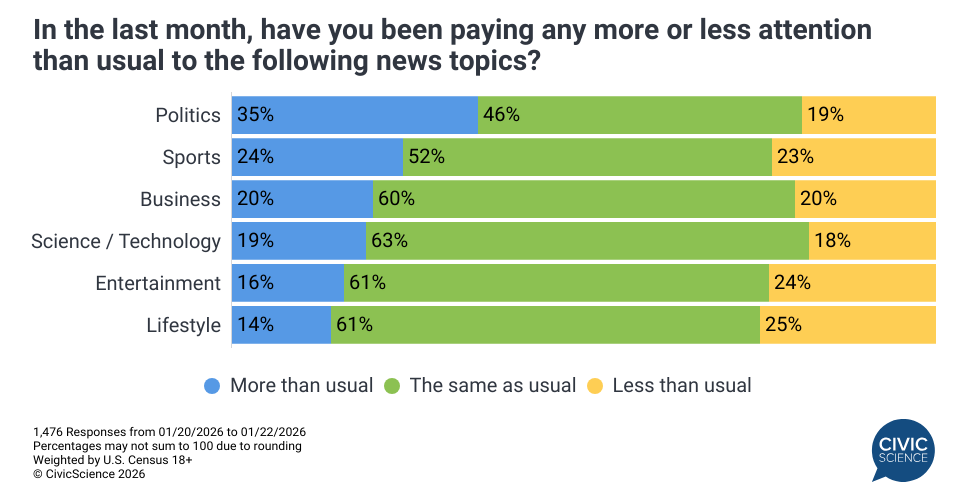
Beyond trust, engagement patterns are also evolving, with new CivicScience survey data showing that Americans are increasingly paying attention to political news compared to other news topics. Over the past month, more than one-third of respondents have been paying ‘more’ attention to political news than they usually do, far ahead of other news categories. And while a majority of Americans say they’re following the ‘same amount’ across nearly all categories studied, the percentage who say they’re paying ‘less’ attention to lifestyle and entertainment news outpaces the percentage who are paying ‘more’ attention by 11 and 8 percentage points, respectively.
While these trends hold among likely midterm voters, they’re also more pronounced – 41% say they’re paying more attention to political news lately, six points higher than the general population. They also lead in every other news category studied by at least two points.
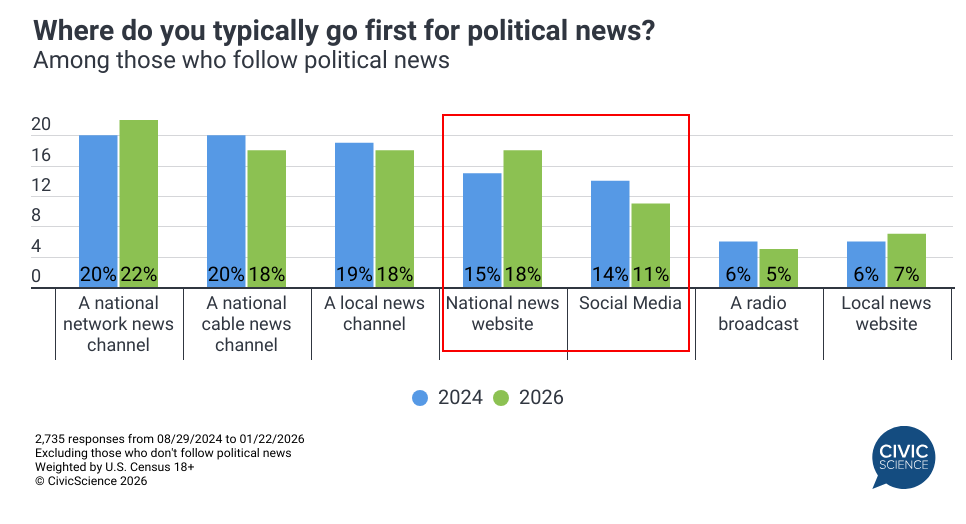
Amid this rising interest in political news, the platforms Americans turn to first have also shifted over the last two years. When asked where they typically go first for political news, news readers are increasingly likely to cite a national network or a national news website as their primary source. Conversely, respondents are less likely to name social media as their initial destination, a sign of encouragement for legacy media.
As Americans navigate competing news sources and heightened political attention, these patterns offer a snapshot of a media landscape in motion in early 2026. The coming months will test whether early-year trends hold or give way to new consumption behaviors as the midterms draw closer. As the media landscape shifts weekly—not yearly—CivicScience’s millions of daily responses capture these patterns as they happen, not after the fact.