CivicScience is a consumer analytics and advertising platform that captures over one million survey responses daily. Turn real-time data into actionable insights here.
1. Two-thirds of Americans feel protein content is important to them while shopping.
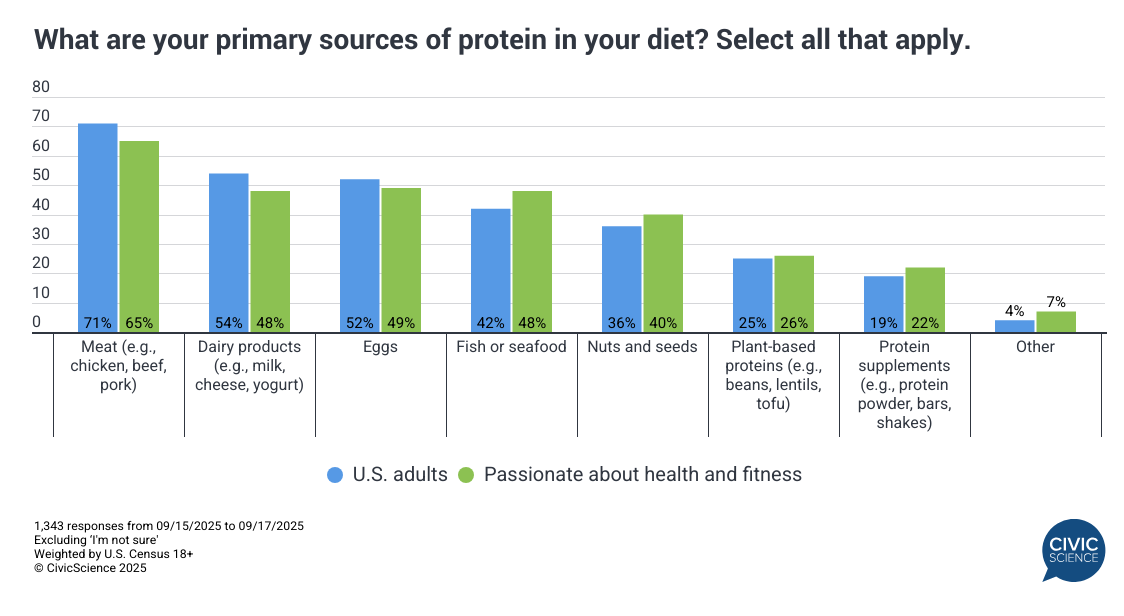
Protein is a top shopping priority among American shoppers. Recent CivicScience findings reveal that 65% of U.S. adults consider protein content at least ‘somewhat’ important when grocery shopping, with 21% feeling it is ‘very’ important and is something they are actively searching for. When asked about their primary sources of protein, traditional staples—meat, dairy, and eggs—lead the way. Consumers who report they’re passionate about health and fitness over-index by a noteworthy margin when it comes to seafood, nuts, and seeds as protein sources.
This trend presents opportunities for brands to innovate and market across categories, especially by targeting health and fitness-oriented consumers with diverse, high-protein offerings.
Take Our Poll: Do you prioritize protein in your diet?
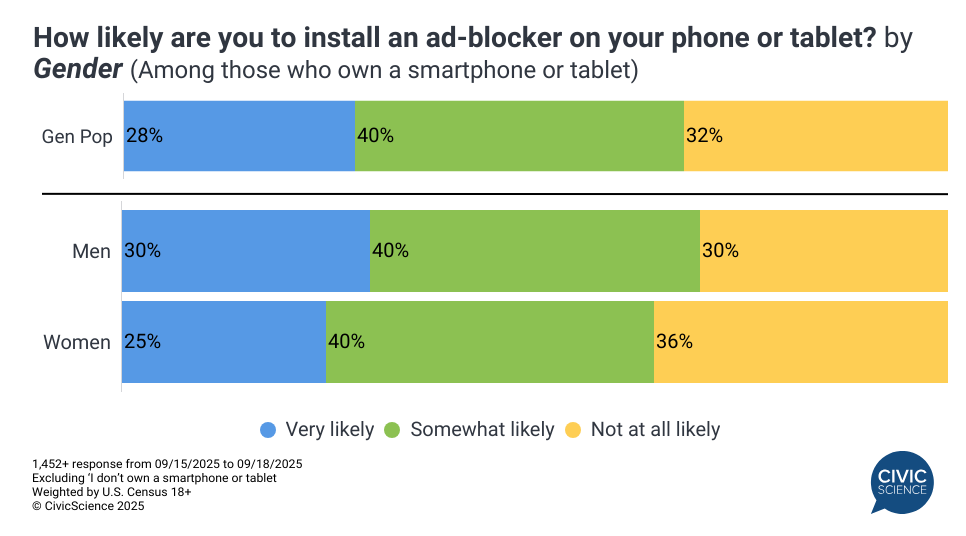
2. More than one-quarter of those who own a smartphone or tablet say they are ‘very’ likely to install an ad-blocker on their device.
As a noteworthy percentage of Americans report feeling instances of “consumer fatigue,” new CivicScience data find many Americans are considering installing ad-blockers on their devices, potentially to reduce the noise. Nearly 7 in 10 respondents with a smartphone or tablet report they are at least ‘somewhat’ likely to install an ad blocker on their phone or tablet, with men being 5pp more likely than women to install one.
3. Most Americans say they have at least some free time on average per day, but how they define “free time” differs.
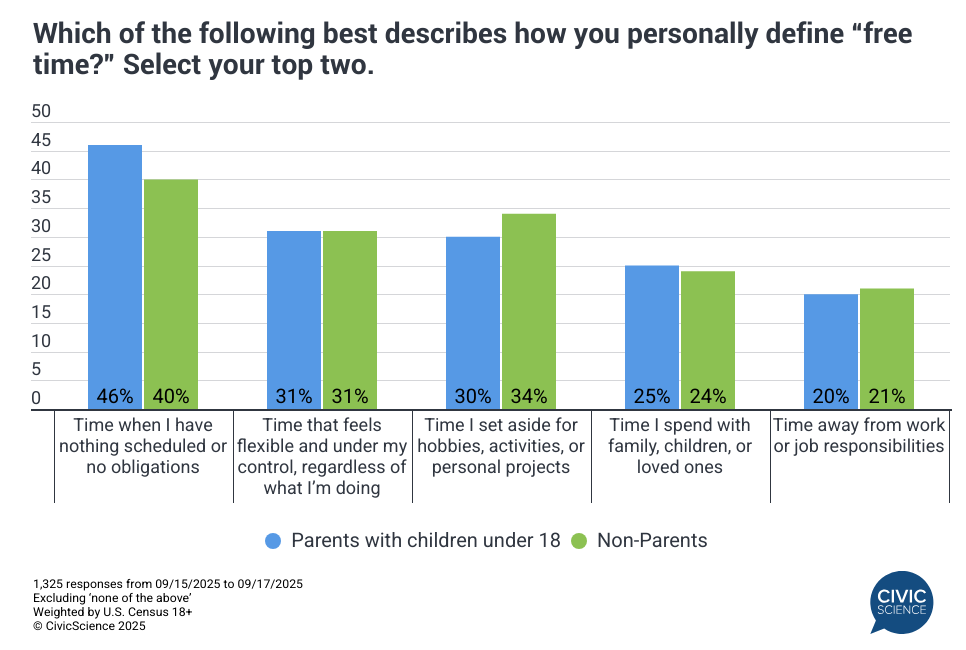
Remote work and post-pandemic stress have reshaped how Americans think about free time. CivicScience found a strong majority (89%) reporting they have at least some free time on an average weekday, with 51% saying they typically have 3+ hours per day. Yet, how Americans define free time differs. For instance, parents are most likely to view it as time with no obligations, while non-parents lean toward hobbies and personal projects (excluding ‘none of the above’).
Weigh In: If you had to pick one, would you rather have more time or more money?