CivicScience has the world’s largest proprietary database of real-time declared intent, allowing brands to activate high-performing advertising that drives up to 80% better performance. See how our partners achieve superior marketing outcomes here.
1. Strong climate concerns climb, and interest in buying eco-friendly products grows amid the recent rollback of environmental regulations.
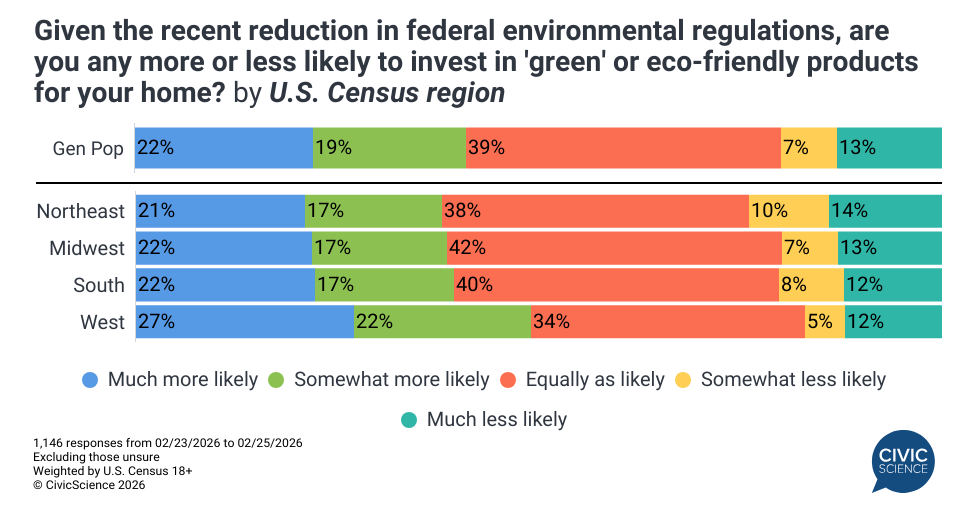
The percentage of Americans ‘very’ concerned about environmental issues has climbed to 41%, the highest level seen since concerns peaked in 2020 (as of February 24, 2026). This rising worry comes as the Environmental Protection Agency (EPA) recently announced a rollback of environmental regulations. Self-declared consumer intent data show that these worries and rollbacks are likely shaping consumer purchasing: roughly two in five U.S. adults say they are now more likely to buy “green” products for their homes, specifically because of the reduction in federal regulations (excluding those unsure).
This approach is not one-size-fits-all, however, as Americans living in the Western U.S. are far more likely to emphasize green purchasing. Those living in the Northeast, meanwhile, lead the way in being ‘less’ likely to purchase following federal rollbacks.
Let Us Know: How eco-friendly is your current lifestyle?
2. Few Americans are optimistic that the Supreme Court’s ruling overturning tariffs will lead to lower prices following new 15% global tariffs.
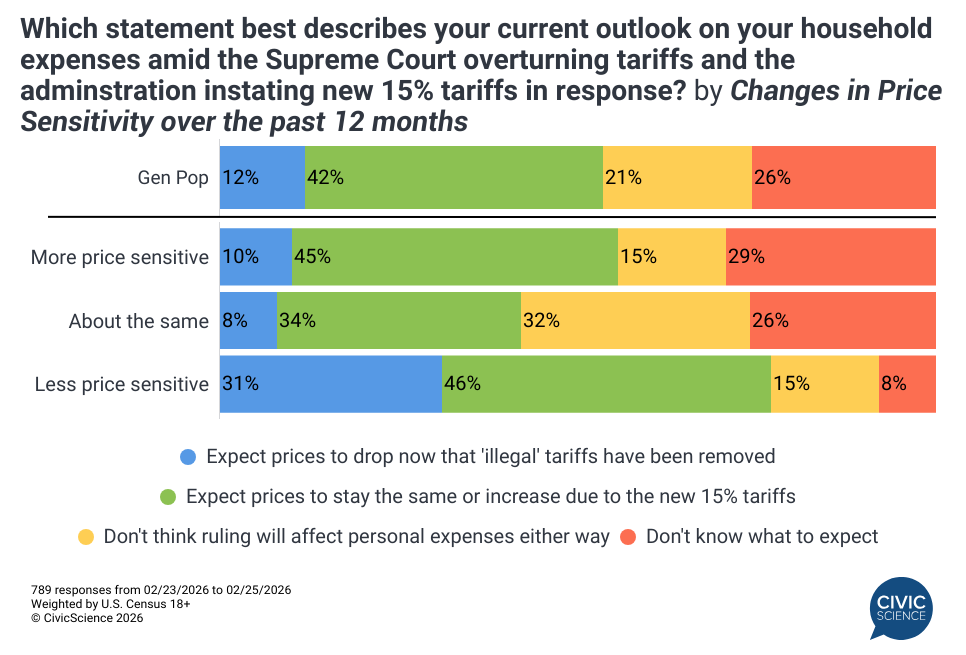
The recent Supreme Court ruling overturning the Trump administration’s sweeping tariffs, followed quickly by the administration’s new 15% global tariff, has done little to ease public anxiety about the cost of living. While 12% of consumers expect a price drop as a result of the Court’s ruling, 42% believe prices will either stay the same or increase, and 26% remain uncertain how their household expenses will be affected.
Respondents who have become less price sensitive over the last 12 months are nearly three times as likely as the average American to expect prices to go down as a result of the ruling. This contrast suggests that while more affluent or less budget-constrained Americans may be focusing on the legal victory, the consumers most vulnerable to price changes remain stuck in a “wait-and-see” pattern regarding the real-world impact on their finances.
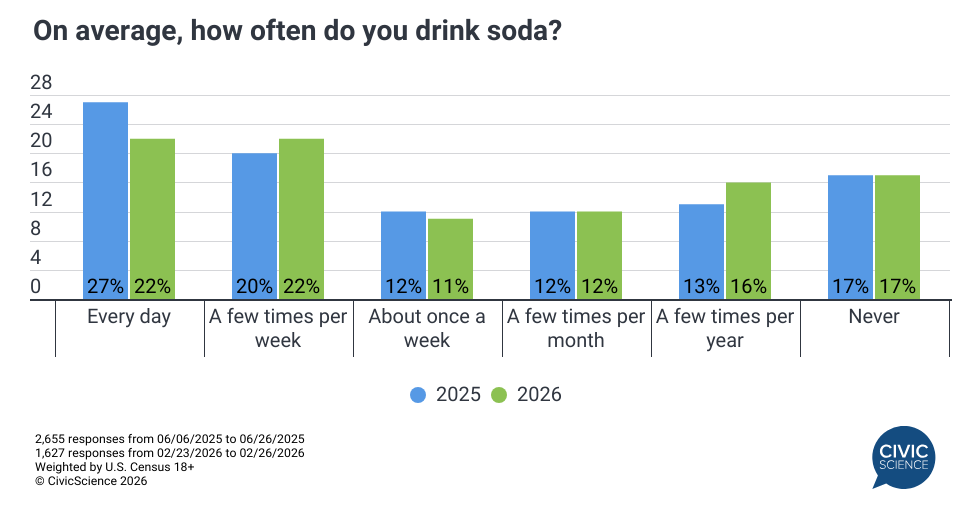
3. Americans are drinking soda less frequently than they did last year.
As new soft drinks and beverages enter the market, Americans’ soda-drinking habits are shifting. Compared with last year, consumers report drinking soda less often: 22% say they drink it daily, down from 27%, while the share who say they drink it only a few times a year has increased by three percentage points. Among soda drinkers, Coca-Cola remains the brand most likely to be consumed regularly (46% of drinkers), but Dr. Pepper (35%) has overtaken Pepsi (34%) for the second most common, and Sprite (30%) has seen modest gains over the last few years.
Take Our Poll: Soda tastes best when consumed in which of the following ways?