CivicScience engages directly with consumers, collecting over one million survey responses daily, to turn real-time insights into high-performing advertising campaigns. See how leading brands use CivicScience to drive campaign performance here.
1. Feelings of stress strongly impact the type of content Americans read and watch, with stark differences by age.
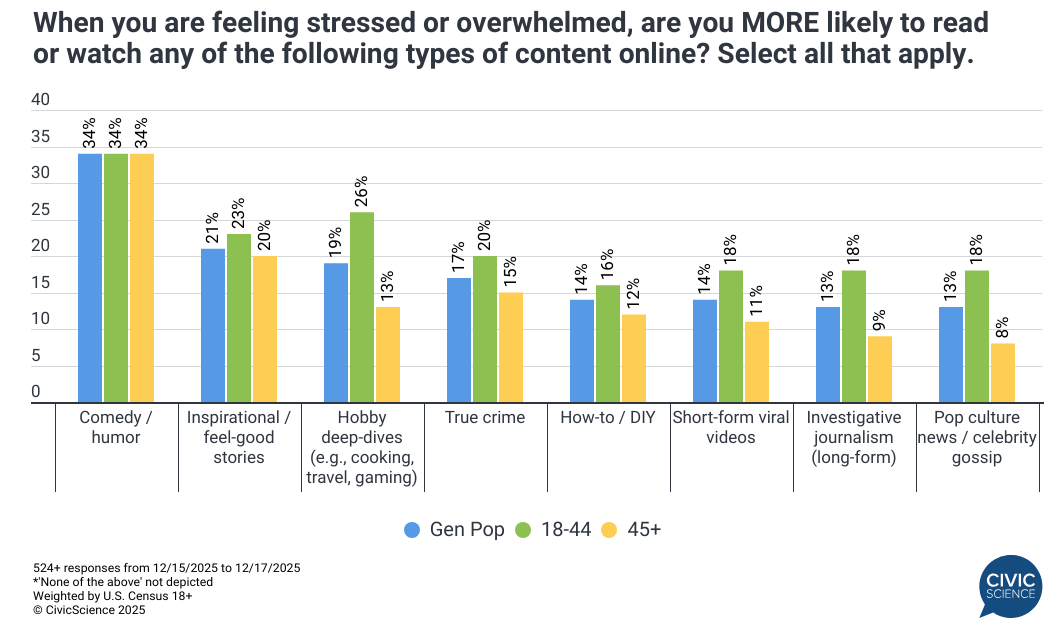
New CivicScience survey data reveal that Americans gravitate strongly toward “comfort media” when they are feeling stressed or overwhelmed. To alleviate tension during difficult times, audiences unsurprisingly prioritize lighthearted and uplifting material, with just over one-third saying they are more likely to seek out comedy and humor, followed by inspirational stories and hobby-related content. Those between the ages of 18 and 44 over-index nearly across the board in turning to at least one form of content studied when they’re stressed, with the most significant gap in hobby content.
On the other hand, Gen Pop actively retreats from intense or potentially taxing genres when they’re stressed. Respondents tell CivicScience they are less likely to engage with pop culture news, true crime, and investigative journalism during stressful periods, suggesting a desire for emotional escapism over complex or sensationalized reality.
Take Our Poll: How often would you say you watch TV to help yourself get over a tough day?
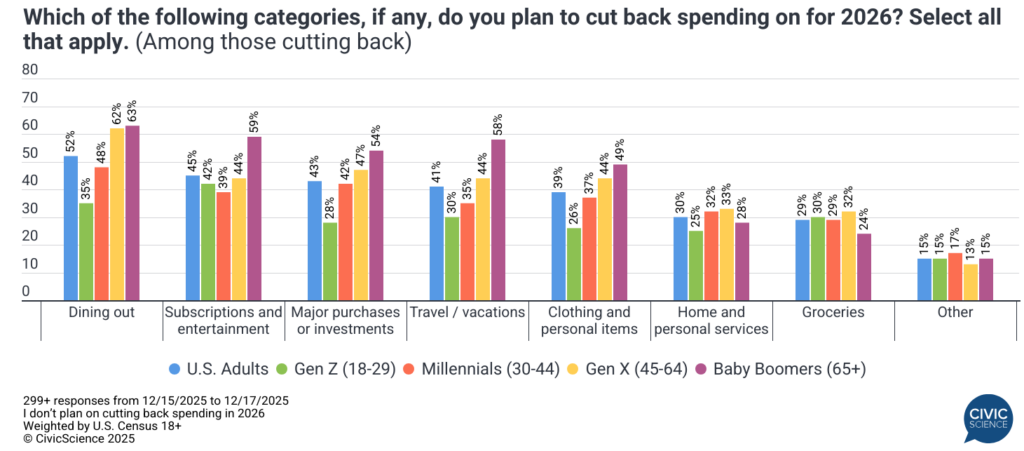
2. Nearly three-quarters of Americans say they plan to reduce their expenses in at least one area in 2026, with broad cuts coming among those 65+.
As 2025 draws to a close, 73% of Americans say they intend to reduce their expenses in some manner in 2026, though cost-cutting strategies vary significantly by demographic. Consumers aged 65 and over emerge as the most aggressive savers across most categories—especially subscriptions and travel—but they are the least likely to plan on reducing their grocery spending. Conversely, Gen Z, aged 18-29, is among the least likely to cut back across nearly every area of spending. Collectively, these insights reveal a market entering 2026 with a cautious, bifurcated approach to spending, one that largely favors necessity over luxury and leisure.
3. American support is strong for federal regulations to protect child social media users amid the new Australian law banning social media for those under 16.
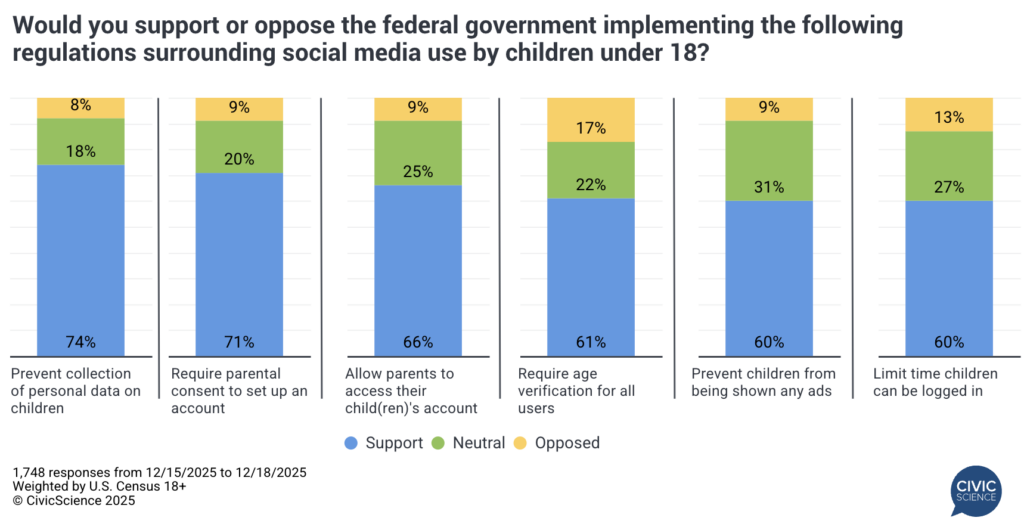
In the wake of Australia’s landmark ban on teenage social media access, CivicScience data reveal that a significant majority of U.S. adults with an opinion on the matter favor federal regulations aimed at protecting minors online. Support is highest for measures centered on privacy and parental control, with 74% of Americans backing a ban on child data collection and 71% supporting mandatory parental consent for creating an account. Despite this strong backing, the percentage who support each of the measures studied has fallen across the board since 2023.
Republicans are nearly 20 percentage points more likely than Democrats to support a ban on the collection of children’s personal data. Support for regulating child usage of social media platforms is also strongly correlated with social media usage; respondents who don’t use social media are 25 points more likely to favor data collection bans than those who spend more than two hours a day on these platforms.
Let Us Know: Do you allow your children to have access to social media?