CivicScience has the world’s largest proprietary database of real-time declared intent, allowing brands to activate high-performing advertising that drives up to 80% better performance. See how CivicScience partners achieve superior marketing outcomes here.
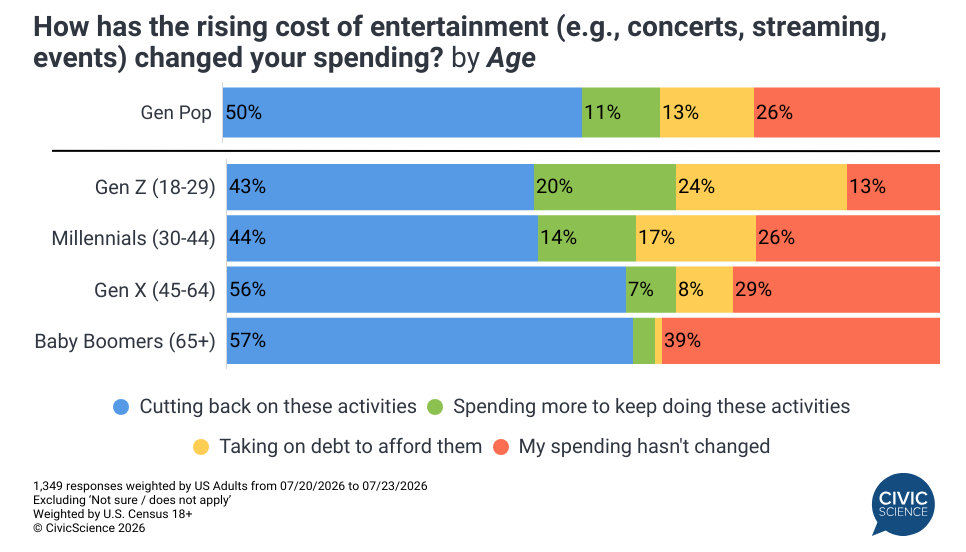
1. Half of adults have cut back on entertainment spending in the face of rising costs, while Gen Z turns to debt to keep entertainment on the docket.
Rising entertainment costs are forcing a major shift in consumer habits, with 50% of U.S. adults actively cutting back on leisure and entertainment activities. While 26% report no change in their spending, 24% are going to extra lengths to maintain their lifestyle—either by spending more (11%) or taking on debt (13%). Younger consumers, particularly Gen Zers, are especially likely to pay higher prices (20%) or take on debt (24%) to keep entertainment in their lifestyle mix.
Let Us Know: How much of your personal budget is dedicated to entertainment and experiences?
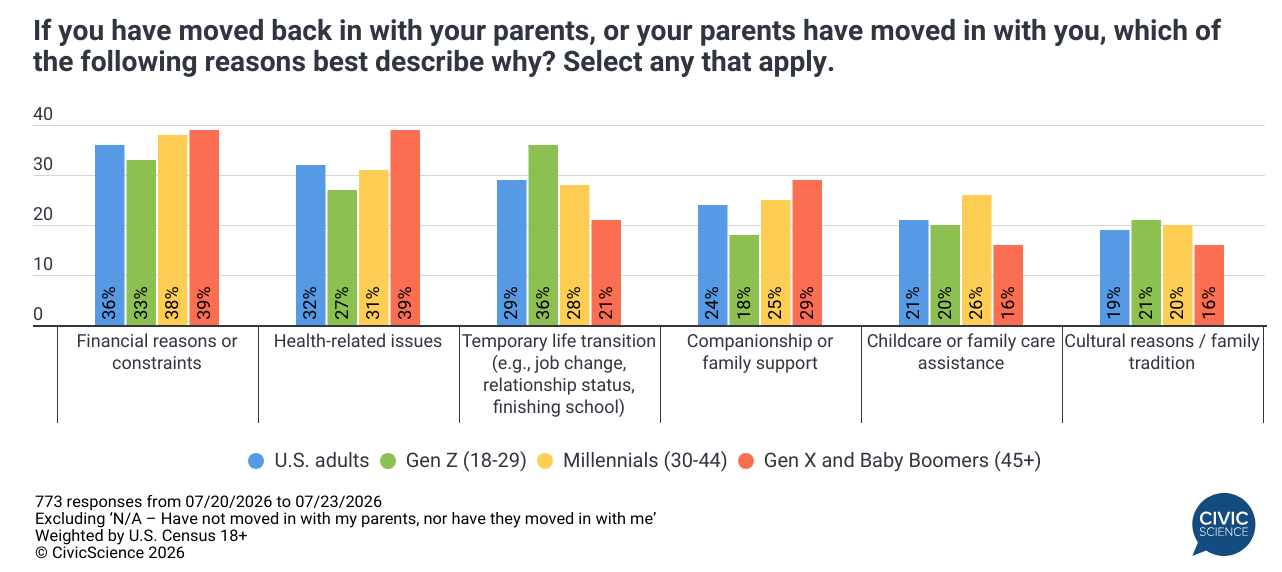
2. From finances to major life transitions, the reasons for sharing a home with parents vary by age.
Among adults who have moved in with their parents or had their parents move in with them, financial reasons (36%) and health-related issues (32%) are the primary catalysts overall. Financial pressures are most pronounced among Gen X and Baby Boomers (39%) and Millennials (38%), compared with 33% among Gen Z. Meanwhile, Gen Z adults are far more likely than older generations to attribute cohabitation to temporary life transitions such as job changes or finishing school (36%). Millennials skew heavily toward moving for childcare or family care assistance (26%), underscoring how shared housing serves different life-stage needs across generations.
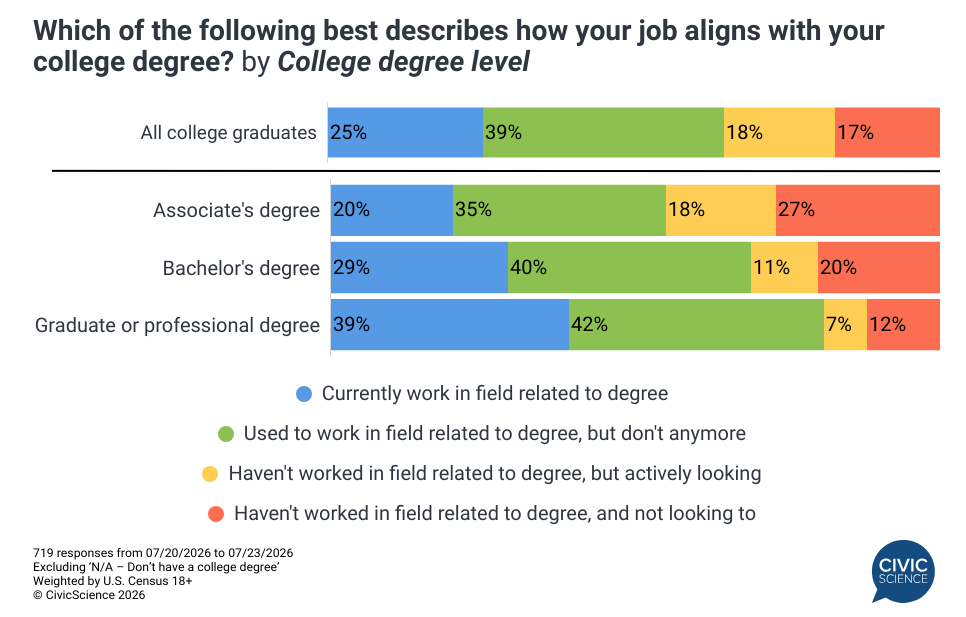
3. Just one-quarter of U.S. college graduates say they currently work in a field related to their degree.
Only 25% of college graduates say they currently work in a field directly related to their degree, while 39% used to work in such a field but have since transitioned away. Career alignment unsurprisingly increases with higher education levels: 39% of graduate or professional degree holders currently work in their field of study, compared to 29% of bachelor’s degree holders and just 20% of associate degree holders. Crucially, working in one’s field of study strongly correlates with workplace satisfaction.
Those currently working in the field they graduated in report higher levels of happiness in their current jobs (83%), whereas job happiness drops to 49% among those who haven’t worked in their studied field but are actively looking to do so –highlighting the morale toll of underemployment.
Take Our Poll: Do you feel like you use your university degree in your job?