CivicScience engages directly with consumers, collecting over one million survey responses daily, to turn real-time insights into high-performing advertising campaigns. See how leading brands use CivicScience to drive campaign performance here.
1. New CivicScience data reveal a strong link between sports fandom optimism and broader spending among U.S. adults.
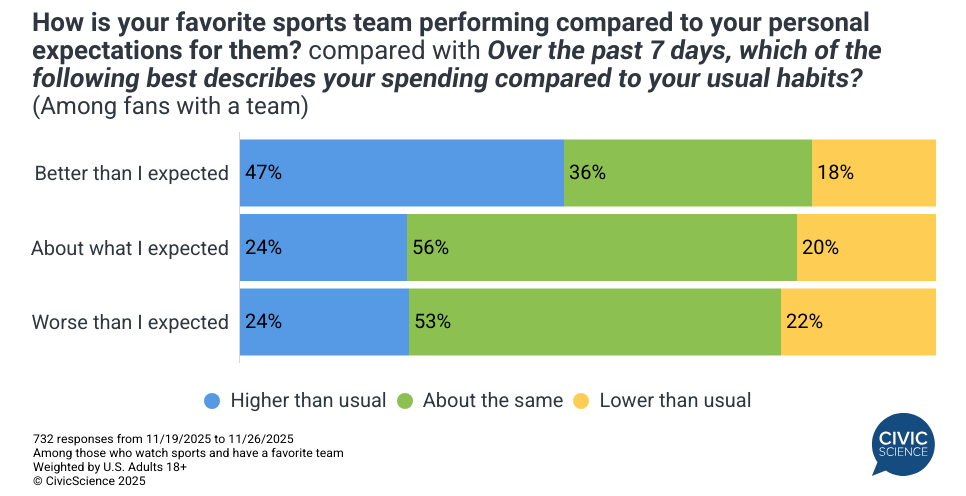
While many factors – notably emotional well-being – shape consumer spending, recent CivicScience data show that one’s feelings about their favorite sports team are also closely tied to spending. In fact, fans whose favorite team exceeds their personal expectations are nearly twice as likely to spend more overall recently. Holiday shopping further highlights this divide: 40% of fans who perceive their team is performing well are spending more on the holidays this year compared to last year, nearly doubling the 22% seen among those who believe their team is underperforming.
2. Americans increasingly favor school calendars with shorter summer breaks and more frequent, evenly distributed time off, citing benefits for learning and student well-being.
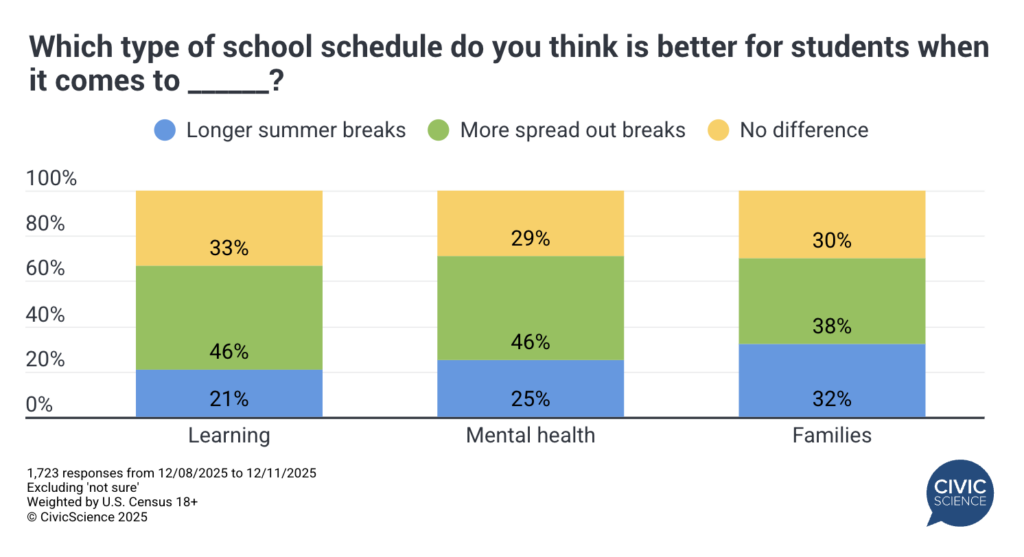
The traditional school calendar, featuring an extended summer break, is increasingly under review in the United States, prompted by logistical issues for families and the adoption of remote learning during the pandemic. CivicScience data indicate that nearly half of U.S. adults (44%) prefer a schedule that replaces extended summer breaks with shorter, more frequent breaks throughout the year. This preference is consistent across parents and non-parents, with nearly identical levels of support (43% and 44%, respectively).
Thirty-eight percent of Americans say more spread-out breaks are better for students’ family lives, compared with 32% who favor traditional schedules. A near majority of Americans also believe that school years with more evenly spaced breaks better support students’ learning and mental health.
Answer our Poll: Do you generally prefer longer or shorter summer breaks for students?
3. A plurality of respondents support the construction of new data centers in the U.S., though local cost concerns influence sentiments.
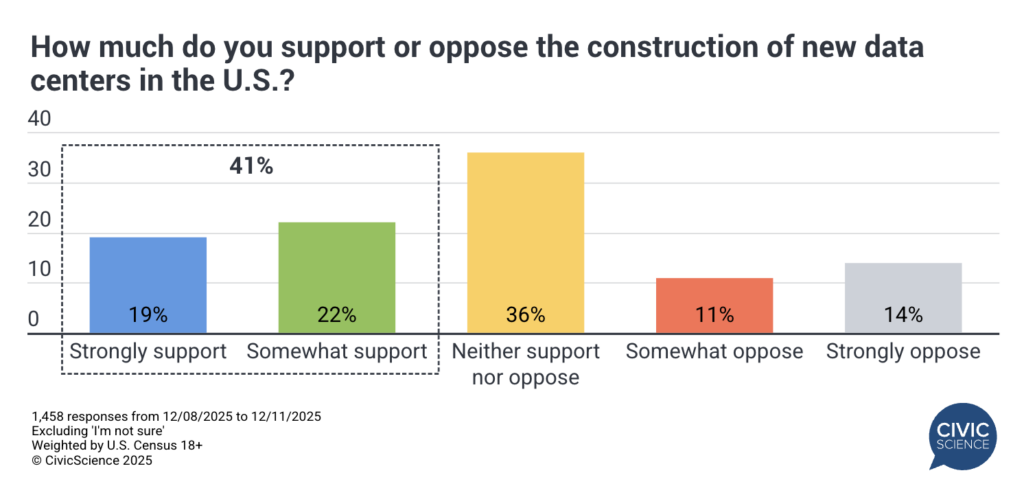
There is noteworthy levels of support among the American public for the construction of new data centers, despite the mixed sentiments surrounding the topic. According to CivicScience data, 41% of U.S. adults support the construction of new data centers within the country, with support increasing to over 50% among Republicans and Gen Z adults.
However, among those who live near data centers, 37% report noticing increased costs as a result of their construction. Consumers who oppose the development of new data centers are more likely to report experiencing rising energy costs, suggesting that localized economic concerns – especially those tied to utility costs – are a primary driver of resistance, even as national support remains high.
Weigh In: To what extent are you concerned about the potential health impacts of data centers in your area?