CivicScience is a consumer analytics and advertising platform that captures over one million survey responses daily. Turn real-time data into actionable insights here.
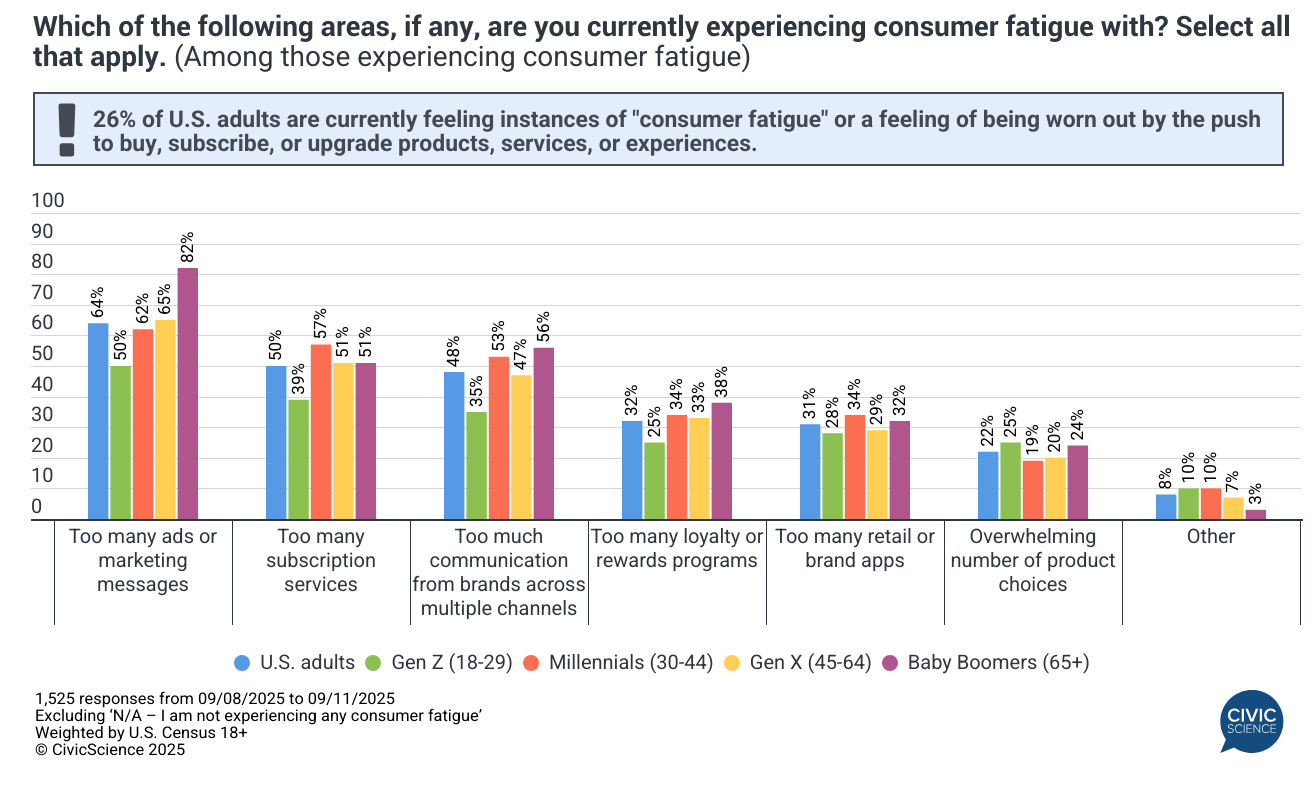
1. More than one-quarter of Americans say they currently feel worn out by the push to buy, subscribe, or upgrade products or services.
When people think of burnout, job stress and work-life balance usually come to mind. But there’s another form taking hold among Americans — consumer fatigue — the exhaustion that comes from the constant push to buy, subscribe, or upgrade. New CivicScience data show that over one in four Americans are currently experiencing this consumer fatigue. Among them, roughly half identify the key drivers as an excess of ads and marketing messages, too many subscription services to manage, and an overwhelming amount of brand communication. Older adults (65+) are the most likely to feel worn down by advertising and brand outreach, while Gen Zers are far more tolerant on most fronts — except when it comes to the sheer volume of product choices, which they cite more often than other generations.
Take Our Poll: Have you ever felt like you’re uniquely resistant to the persuasion of advertising?
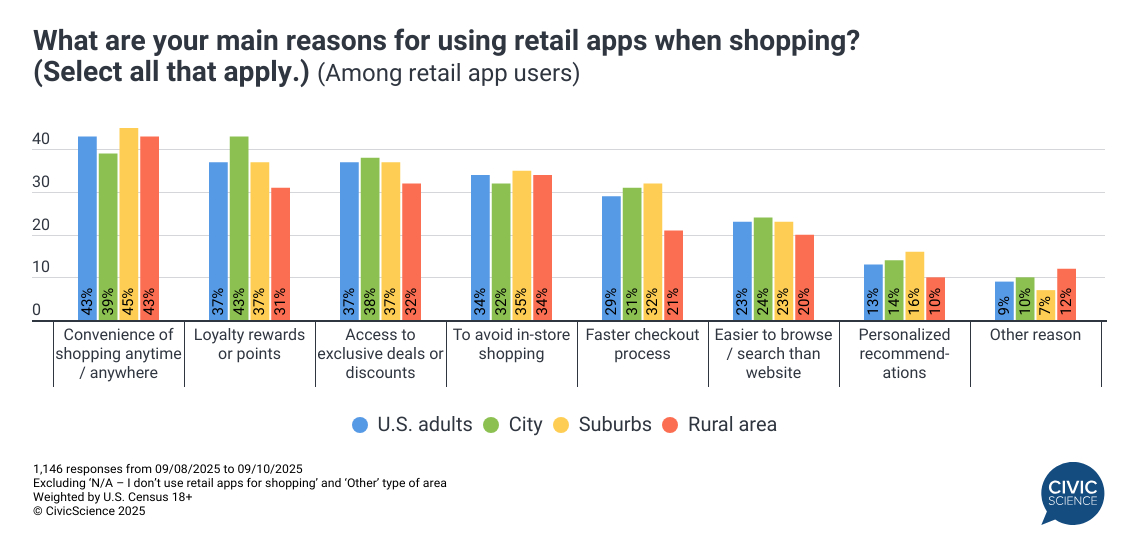
2. Retail app use for online shopping has increased since 2022, with users seeking convenience, loyalty rewards, and exclusive deals.
Also this week, CivicScience examined where American online retail shoppers have been doing their shopping over the past three months. The data show 47% of online retail shoppers shopped directly through the retailer’s website, outpacing those who shop on the retailer’s app (29%) and via another website or app (24%). While retailer websites remain the primary channel for online shopping, the use of retailer mobile apps has grown modestly, with app usage now more than 20% higher than it was in 2022, despite a slight 2pp year-over-year decline.
Consumers who use retailer apps are most likely to cite convenience—being able to shop anytime and anywhere—as well as the ability to earn loyalty rewards, access exclusive deals, and avoid in-store visits as key motivators. Notably, urban shoppers are more likely to use these apps for rewards and discounts, whereas those in suburban and rural areas tend to prioritize the convenience factor, reflecting differing regional shopping preferences and needs.
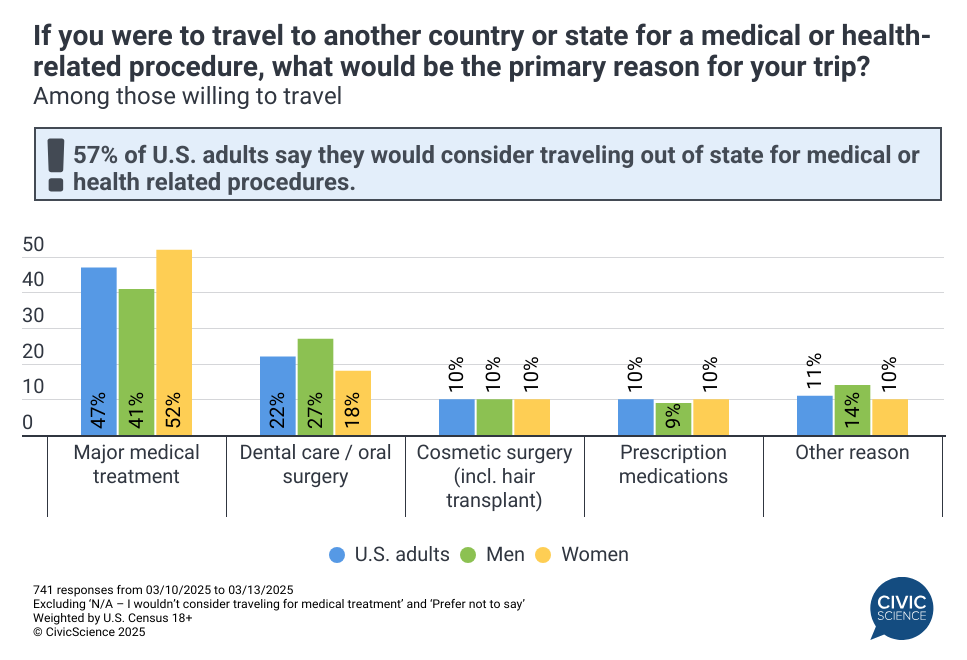
3. More than half of Americans would consider traveling out of town for medical care.
With healthcare costs rising and safety nets under pressure, many Americans are exploring the idea of traveling out of state or out of the country for medical care. CivicScience finds that 21% have reported they traveled for care, and 57% would consider it. Among those who would consider traveling for medical care, major treatments (e.g., specialized or cancer treatments), 47%, and dental procedures (22%) are the most common procedures. Men and women are equally open, but women generally travel for major procedures, while men are more willing to pursue dental care abroad.
What do you think: Do you think the benefits of medical tourism outweigh the risks?