CivicScience engages directly with consumers, collecting over one million survey responses daily, to turn real-time insights into high-performing advertising campaigns. See how leading brands use CivicScience to drive campaign performance here.
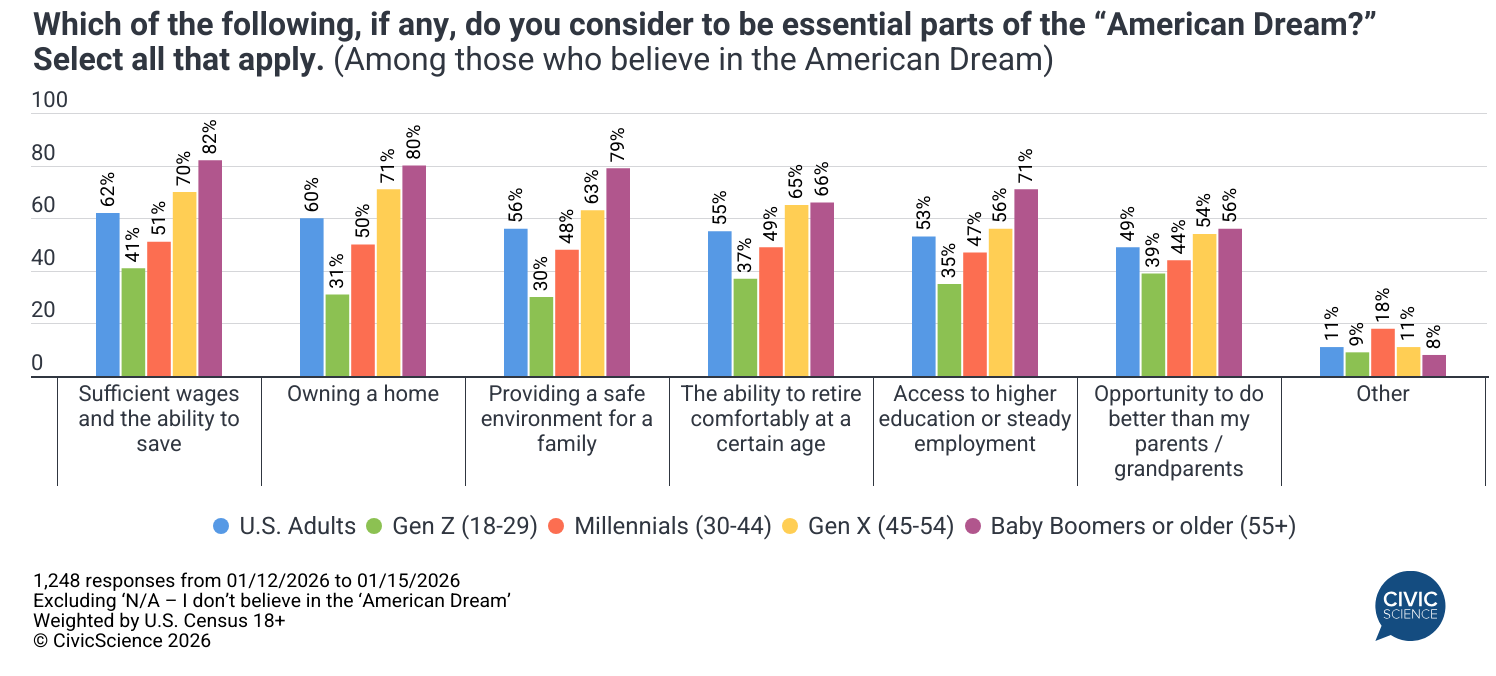
1. A strong majority believes in the idea of the “American Dream,” but definitions vary dramatically by age, especially among Gen Z.
While 86% of U.S. adults say they believe in the concept of the “American Dream,” how they define it differs by age. Among believers overall, “traditional” pillars such as earning a livable wage, owning a home, and ensuring a safe environment for one’s family lead. However, Gen Z in particular defines it very differently. Instead, this younger cohort is more likely to say long-term financial independence and upward mobility are essential to the American Dream, specifically prioritizing the ability to retire comfortably and the drive to surpass their parents’ financial achievements, than they are to cite milestones like homeownership or family safety.
Weigh In: Is the American Dream still attainable?
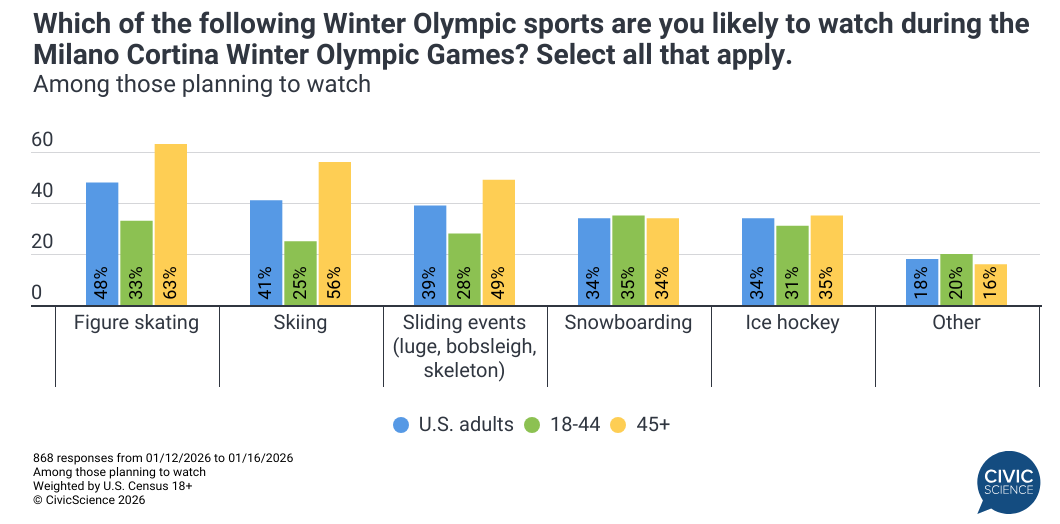
2. Intent to watch the Winter Olympics rebounds to pre-pandemic levels ahead of the Milano Cortina Winter Games next month, with figure skating drawing the most interest.
With the 2026 Winter Olympics just weeks away, new consumer-declared data finds just over half of U.S. adults are at least ‘somewhat’ likely to watch this year (52%), marking a 13-point increase from the 2022 Winter Games (38%) and aligning with interest levels in 2018 (51%). Notably, the share who say they are ‘very’ likely to tune in has more than doubled since the Beijing Winter Olympic Games in 2022, which were still being impacted by the COVID-19 pandemic. This year also marks the return of NHL players to the ice hockey tournament for the first time since 2014, though data show figure skating leads among what sports viewers say they’re most likely to tune into, followed by skiing. Americans 45 and older look to drive much of the interest, particularly in figure skating and skiing.
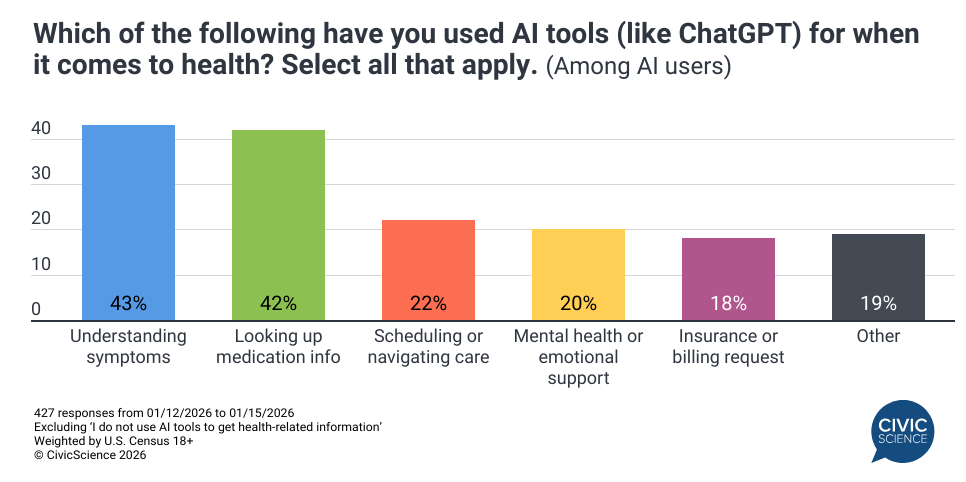
3. Nearly one-third of U.S. adults say they turn to AI tools when it comes to supporting their health, but they’re still skeptical of medical providers using the technology.
As AI remains a hot topic as we move into 2026, CivicScience examined whether Americans are turning to AI tools to help navigate the often complex U.S. healthcare system. About one in three respondents (32%) overall report using AI platforms for healthcare-related purposes. Among them, they are most commonly turning to AI to help them understand symptoms and research medications. This pattern reflects not only growing comfort with AI tools but also the difficulty many consumers face in accessing clear, timely medical information through traditional healthcare channels.
Still, the majority of Americans (61%) are uncomfortable with the idea of healthcare providers using AI tools to assist with their care, while just 11% are ‘very’ comfortable. Daily AI users are far more likely to feel ‘very’ comfortable with providers using AI (43%), while 57% of those who rarely or never use AI report being ‘very’ uncomfortable with its use in healthcare settings. This suggests that acceptance of AI in healthcare is less about the technology itself and more about exposure, trust, and perceived reliability.
Take Our Poll: Do you feel comfortable using AI for advice on topics such as health, lifestyle, or other sensitive matters?