CivicScience engages directly with consumers, collecting over one million survey responses daily, to turn real-time insights into high-performing advertising campaigns. See how leading brands use CivicScience to drive campaign performance here.
As the days grow longer and spring looms on the horizon, many will begin thinking about home improvement projects. However, the state of home improvements is more nuanced this year, and CivicScience has new data on what home improvement will look like in 2026:
Home Improvement Plans Hold Relatively Steady From Q1 2025, But a Growing Segment Intend to Outsource and Up Spending
While 10% of Americans say they plan to spend their tax refund on home improvement projects, overall renovation intent has stayed relatively consistent YOY. Nearly 6 in 10 homeowners (58%) tell CivicScience they plan to spruce up their homes in the next year, a slight one-percentage point increase from Q1 2025 (57%).
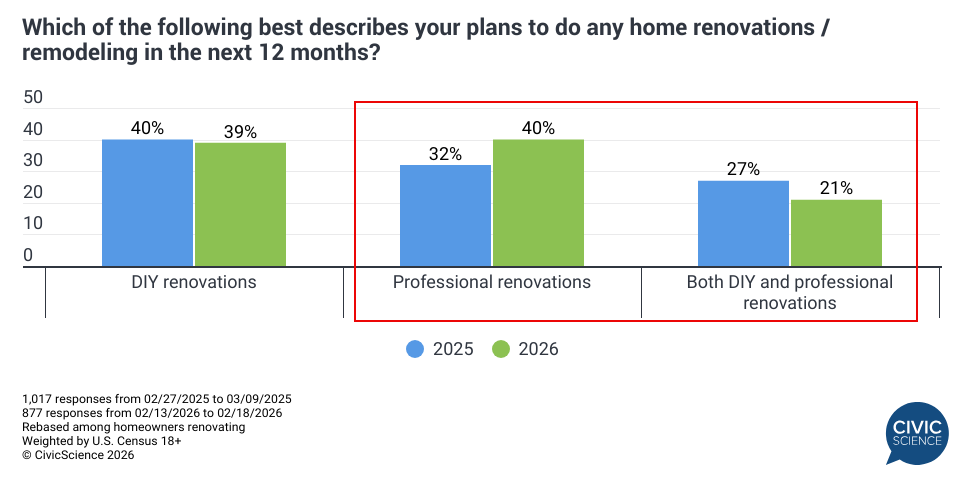
And although year-over-year intent hasn’t changed dramatically, consumer-reported data reveals notable shifts below the surface in HOW the work will get done this year. So far in Q1 2026, home improvement intenders are increasingly likely to hire a professional, with 40% planning to have a professional handle the work entirely, up eight points from 32% in Q1 2025. And while a similar percentage plan to do all the work themselves, they are particularly less likely to take the hybrid approach, combining some DIY work with some professional work.
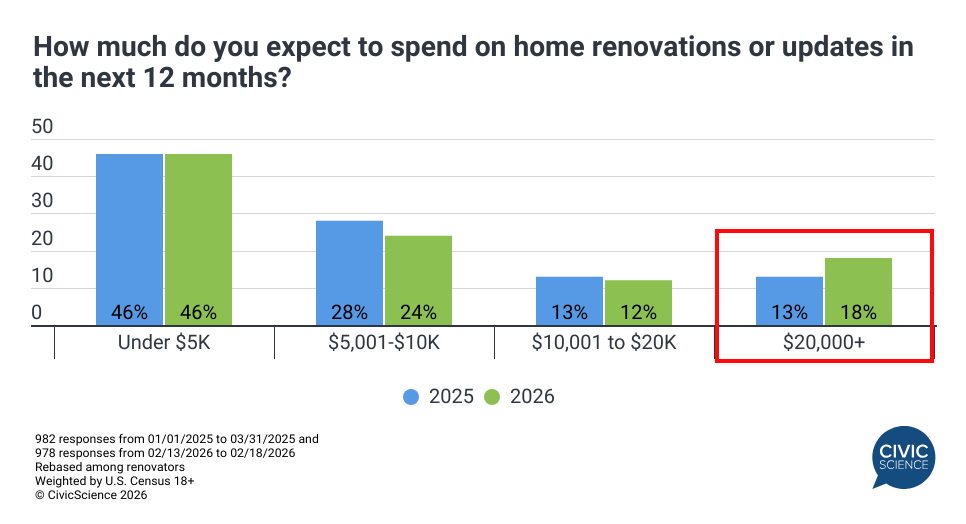
While nearly half of prospective renovators expect to spend under $5K, the share planning more substantial investments ($20K+) has risen by five points from Q1 2025. This suggests that although there’s been only a marginal increase in renovation plans, those who have plans are preparing for potentially more expensive or professionally driven projects.
Plans to Take on Debt Increase
Planning to spend doesn’t necessarily mean paying entirely out of pocket. Nearly one quarter (24%) of renovators say they plan to take on debt for home improvement projects in the next 12 months, up from 19% who said the same last February. Financing intent is particularly pronounced among those budgeting for larger projects, though debt isn’t limited to high-cost renovations – a meaningful share (30%) of renovators spending under $5K also expect to borrow.
City Residents Lead in Larger Upgrades
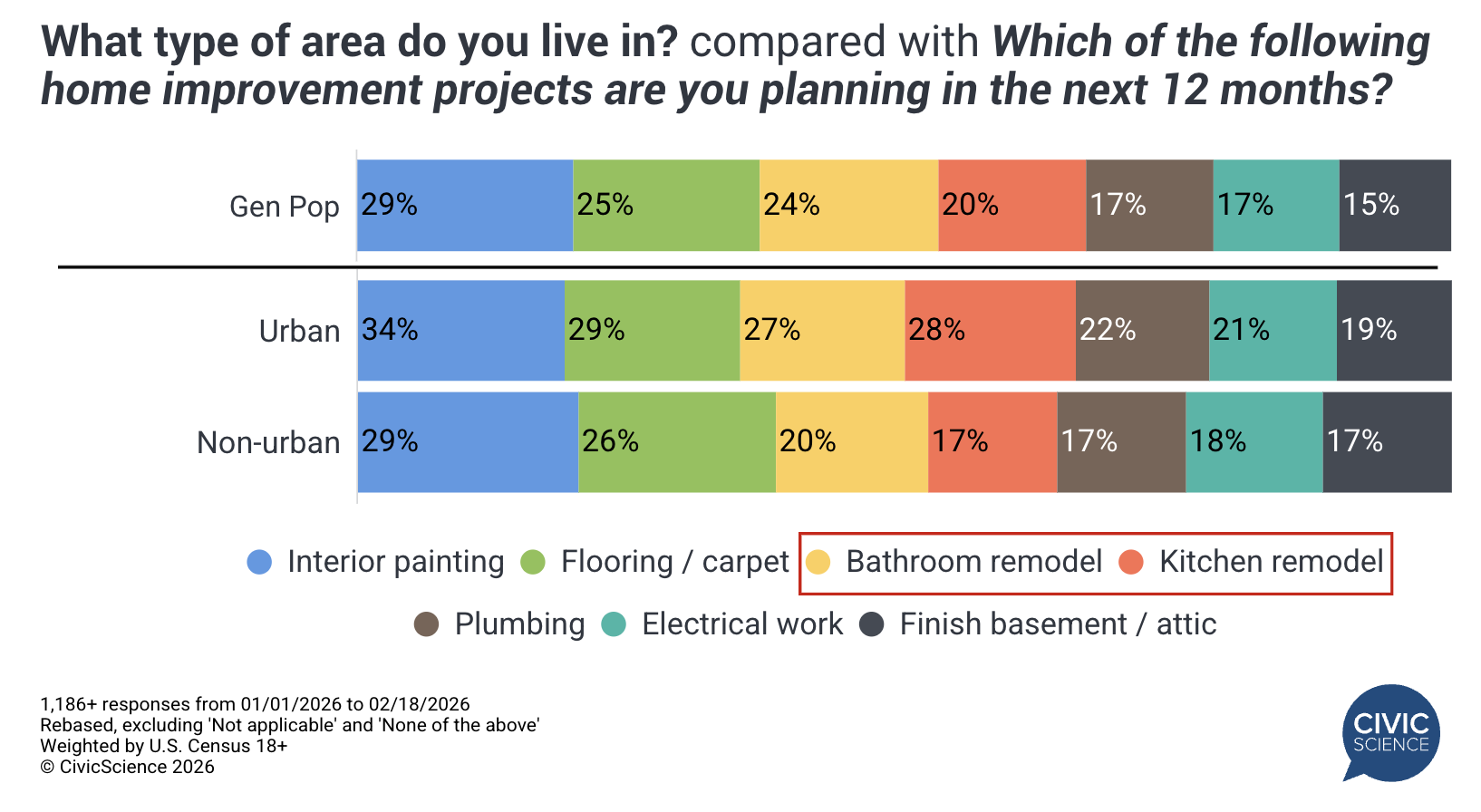
When it comes to the types of renovations homeowners are planning, priorities remain largely consistent year over year. Interior painting, flooring or carpet installation, and bathroom remodels rank as the top three intended projects. Most other renovation categories have held steady compared with last year, but finishing a basement or attic has increased four percentage points since Q1 of 2025.
City residents are more likely than those in non-urban areas to plan renovations of all types in the next 12 months. While interior painting is common across both urban and non-urban renovators, urban residents notably over-index on larger, more extensive upgrades, particularly kitchen remodels (28% vs. 17% among non-urban residents), and bathroom remodels (27% vs. 20%).
While city-dwellers are nearly as likely as non-city residents to DIY all their renovations (40% to 39%, respectively), they are eight points more likely to take a hybrid approach that combines DIY and professional work. Renovators who don’t live in a city, meanwhile, outpace city residents in their intent to hire a professional to handle all of the work (43% to 34%, respectively).
On the surface, home improvement intent is largely consistent with last year, yet a closer look at 2026 data reveals a market in transition toward larger, expert-driven projects. By trading hybrid DIY/professional work for total professional outsourcing and higher $20K+ budgets, homeowners are signaling a preference for significant, professionally-finished upgrades even as they increasingly rely on debt to see them through.