CivicScience engages directly with consumers, collecting over one million survey responses daily, to turn real-time insights into high-performing advertising campaigns. See how leading brands use CivicScience to drive campaign performance here.
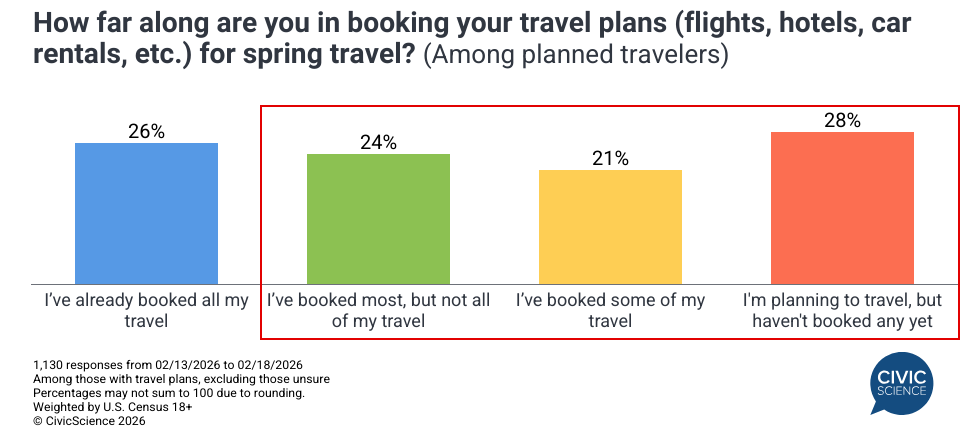
Amid a winter marked by cold and extreme weather, Americans are signaling they are ready for warmer horizons. With the official start of spring just over a month away, 42% of U.S. adults tell CivicScience they plan to travel during the upcoming spring season, and that percentage may climb as another 13% remain undecided on travel plans as of now. While intent is strong, action is lagging: 73% of committed spring travelers still have at least some booking left to do, including nearly 3 in 10 who haven’t reserved anything yet.
What Spring Travelers Are Telling CivicScience
CivicScience’s consumer-declared data goes deeper to pinpoint what spring travel will look like this year, allowing brands to build precise audiences. Here’s what the latest data show:
- Wellness-focused: One-quarter of those planning to travel this spring say they are ‘very’ likely to take at least one trip centered on wellness (e.g., spa, fitness, mindfulness) in the next three months.
- Solo leisure travel: Among those traveling for leisure in the next three months, 60% plan to take at least one solo trip, compared to 40% who will travel with others. This solo leisure travel percentage jumps to 77% among Gen Z leisure travelers aged 18-29.
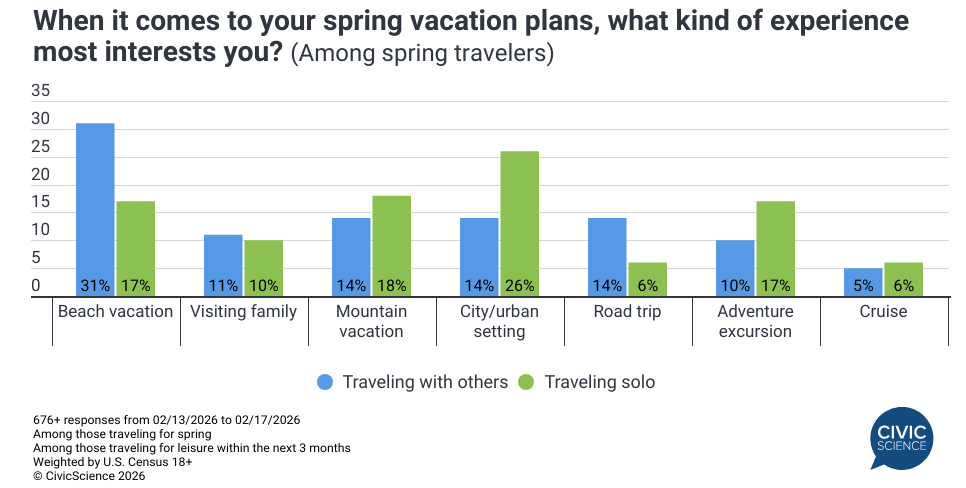
- Varying vacation experiences: Spring travelers overall are most likely to favor beach vacations. Likely trip itineraries differ drastically among solo leisure travelers, who are notably more likely to prefer urban settings and adventure excursions. Those traveling with others, meanwhile, lean toward the beach or a road trip.
Noteworthy Splits in Accommodation Patterns
Hotels and motels are the clear leader when it comes to where spring travelers will stay (47%), with staying with family or friends (19%) coming in a distant second. They are equally as likely to stay in either a rental like Airbnb or at a bed and breakfast (12%, each). Five percent say they’ll be in an RV, cabin, or tent, and another 6% cite ‘other.’
Among travelers still finalizing reservations, 43% use discount sites like Expedia or Kayak to book their hotel lodging, 10 points higher than those who’ve already booked all of their spring reservations (33%). Meanwhile, only 27% of those with bookings left to make go directly through hotel/motel websites, compared to 47% of those who have finalized all their spring bookings.
Solo travelers also show distinct booking preferences: they’re 10 points more likely than group travelers to use discount sites to reserve lodging (44% vs. 34%) and over three times as likely to book through travel agencies (18% vs. 5%). Group travelers, conversely, are more than twice as likely as solo travelers to book directly with hotels (48% to 22%, respectively).
How Spring Travel Will Shape Near-Term Retail
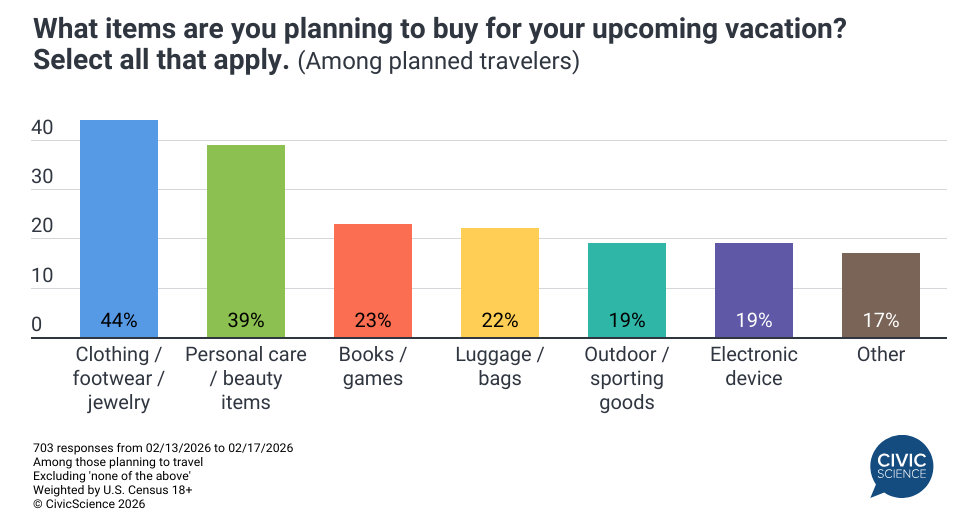
Spring travel’s impact reaches into retail as well. Additional CivicScience intent data reveals 73% of planned spring travelers will purchase from at least one retail category specifically in preparation for their next vacation. Clothing and apparel top vacation shopping lists among these planned travelers, followed by personal care and beauty products. Entertainment through books or games ranks a distant third, suggesting that spring travelers prioritize practical necessities over leisure items when preparing for their upcoming travel.
The gap between travel intent and final booking shows that consumer decisions for travel in the coming months are still being made. These insights highlight how nuanced consumer preferences, from solo urban escapes to pre-trip apparel shopping, are already taking shape ahead of the travel season. Whether in travel, retail, or beyond, CivicScience enables brands to build precise, data-driven audiences that turn emerging consumer trends into actionable growth strategies.