CivicScience has the world’s largest proprietary database of real-time declared intent, allowing brands to activate high-performing advertising that drives up to 80% better performance. See how our partners achieve superior marketing outcomes here.
It continues to be a rough go for consumers looking to purchase a consumer electronic. Amid the ongoing chip shortage driven by AI/data centers and persistent economic uncertainty, the obstacles to tech buying have proved significant. According to recent CivicScience data, just 15% of tech-interested consumers report that rising electronics prices haven’t affected their tech purchasing in any way, while 18% are holding off on tech purchases altogether for now.
Despite this cautious landscape, a high-value, high-intent segment of consumers is still looking to buy within the next three months, and consumer-declared data highlight who they are and how to reach them:
51% of U.S. Adults Plan Near-Term Electronics Purchases, With Smartphones Capturing the Most Interest
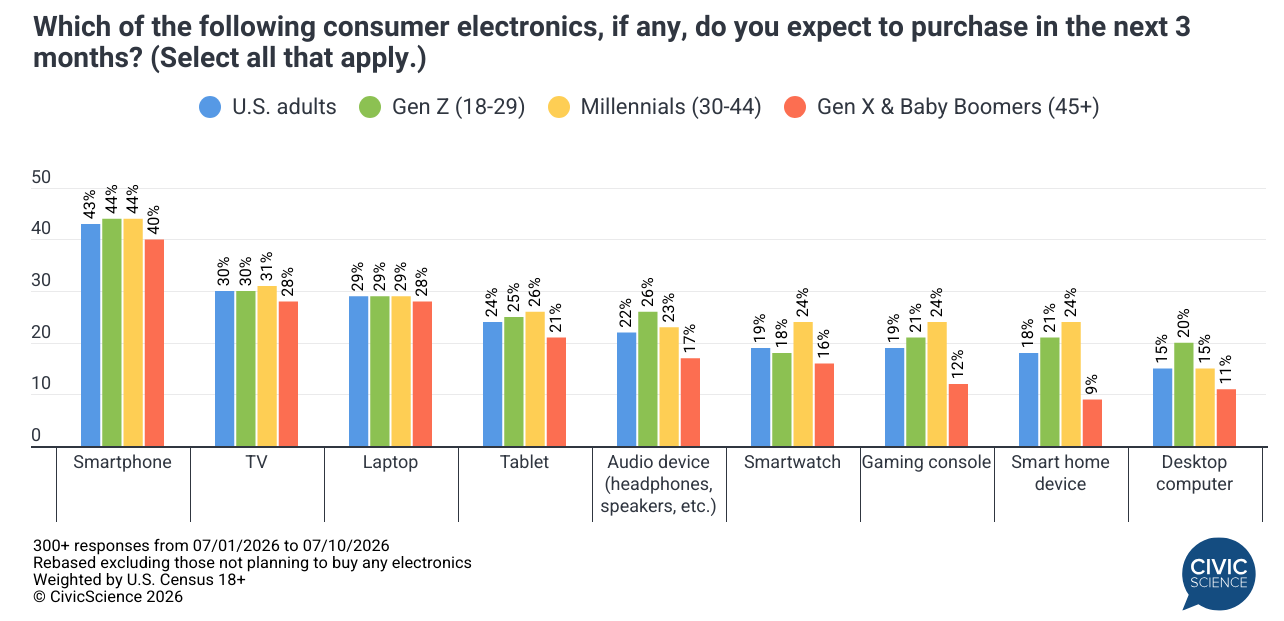
While signals of consumer hesitation certainly aren’t encouraging for the industry, near-term interest remains resilient amid Christmas in July, back-to-school shopping, and Labor Day sales on the horizon. The latest intent data show that 51% of U.S. adults plan to buy at least one electronic device in the next three months, with Gen Z, Millennials, and men leading the way.
Those planning to purchase are most likely to envision a new smartphone, while TVs, laptops, and tablets also rank highly across the board. Millennial buyers drive demand for smartwatches, gaming consoles, and smart home tech, whereas Gen Z adults are narrowly more likely to prioritize audio devices.
Another nugget of note: Gen Zers also set the pace in desktop computer intent, which aligns with additional CivicScience data showing that the share of Gen Z adults who play PC games at least weekly has jumped 38% since 2024.
Early Adopters Are Key to Short-Term Demand
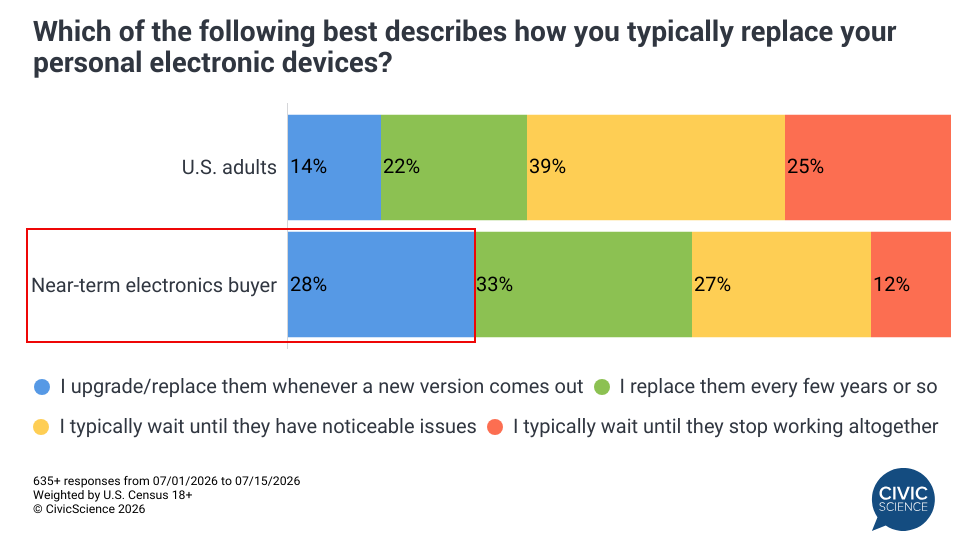
In a tech market full of headwinds, it’s the consumers who consistently crave the latest tech that will step up to the plate in Q3. Sixty-one percent of Americans planning to buy an electronic device in the next three months say they typically upgrade or replace their electronics at least every few years. What’s more, these near-term buyers outpace the average American in buying devices ‘whenever the new version comes out’ by a 2-to-1 margin. The Gen Pop, meanwhile, is far more likely to wait until their tech begins to show signs of age or stops working altogether before taking the plunge on their next device (64% to 39%, respectively).
According to additional consumer-reported data, near-term electronics buyers also outpace the average American in other key consumer signals. These insights present opportunities for brands and advertisers to cross-promote and reach these consumers where they are active and already in buying mood. This includes:
- Switching Mobile Carriers: An electronics purchase isn’t the only action near-term buyers are planning to take; they’re also more than twice as likely as Gen Pop to switch mobile carriers in the next 90 days.
- Frequent Local News Viewership: 56% of those planning to buy electronics within the next three months frequently watch (daily or most days) local TV news, a rate nine points higher than average (47%).
- DIY Project Plans: Do-it-yourself (DIY) work is in their future as 75% say they’re likely to start a new DIY project in the next three months, compared to 61% of Gen Pop.
- Early Halloween Shopping: 59% of electronics buyers will start shopping for Halloween in either August or September (47% of Gen Pop Halloween shoppers say the same).
Social Media Increasingly Drives Tech Buying Across All Ages
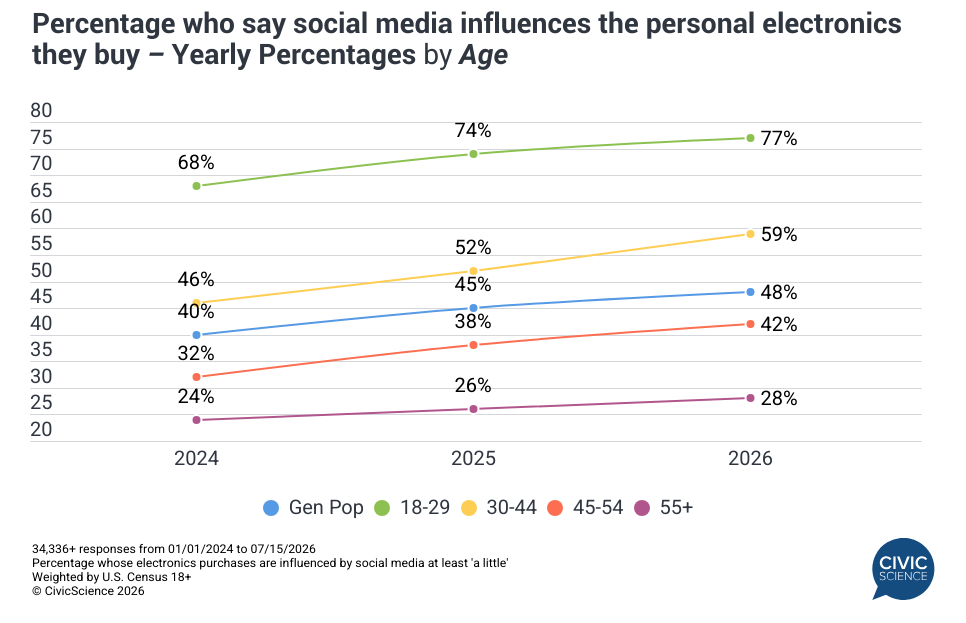
The growing influence of social media in shaping electronics purchasing continues to build. Social media is particularly influential among near-term tech buyers, with 69% reporting it holds at least some influence, 21 points higher than Gen Pop (48%).
While the pull of social media is unsurprisingly strongest among younger generations, older generations are also increasingly likely to trust it when it comes to their electronic buying.
The consumer electronics market remains turbulent, but that doesn’t mean demand has paused entirely. Navigating this cautious market means using real-time consumer intelligence to identify, engage, and convert high-value buyers precisely when and where they’re ready to purchase.