CivicScience has the world’s largest proprietary database of real-time declared intent, allowing brands to activate high-performing advertising that drives up to 80% better performance. See how our partners achieve superior marketing outcomes here.
From HGTV to home makeover TikToks, consumers don’t have to look far to find inspiration for tackling home projects themselves. But today’s do-it-yourself (DIY) boom isn’t just about aesthetics or weekend hobbies—it’s increasingly shaped by evolving shopping habits, technology, and consumer priorities. Regardless of the reason, many Americans have plans to roll up their sleeves and tackle a DIY project this summer and early fall.
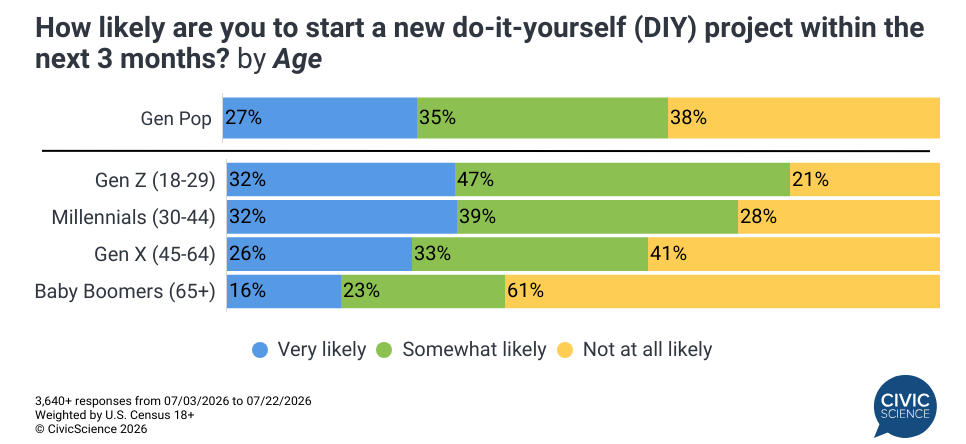
New CivicScience data show that more than 6 in 10 (62%) American adults are at least ‘somewhat’ likely to start a new DIY project in the next three months. Men and Gen Z in particular lead with their enthusiasm for a new DIY project. It’s also worth noting that near-term DIY planning is strong regardless of income level. Higher-income households (earning more than $100K) exhibit the strongest intent, outpacing low-income (those earning less than $50K) by just five points (64% to 59%), hinting that while saving money on doing the work themselves may play a role, there may be other motivations at play beneath the surface.
DIY Motivations Extend Beyond Saving Money
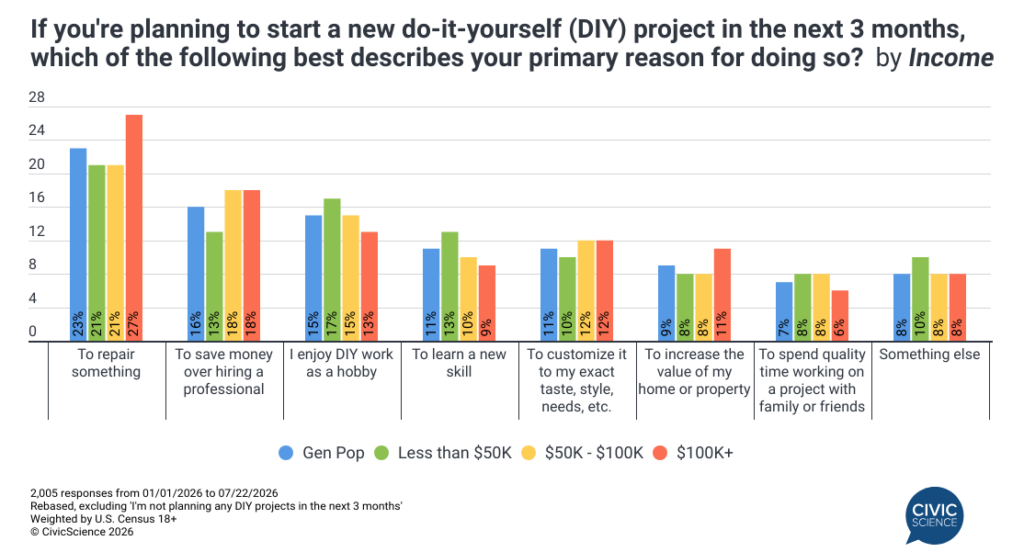
As for what’s driving near-term DIY plans, motivations range from the practical to the more personal. The strongest motivation is the need to repair something (23%), followed by a desire to save money (16%) and the pleasure of doing DIY as a hobby (15%). Learning a new skill and customizing the outcome inspire a mid-level sense of motivation, while increasing property value and spending quality time with family and friends while working on the project rank lower on the list.
While repairs are the leading driver across income levels, the findings further suggest today’s DIY movement isn’t driven solely by financial necessity. Lower-income Americans are most likely to say they enjoy DIY projects as a hobby, while higher-income Americans most often take a DIY approach to save money or to customize the outcome to their exact tastes and needs.
Climate and Extreme Weather Concerns Run Deep
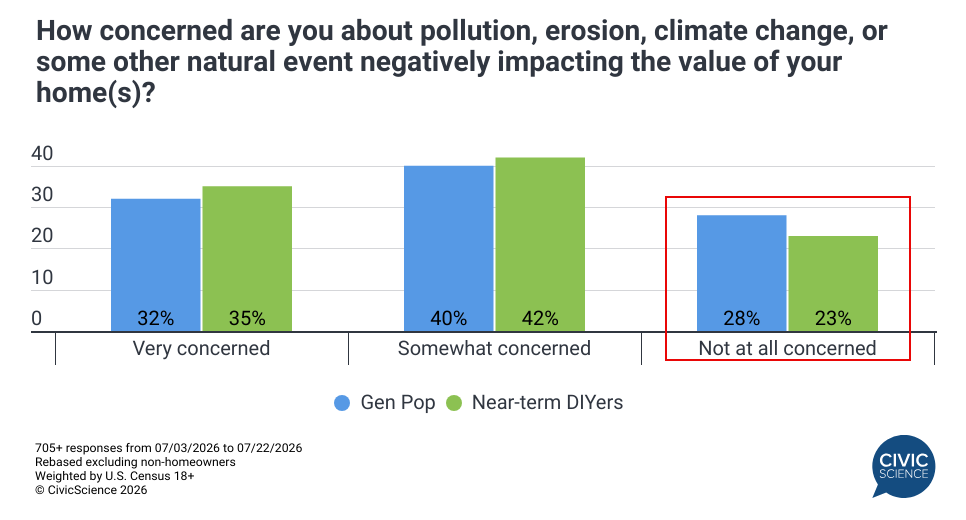
While immediate and mostly minor fixes have the attention of DIYers, CivicScience data suggest more serious anxieties lie beneath the surface. Roughly two-thirds (67%) of near-term DIYers express concern about climate change and the environment overall, slightly higher than Gen Pop (63%). Among DIYers who are homeowners, that concern becomes even more tangible: 77% are at least ‘somewhat’ concerned that pollution, erosion, climate change, or other natural event will negatively impact the value of their home, five points higher than the Gen Pop.
Today’s DIYers Are Digital-First Consumers
Those planning DIY projects aren’t just rolling up their sleeves—they’re also embracing digital tools to help them along the way. Americans who are ‘very’ likely to start a DIY project are 11 percentage points more likely than the general population to use at least one AI platform each month (63% vs. 52%). They also skew toward e-commerce, with half (50%) doing the majority of their shopping online, compared to just 30% of Gen Pop. That digital-first mindset extends to payment preferences as well, with DIY intenders significantly more likely than average to use Buy Now, Pay Later services (48% vs. 34%).
Retailers Have an Engaged DIY Audience
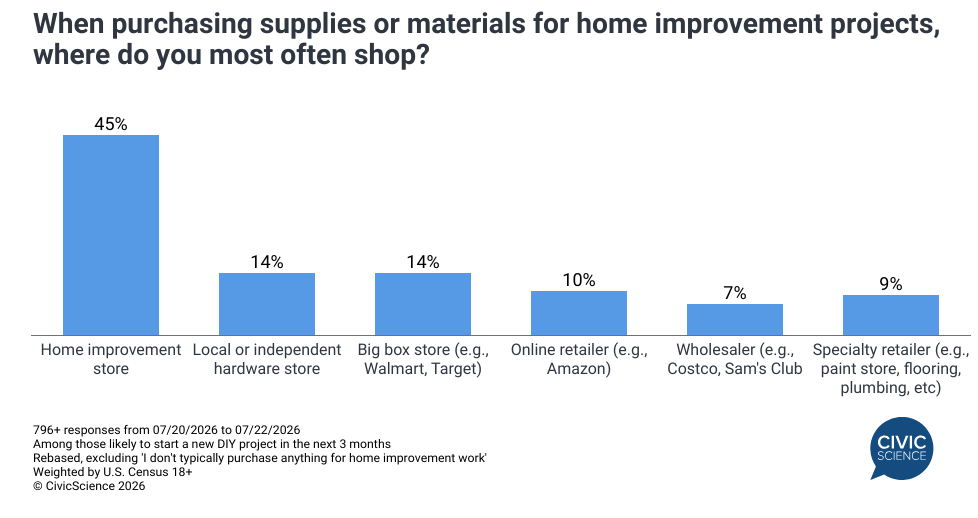
Unsurprisingly, near-term DIY intenders most often shop for supplies and materials at home improvement stores. Among secondary options, these consumers are equally as likely to shop at local/independent hardware stores and big box stores while they are less likely to turn to wholesalers and specialty stores.
The outlook for DIY activity for the rest of 2026 remains strong with one-third of Americans expecting to take on even more work for the remainder of the year, compared to just 17% who will do fewer DIY projects. Beyond their enthusiasm for home improvement, these consumers also exhibit shopping traits that make them particularly valuable for brands and retailers. As DIY activity continues to grow, understanding this audience’s motivations, digital habits, and retail preferences can help brands connect with consumers long before the next project begins.