CivicScience has the world’s largest proprietary database of real-time declared intent, allowing brands to activate high-performing advertising that drives up to 80% better performance. See how our partners achieve superior marketing outcomes here.
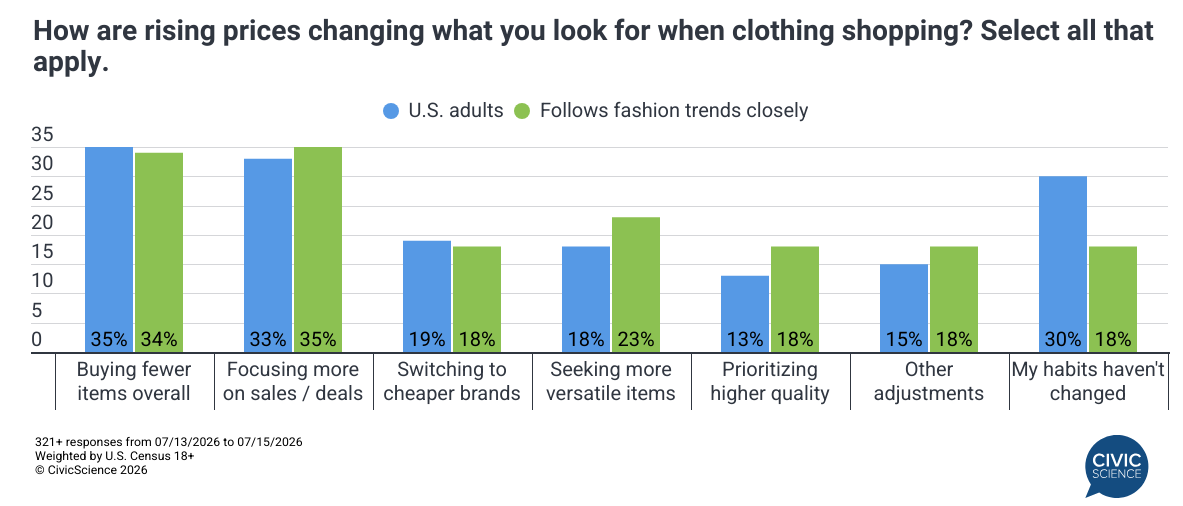
1. Persistent inflation is driving widespread changes in how consumers shop for clothes, especially among those who closely follow fashion trends.
Despite a recent drop in June, clothing prices remain nearly 4% more expensive than they were this time last year. New consumer-reported data highlight the impact of this persistent inflation — 7 in 10 U.S. adults say they’ve adjusted their clothing-buying habits in some way due to rising prices. Buying fewer items overall and hunting for sales and deals are unsurprisingly the most common tactics, while switching to more affordable brands, seeking more versatile items, and prioritizing higher-quality items are less popular actions overall.
The data also show that consumers who follow fashion trends ‘somewhat’ or ‘very’ closely are far more likely to make changes, with just 18% reporting no change in their clothing-buying habits at all. Beyond cutbacks and deal hunting, fashion trend followers are notably more likely than the average consumer to seek versatile items and to prioritize higher quality when they do buy.
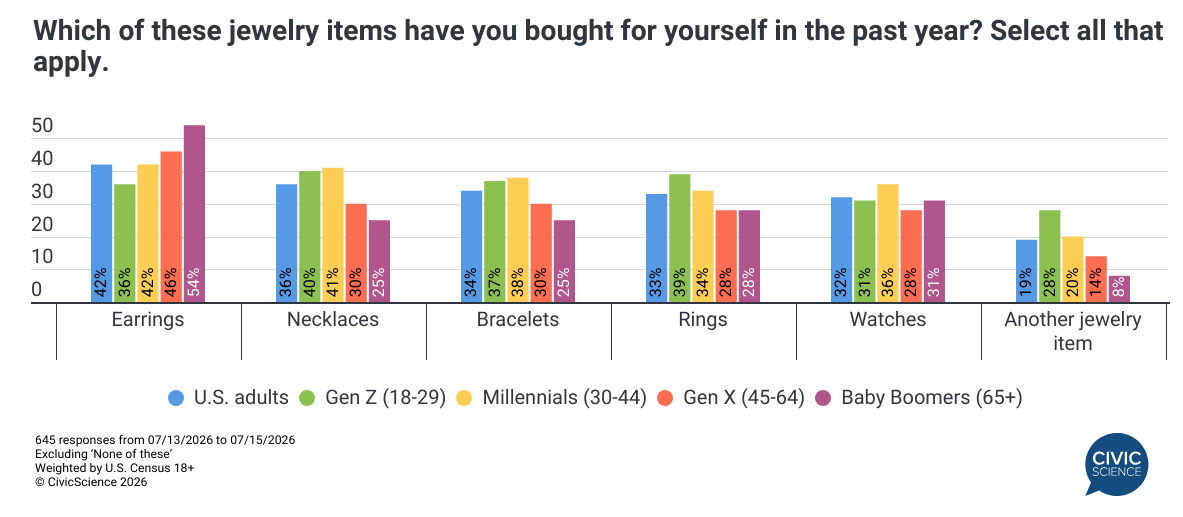
2. Two in five American adults, led by Gen Z, embrace buying jewelry for themselves, with earrings and necklaces topping the list.
Despite cutbacks in clothing spend, more Americans are using beauty as a form of self-care, and this trend may be carrying over into jewelry purchases. New CivicScience data indicate that 40% of U.S. adults enjoy buying jewelry for themselves (19% ‘love it’ and 21% ‘like it’). This self-buying trend is heavily dominated by younger generations, as an impressive 55% of Gen Z (18-29) and 46% of Millennials (30-44) enjoy buying jewelry for themselves. In stark contrast, older demographics are much more resistant to self-purchasing, with just 24% of those aged 65+ purchasing jewelry for themselves – highlighting a clear generational shift toward personal indulgence among younger consumers.
For consumers who actively buy jewelry for themselves, earrings have been the most purchased item over the last year. Though the 65+ cohort is less interested in self-gifting jewelry in general, those who do drive earring purchases compared to other age groups, but show the least interest across all other types of jewelry. Necklaces and bracelets are also highly popular self-purchases, particularly among Millennials (41% and 38%, respectively). Meanwhile, rings and watches are more evenly distributed across generations in terms of interest, though Gen Z shows a distinct preference for purchasing rings themselves compared to their older counterparts.
Take Our Poll: Do you typically wear gold jewelry or silver jewelry?
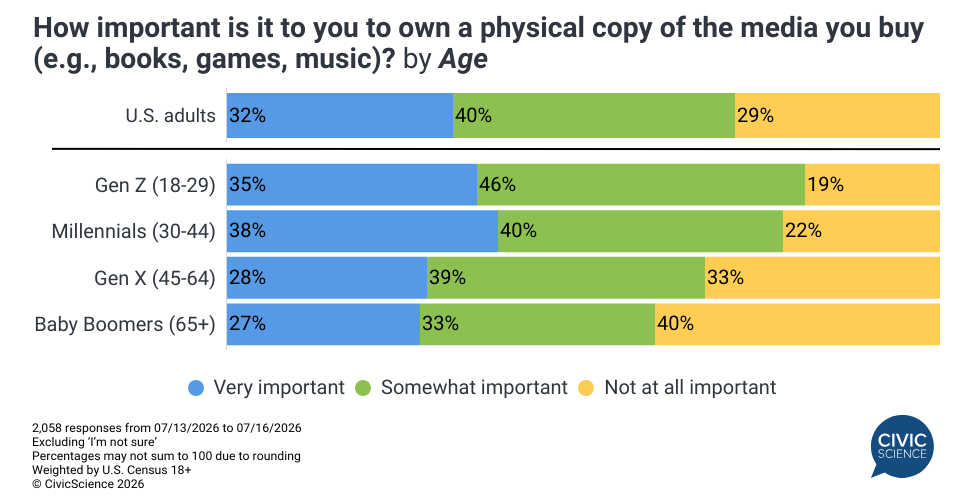
3. In an evermore digital world, nearly three-quarters of Americans say owning physical copies of purchased media is still important to them.
Earlier this month, Sony, the producer of PlayStation consoles, announced the end of physical game discs. Where do Americans stand when it comes to physical media? CivicScience data show that physical copies of purchased media remain highly valued among consumers, with 72% of U.S. adults stating that it is either ‘very’ or ‘somewhat’ important to them. This desire for physical ownership is strongest among younger generations, particularly Millennials (38% ‘very’ important) and Gen Z (35% ‘very’ important), compared to just 27% of Baby Boomers – aligning with CivicScience data showing that younger consumers are the most influenced by nostalgia.
Weigh In: How do you feel about the departure from physical video game discs to digital media?