CivicScience has the world’s largest proprietary database of real-time declared intent, allowing brands to activate high-performing advertising that drives up to 80% better performance. See how our partners achieve superior marketing outcomes here.
Years of consumer-declared data all point to the same conclusion: how consumers feel and how they plan to spend are intricately linked. This means that keeping tabs on how emotions shift in real time is key for brands, advertisers, and publishers seeking to anticipate shifts in mindsets around spending and lifestyle before they become reality.
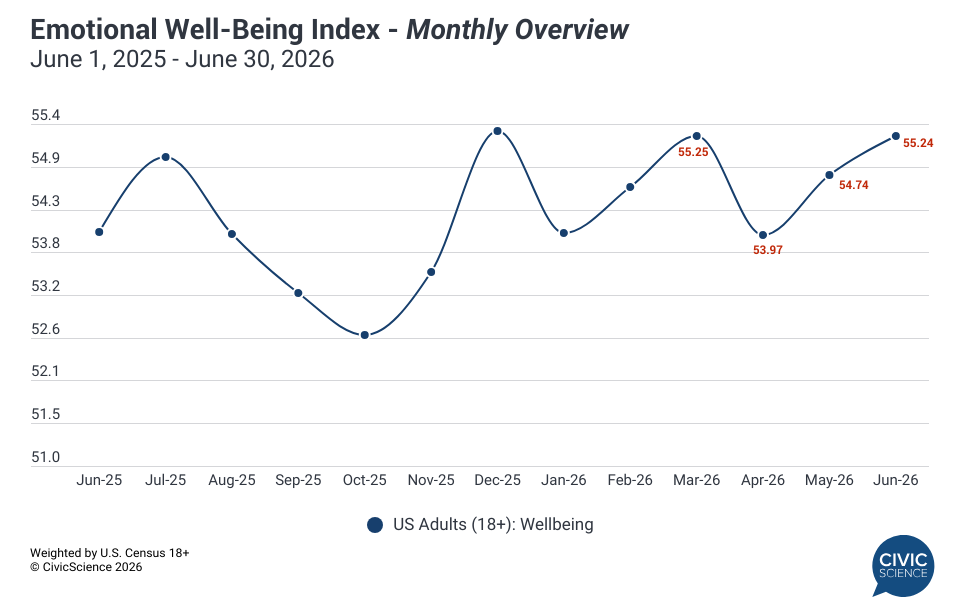
The CivicScience Well-Being Index (WBI) sheds light on the emotions that U.S. adults aged 18 and older experience month to month. By staying on the pulse of specific demographic shifts that often precede larger consumer changes, the WBI quantifies the collective mood and ever-evolving state of mental health.
Well-Being Creeps Upward For a Second Month in a Row
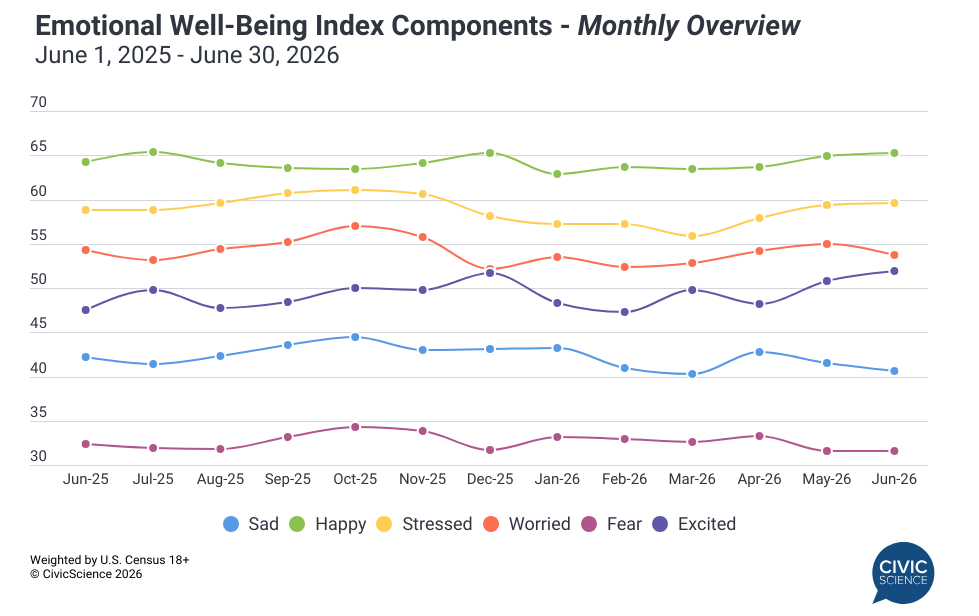
The June reading shows that after an increase in May, well-being among U.S. adults rose slightly–by 0.5 points–for a second month in a row, landing at 55.24. This compounding positive shift returns the WBI to its 2026 high-water mark in March and paces 1.27 points higher than June 2025 (53.97). Although the increase was led by adults aged 35-54, all age groups saw a slight uptick, indicating that the mood boost transcends generational divides.
Positive Emotions Outweigh Mixed Anxieties to Lift the WBI
The individual WBI components reveal competing forces that culminated in the overall increase in well-being. Both positive emotions increased for a second month in a row, with a 1.1 point boost in excitement and a 0.32 point jump in happiness. Conversely, the data for negative emotions were mixed: stress and fear saw minor upticks (+0.22 and +0.08 points, respectively), but these were easily offset by substantial declines in worry (-1.24 points) and sadness (-0.89 points). Ultimately, these falling anxieties allowed the WBI to finish the month on a higher note.
Beauty as a Form of Self-Care Is a Trend to Watch
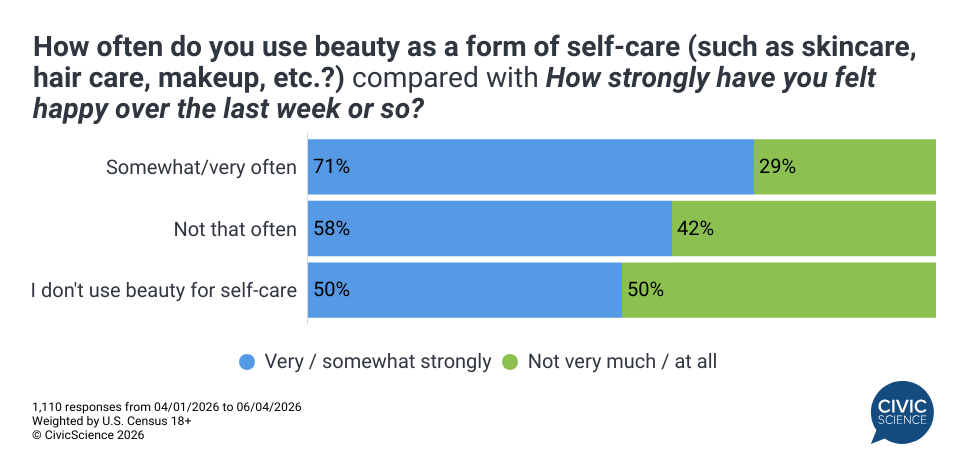
In H2 2026, the beauty sector is cementing its role in the wellness economy. New data from CivicScience shows that 47% of U.S. adults now use beauty products for self-care at least ‘somewhat’ often, up from 42% in 2025. While this trend likely played a role in last month’s Amazon Prime Day sale, its most significant impact is on consumer well-being. A striking 71% of these regular beauty self-care practitioners report feeling happier recently, compared to 50% among those who don’t use beauty as self-care at all.
In June, well-being once again gained positive momentum, driven by continued increases in positive components and felt across all age groups. What appeared as a potential blip on the radar in May is now establishing itself as a real positive trend. However, these ebbs and flows often align with the season. And as consumers shift from vacation planning to back-to-school planning, only time will tell if well-being will remain positive or once again decline. For businesses looking to stay ahead of the curve, CivicScience’s real-time insights empower smarter, more agile decisions as consumer behavior continues to evolve.