CivicScience engages directly with consumers, collecting over one million survey responses daily, to turn real-time insights into high-performing advertising campaigns. See how leading brands use CivicScience to drive campaign performance here.
Now that we’ve established the pace of the 2026 tax season, it’s time to look under the hood at the underlying consumer data. One month in, we are seeing significant fragmentation in how different generations seek guidance and plan to deploy their refunds. Here are the five things to know as filing season hits its stride:
1. More Americans will handle taxes on their own this year, with an increasing share doing them by hand.
The latest CivicScience data shows self-preparation is the most popular filing method this year, with 47% of taxpayers using online software. Notably, manual filing has doubled since early 2025; 10% now plan to mail paper returns, up from 5% last year. Meanwhile, 31% will hire an accountant, 6% will use full-service platforms, and the remaining 6% will opt for other methods.
Among tax platform users, Intuit TurboTax and H&R Block continue to lead in interest, though intent to use either has declined slightly, with modest gains for platforms such as TaxSlayer, TaxAct, and Cash App Taxes.
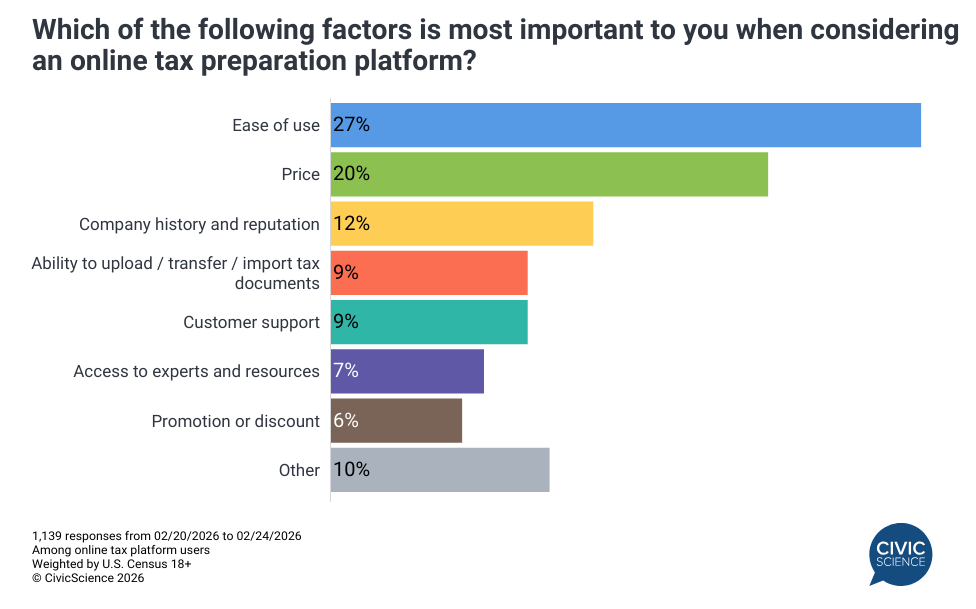
2. Online tax preparation users are most likely to prioritize user experience when choosing a platform.
Despite a climate of consumer spending cutbacks, convenience has emerged as the primary driver of the choice of online tax platforms. While cost remains a noteworthy factor, ease of use holds a seven percentage point lead in consumer priority. This preference for functionality over price persists throughout the data; secondary motivators such as document uploading (9%) and customer support (9%) slightly outrank promotions and discounts (6%). Ultimately, users are prioritizing the resources necessary for a seamless filing experience, even if it means spending more.
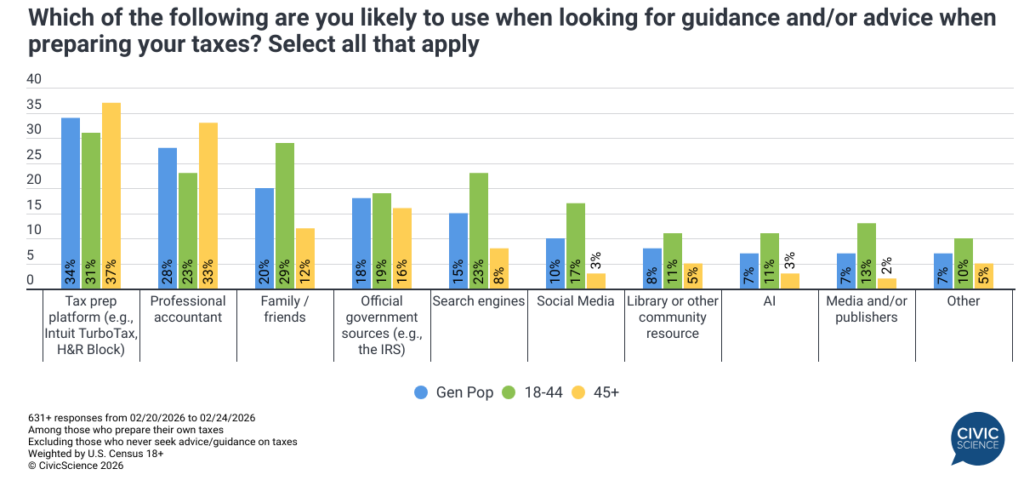
3. Tax preparation platforms are Americans’ most common source for tax guidance, but filers under 45 are far more likely to use non-traditional sources for help.
Data indicate that tax support preferences are diversifying across generational lines. Filers aged 45+ report primarily utilizing tax platforms and accountants, while those under 45 exhibit more varied behavior, leading in using AI and social media channels for support. A striking difference is also seen in media consumption, where younger filers turn to media and publisher articles and resources for guidance at a rate nearly double that of their older counterparts.
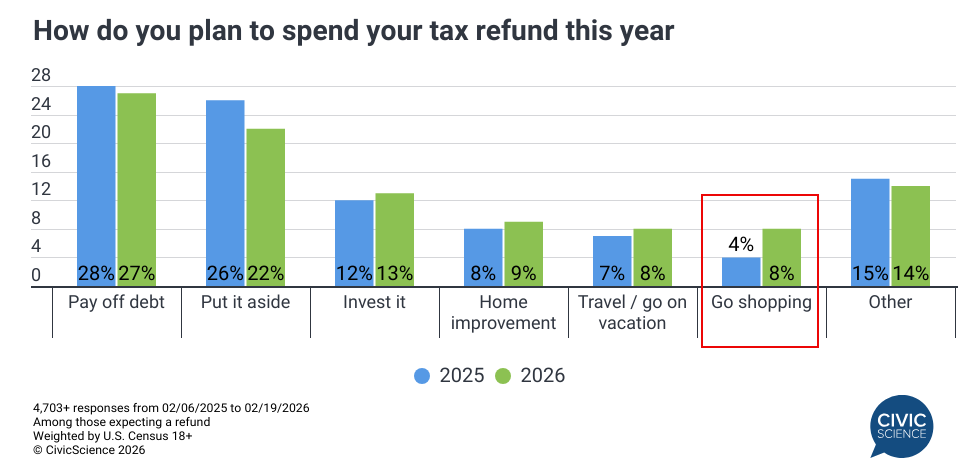
4. Slightly more Americans expect to receive a tax refund this year, and they’re twice as likely to use it for shopping.
So far this year, 60% of taxpayers report expecting a refund, a slight two-point increase from February 2025. Among those expecting a refund, nearly half (49%) plan to either set it aside or use it to pay down debt. While this approach is significant, it’s important to note that intent to use refunds specifically for shopping has doubled from 4% last year to 8% this year. Intent to earmark refunds for other areas of discretionary spending has also ticked up slightly year over year.
5. Discretionary refund spenders show intent to purchase in beauty and furniture.
With 25% of those expecting a refund planning to use it for some manner of discretionary spending (including shopping, home improvement, and travel), consumer-declared data from CivicScience is able to highlight three key areas to watch, compared to non-discretionary spenders (including paying off debt, putting it aside, investing it):
- Beauty spending: Nearly one-quarter (24%) of those planning to spend their refund on discretionary items intend to increase their beauty spending in 2026, compared to just 10% of those saving, using it for debt, or investing their refunds. They’re also nearly 20 points more likely to say they prioritize brand over price when buying beauty products (47% to 30%, respectively).
- Furniture purchasing: 69% of refund spenders say they will buy furniture in the next 12 months, compared to 50% of those using their refunds for non-discretionary purposes.
- Sports streaming subscriptions: 51% of discretionary spenders are likely to subscribe to streaming platforms specifically to watch sports this year, compared to 33% of non-discretionary spenders (among those who watch sports).
Leveraging CivicScience consumer-reported data allows for a deeper dive into insights like these to build custom audiences, giving brands and advertisers the power to pinpoint exactly where consumers are shifting their spend and reach them at the right time.
As filing methods evolve and younger generations turn to non-traditional sources for guidance, the tax season landscape is becoming increasingly fragmented. For those tracking consumer trends, the rise in refund-driven spending highlights a significant opportunity to engage with an audience ready to spend.