CivicScience engages directly with consumers, collecting over one million survey responses daily, to turn real-time insights into high-performing advertising campaigns. See how leading brands use CivicScience to drive campaign performance here.
Meals have historically been a time for people to connect, but that doesn’t mean eating alone can’t serve a purpose. Whether a product of necessity or an intentional selection, people are eating alone, and they are doing so where you might not expect it.
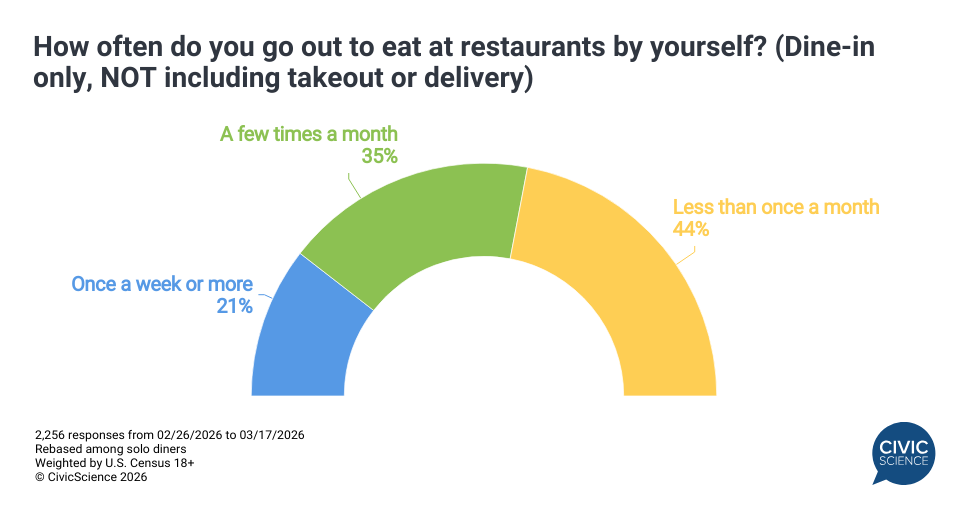
There is a time and place for eating a meal alone. While nearly 62% of Americans say they dine alone at least occasionally, their habits vary significantly once seated at a table for one. Among these solo diners, the plurality – 44% – do so less than once a month. However, a significant segment of “power diners” has established a firm routine: over one in five (21%) solo diners now eat at a restaurant by themselves once a week or more.
Consumer-declared data also highlights how these solo diners distinguish themselves. Here is what solo diners tell CivicScience about themselves and their eating habits:
When choosing where to eat alone, solo diners most often select casual sit-down restaurants (23%), fast casual (18%), and quick-service establishments (16%), whereas upscale restaurants, cafes, bars, and breweries are less common. Solo diners are adventurous in how they approach food in general, with 48% of whom say they try new foods more often than people they know. In a similar vein, when it comes to dining out priorities, solo diners value diverse menu options and lower prices most, but they are less likely to value lower prices than non-solo diners (-8 points). Instead, they’re more likely than non-solo diners to say speed (+5 points) and atmosphere (+3 points) are most important to them when dining out.
Midday Is Prime Solo Dining Time
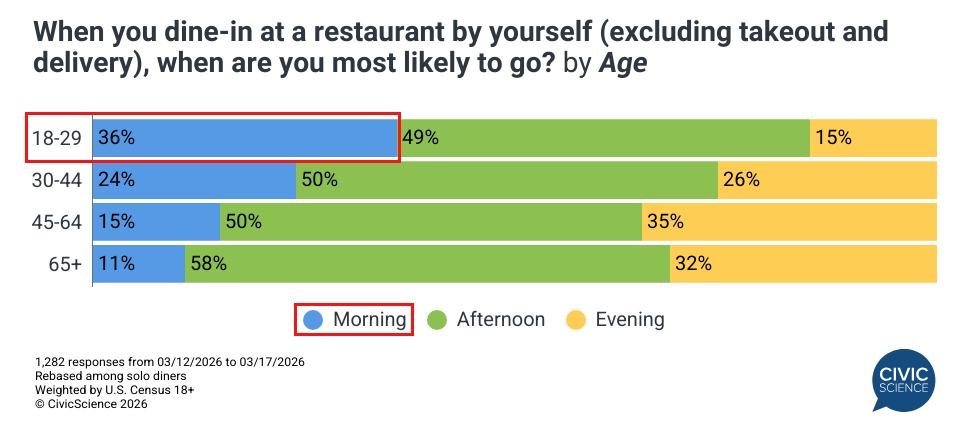
Dining alone at a restaurant is typically an afternoon activity for most solo diners. This could indicate that, among appointments, meetings, and generally full schedules, lunch is less about connection and more about sustaining oneself. There are a few caveats about the time of day when consumers eat out alone. Firstly, people earning $50K or less per year over-index in dining alone at a restaurant for lunch. Secondly, while afternoon is still the most frequent time block for Gen Z’s solo dining adventures, Gen Z is much less likely to solo dine in the evening when compared to other age groups, so breakfast and lunch take first and second place.
Solo Dining for Self-Care
The plurality of those who eat alone in a restaurant (41%) say they spend about the same amount of money on their own as they do when dining with others. But solo diners are slightly more likely to run up a larger bill when dining alone than when dining with a group (31% spend more, compared to 28% who spend less).
One reason for spending more in a restaurant when alone is the idea of using a restaurant meal by yourself as a self-care practice. CivicScience data show that 85% of solo diners go out to eat by themselves specifically as a form of self-care occasionally, including 18% who do so once per week or more. Millennials are the key drivers of this trend as they are the most likely age group to intentionally dine in a restaurant by themselves with self-care as the objective.
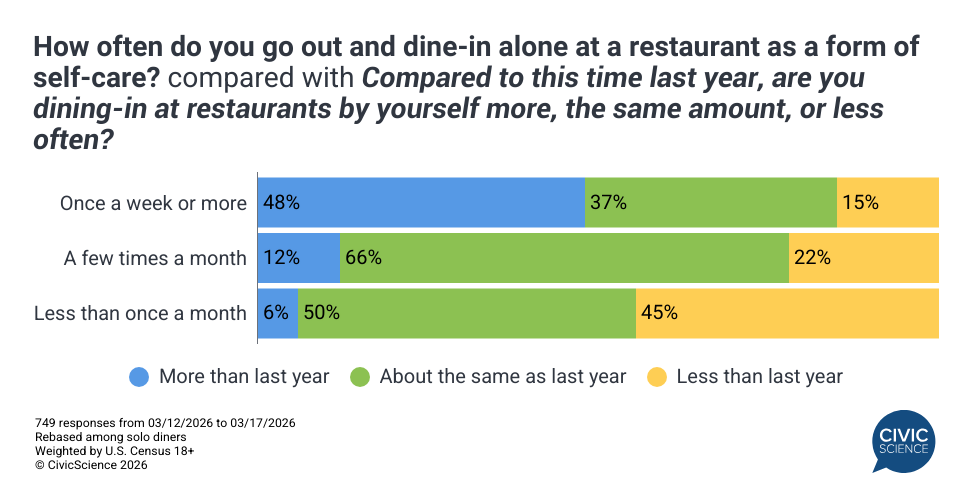
Additionally, year-over-year data indicate the trend of dining out solo for self-care is on the rise. Forty-eight percent of weekly self-care solo diners are reporting that they are eating alone in restaurants more this year than they did last year. The data highlight a unique consumer base that prioritizes self-care by taking alone time and spending money at restaurants weekly.
In a culture that has long framed dining as a social ritual, the rise of solo restaurant visits signals a meaningful shift in how Americans relate to food and themselves. Eating alone is no longer just a fallback; it’s often a deliberate choice shaped by schedule and self-care. From adventurous ordering to midday routines built around convenience or personal time, solo diners are redefining what it means to go out to eat, and the restaurant industry would be wise to take note.