CivicScience engages directly with consumers, collecting over one million survey responses daily, to turn real-time insights into high-performing advertising campaigns. See how leading brands use CivicScience to drive campaign performance here.
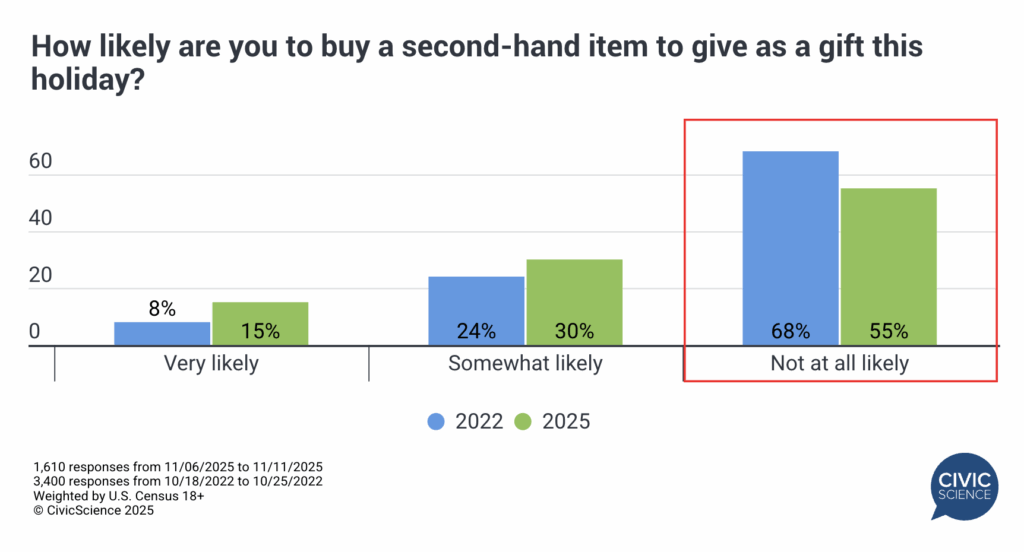
This holiday season, second-hand gifts may be moving from niche to mainstream. Over the past three years, the share of holiday shoppers telling CivicScience they’re ‘very’ likely to buy a pre-owned item as a gift has nearly doubled – from 8% in 2023 to 15% in 2025. The percentage ‘somewhat’ likely to do so rose six points over the same period, reaching 30%. Altogether, 45% of holiday shoppers are at least considering giving second-hand. Similarly, the intent to buy gifts from online clothing resale sites, such as Poshmark and eBay, has also nearly doubled since 2022.
So what’s on the second-hand gift list this year? When asked to select all that apply, many shoppers pointed to books, vinyl records, and other media (40%), followed by clothing, shoes, and accessories (36%). Around 30% plan to give items such as home décor, tech, or collectibles, while nearly a quarter opt for handmade or upcycled creations. Designer and luxury items are also making the cut, with 12% of shoppers saying they’ll be hunting for high-end labels.
Second-Hand Gifting Isn’t Just About Saving Money
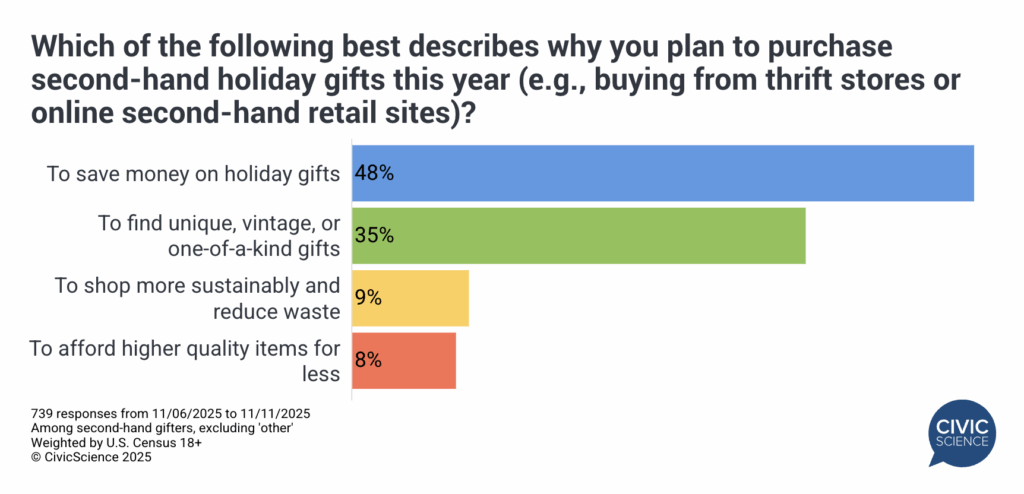
While consumers continue to tighten their budgets amid shifting economic sentiment and declining personal financial outlooks, buying second-hand gifts isn’t solely about cutting costs. About half of shoppers who plan to give pre-owned gifts say they’re doing so to save money, and another 8% want to afford higher-quality items for less. However, a notable 35% are motivated by the hunt for something unique, vintage, or one-of-a-kind. This suggests that shoppers aren’t only looking to spend less – they’re also seeking more meaningful, personalized ways to give.
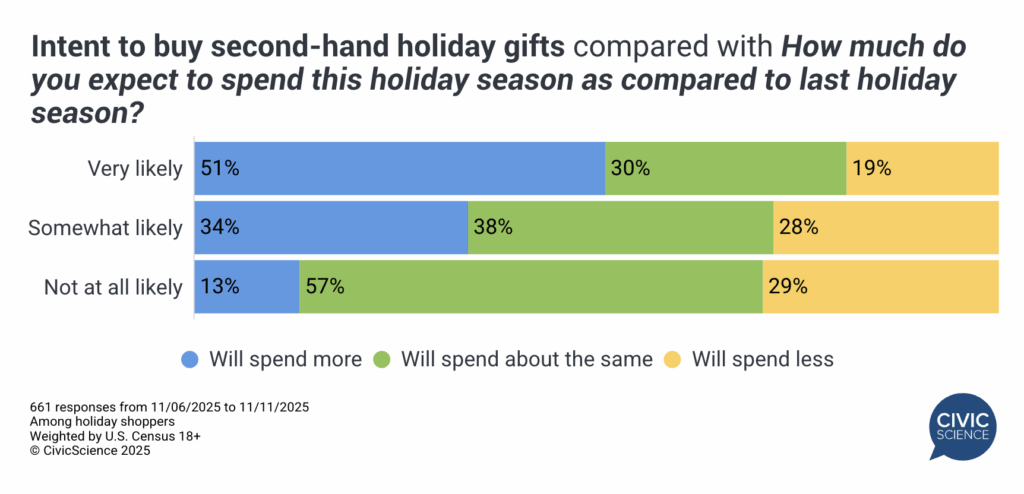
Although ‘saving money’ is the leading motive for second-hand gifting, it doesn’t necessarily mean these shoppers are cutting back on their spending entirely. Nearly half of those ‘very’ likely to buy second-hand gifts say they’re spending more overall on holiday gifts – and buying more of them – compared to previous years. That’s a significantly higher rate than among those who are not at all likely to give second-hand items, who intend to spend about the same amount or less than they did last year.
These findings, combined with a separate survey showing that they’re reporting above-average excitement for the holidays, suggest that consumers are being more intentional about what they give – striking a balance between thoughtful, one-of-a-kind, and cost-effective gifting, likely driven by nostalgia.
What Second-Hand Gifting Means for Retailers
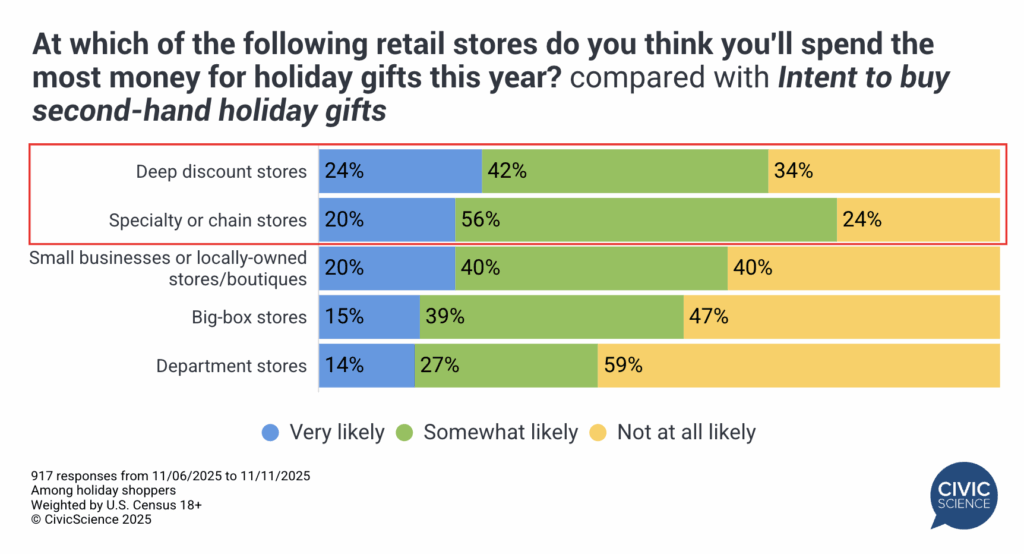
As consumers plan a mix of new and pre-owned gifts, CivicScience data helps pinpoint which retailers are likely to see the strongest second-hand shopping intent this holiday season. Unsurprisingly, those who say they’re doing the majority of their holiday shopping at deep-discount stores lead in strong second-hand gifting intent (24%). However, those who plan to spend the most at specialty or chain stores show the highest interest in general (76%). Conversely, department-store holiday shoppers make up the largest share of those not interested in buying second-hand gifts this year.
Retailers should expect a portion of their customers to seek out pre-owned options, but understanding their motivations for finding special, one-of-a-kind gifts could be key to influencing purchase decisions in-store and online.
As second-hand gifting becomes more of a norm in holiday shopping, the motivations driving it offer valuable cues for brands. By understanding the reasons behind how consumers make purchasing decisions, marketers and advertisers can better anticipate what resonates and what may deter them.
With CivicScience’s consumer-reported intent data, brands can identify and engage the right consumers at the right time, on the right channels.