CivicScience engages directly with consumers, collecting over one million survey responses daily, to turn real-time insights into high-performing advertising campaigns. See how leading brands use CivicScience to drive campaign performance here.
They say the only constant in life is change – and CivicScience data repeatedly show that well-being is a key indicator of what drives the consumer. This means that as 2026 gets well underway, staying tapped into consumer well-being is key for brands, media publishers, and advertisers who want to stay ahead of shifts in consumer spending.
The CivicScience Well-Being Index (WBI) provides a comprehensive view of the well-being of the American consumer aged 18+, and how their feelings translate into real-time impacts on spending.
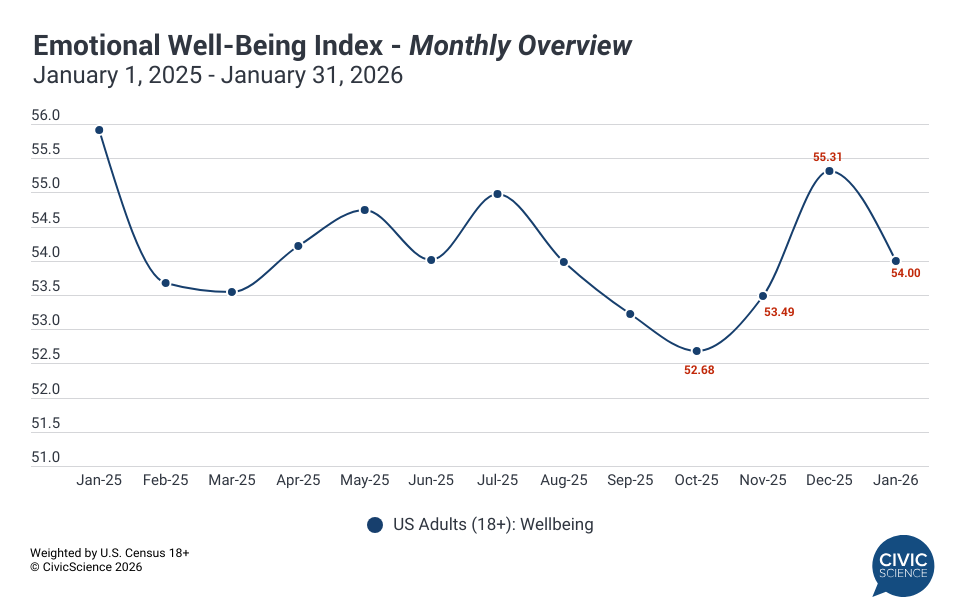
The first reading of 2026 shows that well-being among U.S. adults dipped 1.31 points to 54 through the end of January. This represents a similar drop seen from December 2024 to January 2025.
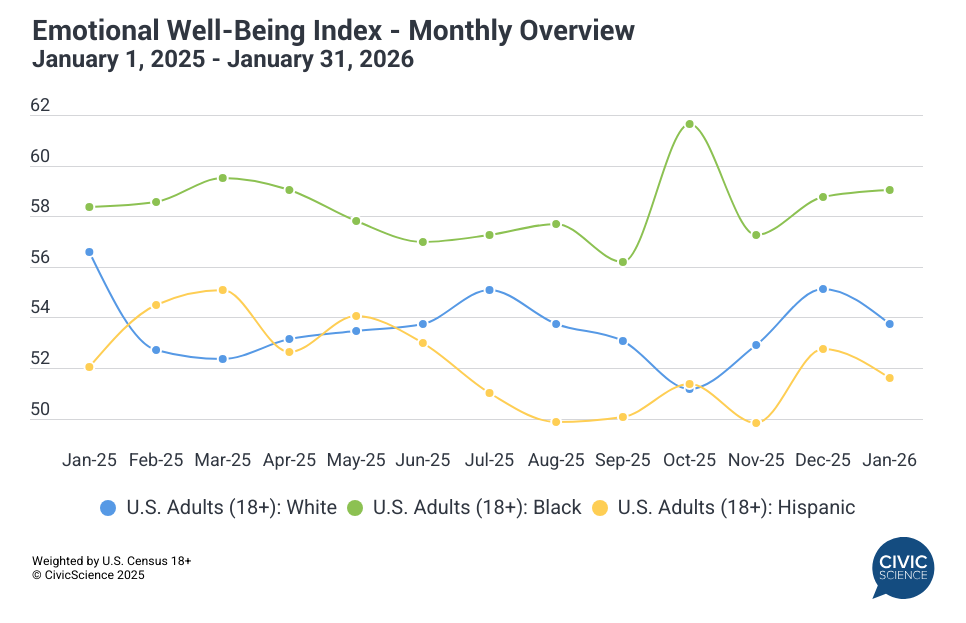
Although all age groups experienced a decline in well-being, the largest drop was among adults aged 35-54, who saw a 1.83-point decrease. Adults aged 18-34 saw a 1.12-point decrease, followed closely by adults aged 55+ who saw a 1.05-point decrease, rounding out the overall decline. Examining further demographics, the data show that the largest monthly drop in well-being came from White Americans (1.37 points), followed closely by Hispanic Americans (1.15 points). Hispanic Americans also rank lowest in overall well-being. Meanwhile, ahead of Black History Month, Black Americans saw a slight 0.28-point increase.
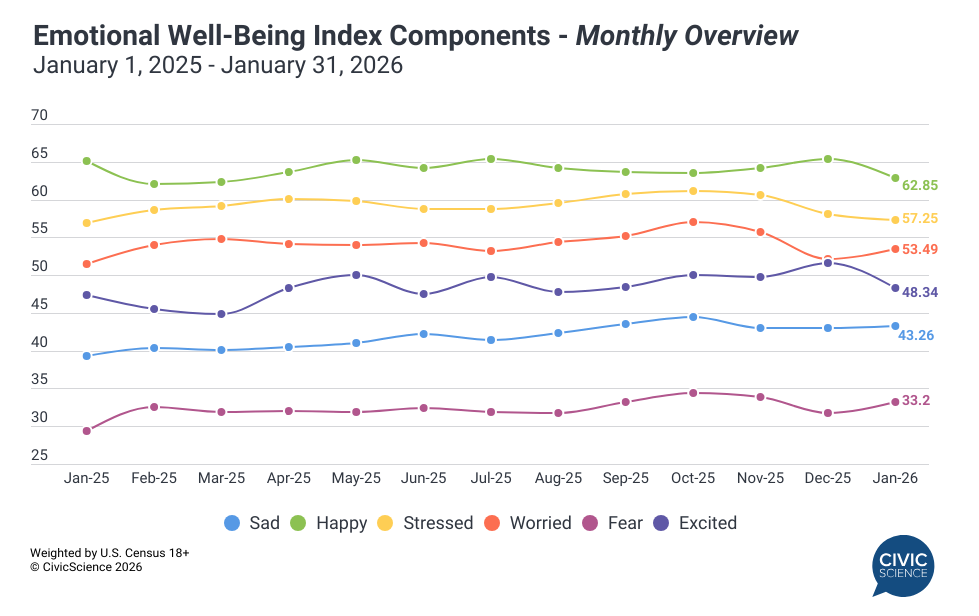
Unsurprisingly, the majority of negative emotions increased in January, while both positive emotions decreased. Fear saw the largest increase (1.42 points), echoing trends in the final months of 2025. This uptick was followed by worry (1.31 points) and sadness (0.17 points). This resounding upward shift in negative emotions offset the slight decrease in stress (0.92 points). Combined with notable decreases in excitement (3.3 points) and happiness (2.44 points), it’s no wonder that well-being took a hit.
The beginning of 2026 has brought heightened uncertainty across multiple fronts—from economic policy changes to immigration enforcement actions—which may help explain the surge in fear and worry we’re seeing in the data. The particularly notable decline among Hispanic Americans (1.15 points), who now rank lowest in overall well-being, suggests these concerns are – no surprise – resonating differently across demographic groups.
Despite an uptick in well-being to close out 2025, 2026 has started on a lower note, suggesting the holiday boost has long since fizzled out. Will hope return at the thought of spring just around the corner? Only time will tell, and when it does, businesses looking to stay ahead of these shifts will want to be in the loop on the latest data.