CivicScience engages directly with consumers, collecting over one million survey responses daily, to turn real-time insights into high-performing advertising campaigns. See how leading brands use CivicScience to drive campaign performance here.
The turn of a new year often lends itself to setting goals and resolutions for the months ahead. For more than one-quarter of U.S. adults, 2026 may include getting into investing – 26% of U.S. adults 18+ say they either plan to start investing within the next 6-12 months or they would like to start but are unsure where to begin (excluding employer-sponsored retirement plans, such as a 401(k)). Notably, this new wave is likely to be driven by young adults, as a significant share of Gen Z adults aged 18-29 (42%) express interest in dipping their toes into investing this year.
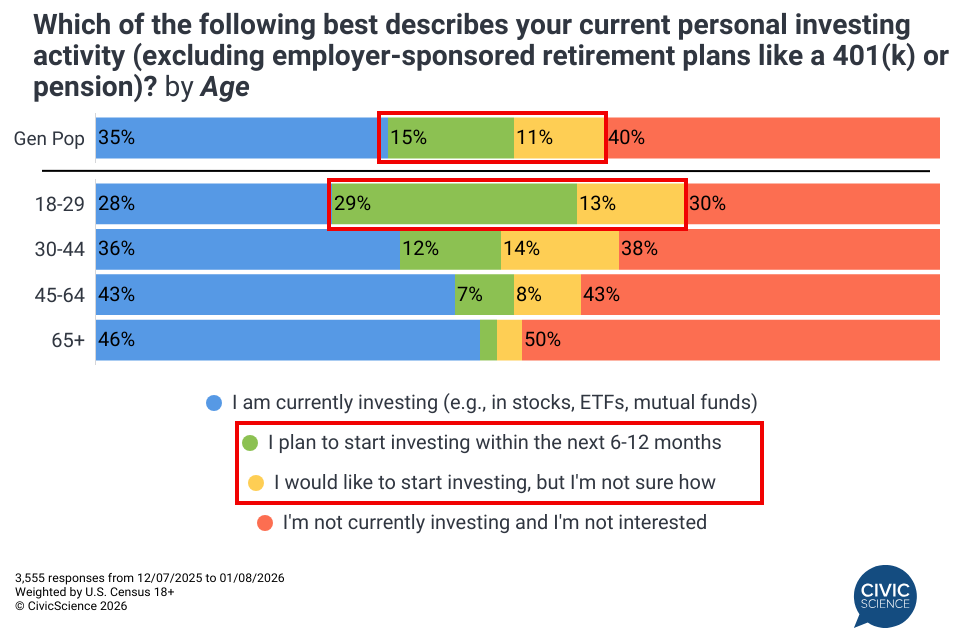
Given their younger skew, cryptocurrency, unsurprisingly, is a draw among these new investors. Those looking to start and those unsure how are more than twice as likely as current investors to say they’re planning to invest in cryptocurrencies.
Prospective Investors Present a Key Advertising Opportunity
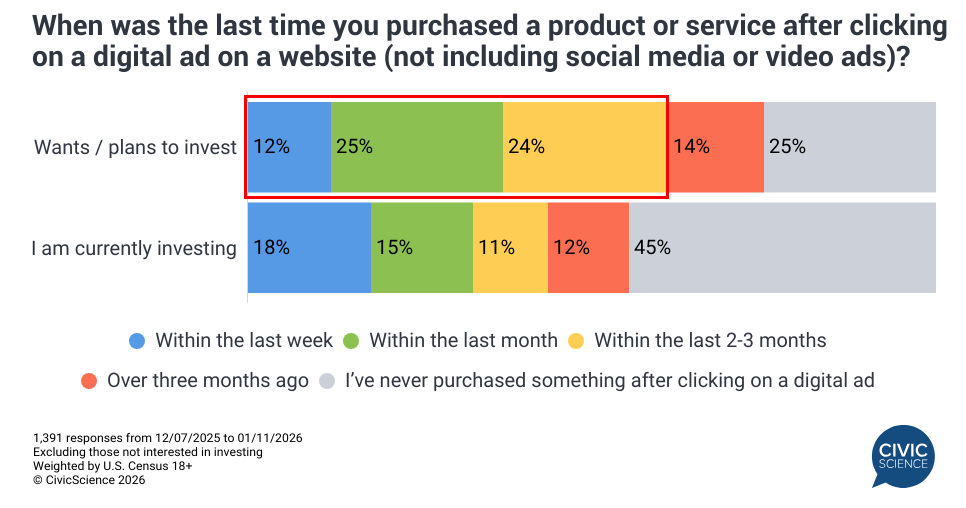
Consumer-declared data from CivicScience highlights the strong opportunity financial advertisers have to capitalize on this investment intent. Data show that this segment of investment intenders, comprising both those planning to start within 6-12 months and those who want to start but are unsure of how to begin, is exceptionally responsive to website ads. Compared to current investors, members of this investment intent group are twice as likely to say website ads ‘most often’ lead them to finalize a purchase. This aligns with an additional survey, which finds that 37% of this segment reported making a purchase after clicking on a website ad in the past month alone. Just one-quarter say they’ve ‘never’ made a purchase after clicking on a website ad, far lower than current investors.
Where They Go to Research Financial Products
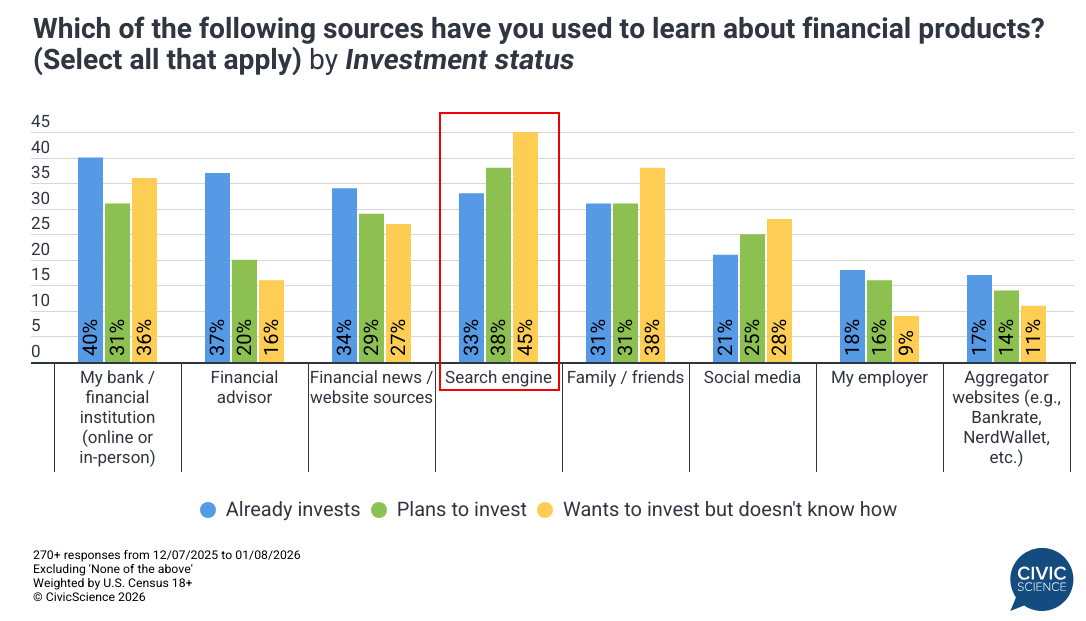
Another key way to understand those looking to start investing this year is where they turn when seeking information about financial products. Those with an interest in investing, and especially those who want to start but aren’t sure how, are most likely to report that they turn to search engines for research. They also over-index among current investors in turning to social media, which is unsurprising, given that these consumers are much more likely to be Gen Z. Conversely, they are less likely to look to their banks or financial news sites, which are the leading sources among current investors.
Meeting New Investors Where They Will Be
To reach this high-value audience, advertisers should look beyond traditional financial news sites, where these intenders under-index. Instead, forward-looking data suggests focusing on the top three lifestyle categories where they plan to increase their spending in 2026, which include:
- Travel & Leisure
- Technology & Electronics
- Health & Wellness
By meeting these consumers in non-financial contexts—and using the search and social channels they trust—brands can introduce investment products to a segment that is already primed to click and convert.
What Stresses Them Out Financially
Understanding the specific financial anxieties of prospective investors is essential for bridging the gap between interest and action. While managing living expenses is the primary source of financial stress across the board, those planning to invest in 2026 and those unsure how to start face distinct secondary pressures. These consumers are more than twice as likely as current investors to say improving their credit score is their leading financial stressor. Other sources of stress (e.g., managing debt, income, and job security concerns) are less common, but are slightly more pronounced among those who don’t know where to start on investing.
Additional survey data show that they also express concerns about saving for the future, with less than half (44%) of those planning to start investing this year being confident that they’re saving enough to live comfortably when they retire.
As the vanguard of 2026’s new investor class, Gen Z is redefining the path to market entry through a blend of crypto interest, retirement focus, and an exceptional responsiveness to digital advertising. Financial institutions and advertisers that prioritize relatable and informative digital outreach in lifestyle categories, such as travel and tech, will be best positioned to capture the loyalty of this motivated and research-oriented generation.