CivicScience clients and partners have access to our millions of daily survey responses, allowing them to generate actionable, forward-looking strategies. See what you’re missing here.
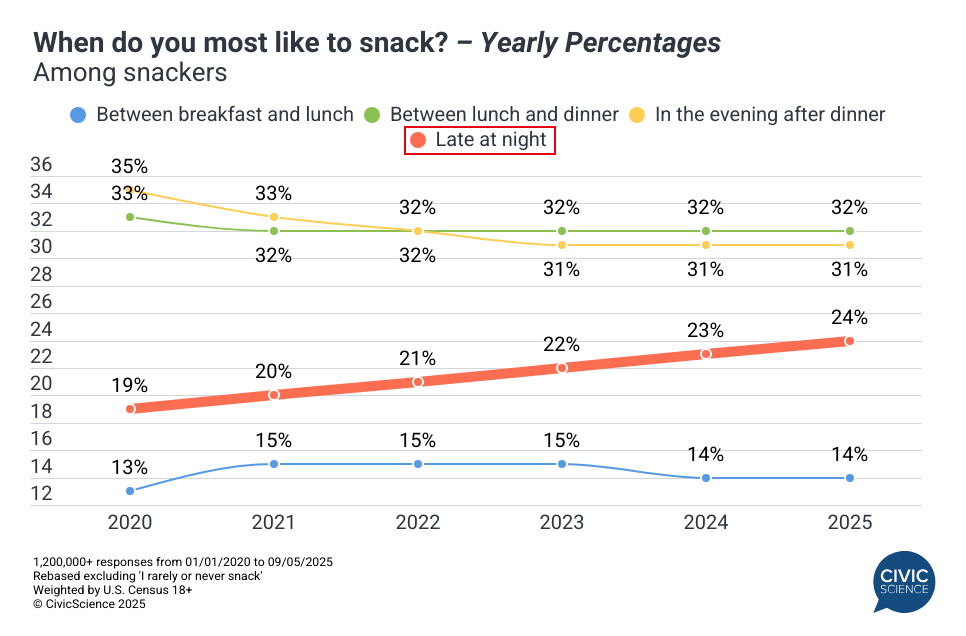
It’s well after dinner, late at night, and hunger strikes – do you reach for a snack? If so, you’re among a growing segment of Americans indulging in late-night bites. A fresh look at CivicScience data from more than 1.2 million responses over the past five years shows that nearly one-quarter of snackers now prefer to eat late at night, a 26% jump since 2020. This comes as early evening after-dinner snacking has fallen by four percentage points over the same timeframe, hinting that snacking is happening later.
While late-night snacking unsurprisingly skews younger – with 18- to 29-year-old Gen Z adults nearly twice as likely as those 65+ to snack late (31% vs. 17%) – that 17% of older adults still represents a sizable share. Men and women, meanwhile, snack late at similar rates, but fully remote and hybrid workers lead the pack over in-person employees.
Let Us Know: Are you a late-night snacker?
Late Night Snackers Eat Fewer Meals
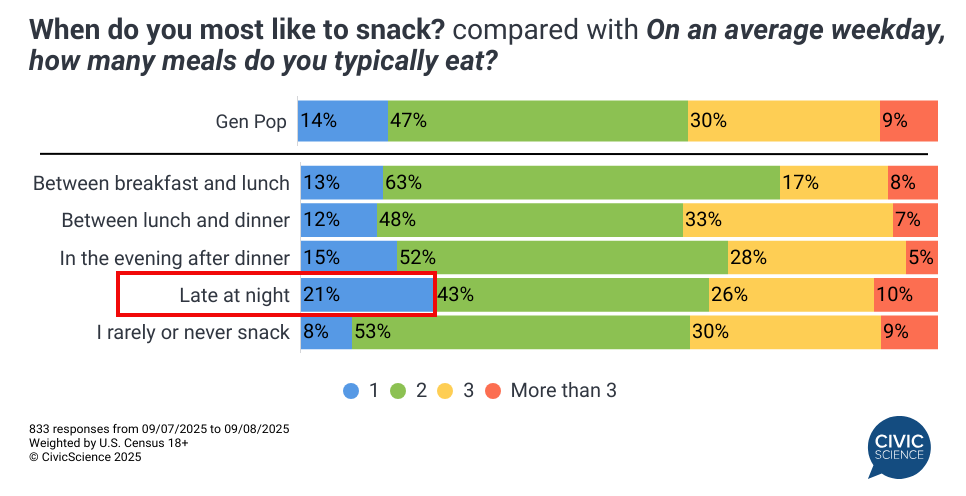
CivicScience data show that 14% of U.S. adults report eating one meal on a typical weekday. Among late-night snackers, that number rises to 21%. This suggests that late-night snacking may often follow a day of fewer meals, pointing to hunger patterns shaped by lifestyle or schedule.
It’s also important to note that those who snack late at night are at least 12 points more likely than those who snack at other times or not at all to say they’ve been feeling stressed over the past week or so.
What Snackers Are Craving
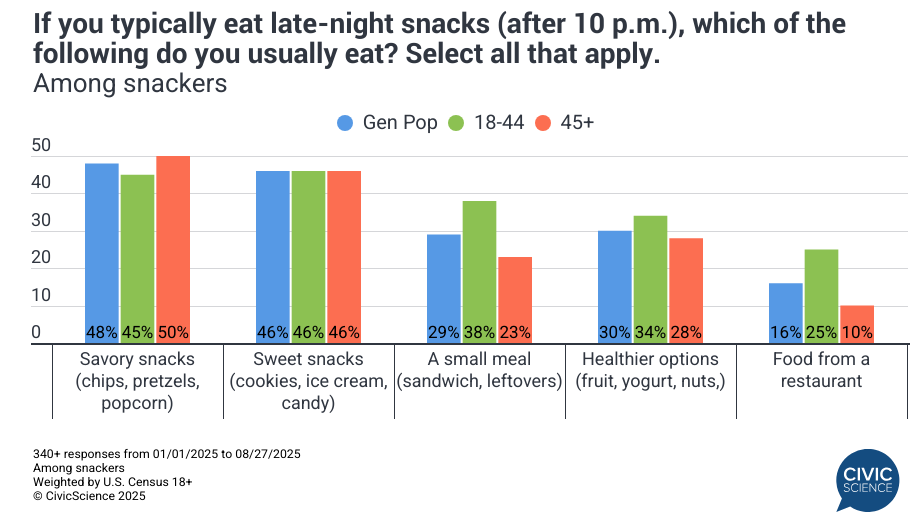
A dive into the food late-night snackers typically go for reveals an equal percentage tend to grab sweet snacks, regardless of age. Beyond the standard savory or sweet snacks, it’s the younger late-night eaters who command the spotlight. These consumers outpace their older counterparts and the average American by notable margins in opting for a small meal and food from restaurants—aligning with recent CivicScience data showing younger consumers are much more likely to be late-night diners and shoppers. But it’s not just chips and fast food; these younger snackers are also most likely to eat healthier options, too.
Restaurant Diners Seek More Late Night Options
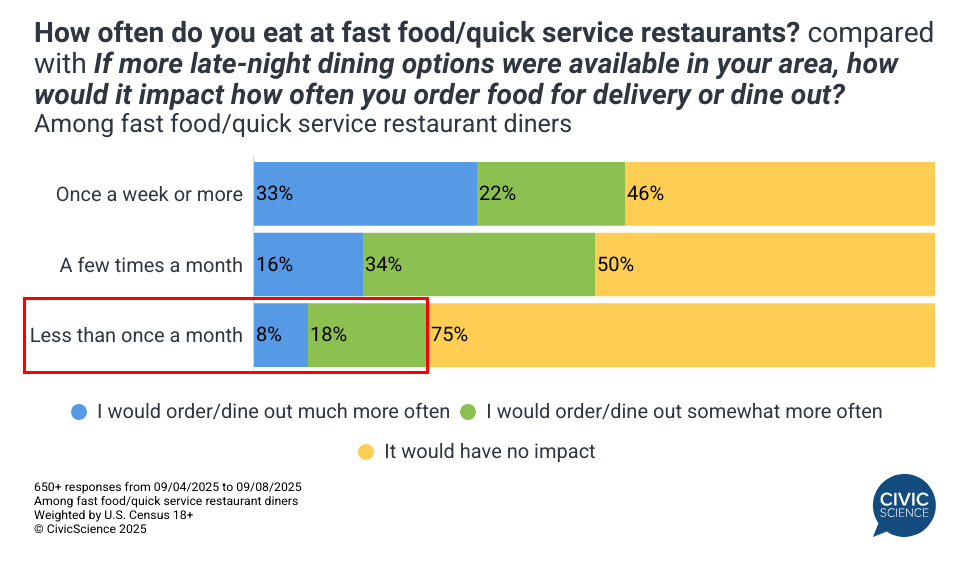
The pressures of an uncertain economy, tariffs, and a tightening job market have led many consumers to cut back on dining out. With the QSR industry needing every advantage it can get to woo cost-conscious customers, CivicScience data suggest it may be advantageous to make a play into late night as after hours snacking trends up—46% of U.S. adults who typically order food or dine out, say they would order or dine out ‘somewhat’ or ‘much more’ often if there were more late-night dining options were available in their area.
Unsurprisingly, more late-night options are particularly enticing to those who already eat at fast food/quick service restaurants frequently. But as much as one-quarter of less frequent (less than once per month) diners would also be more inclined to order food or dine out late at night.
Take Our Poll: How often do you go to a restaurant after midnight?
Late-night snacking is no longer limited to a small segment, as shifting routines, stress, and post-pandemic habits drive more Americans to eat after hours. By catering to this demand, restaurants can capture both loyal and infrequent customers while meeting a growing consumer need.