CivicScience has the world’s largest proprietary database of real-time declared intent, allowing brands to activate high-performing advertising that drives up to 80% better performance. See how our partners achieve superior marketing outcomes here.
The Masters, the first major golf tournament of the year, is set to tee off at Augusta National on April 9. Fresh consumer-declared data from CivicScience offers a glimpse into the audience, exploring not just who is planning to tune in, but why and how the sport’s evolving landscape is moving audiences to act well beyond the fairway.
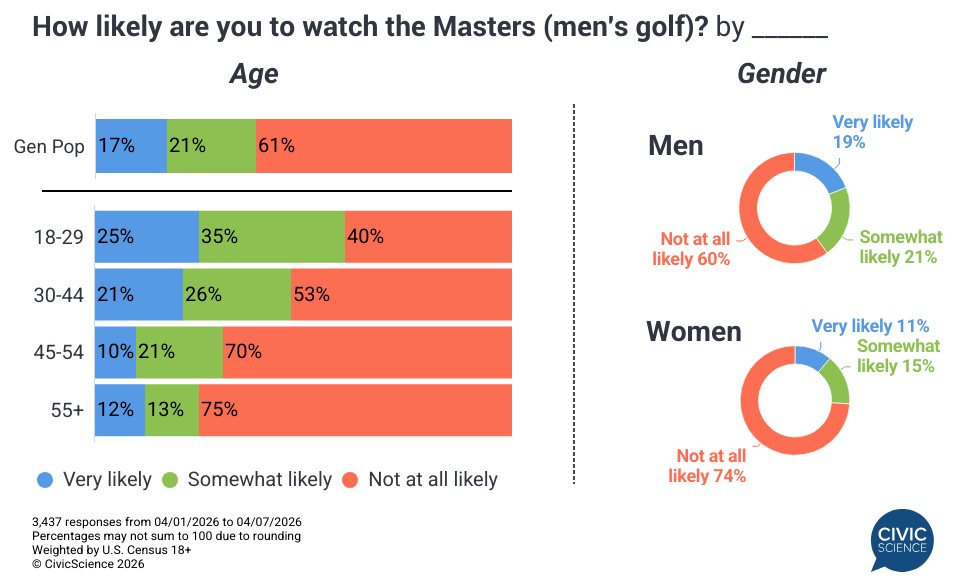
Who is planning to watch: 17% of U.S. adults tell CivicScience they’re ‘very’ likely to watch the Masters this year (and an additional 21% are ‘somewhat’ likely to watch). Those under 45, led by Gen Z adults 18-29, are the key age group to watch, with 25% saying they’re highly likely to watch. Additionally, nearly one in five men and 11% of women say they’re highly likely to tune in.
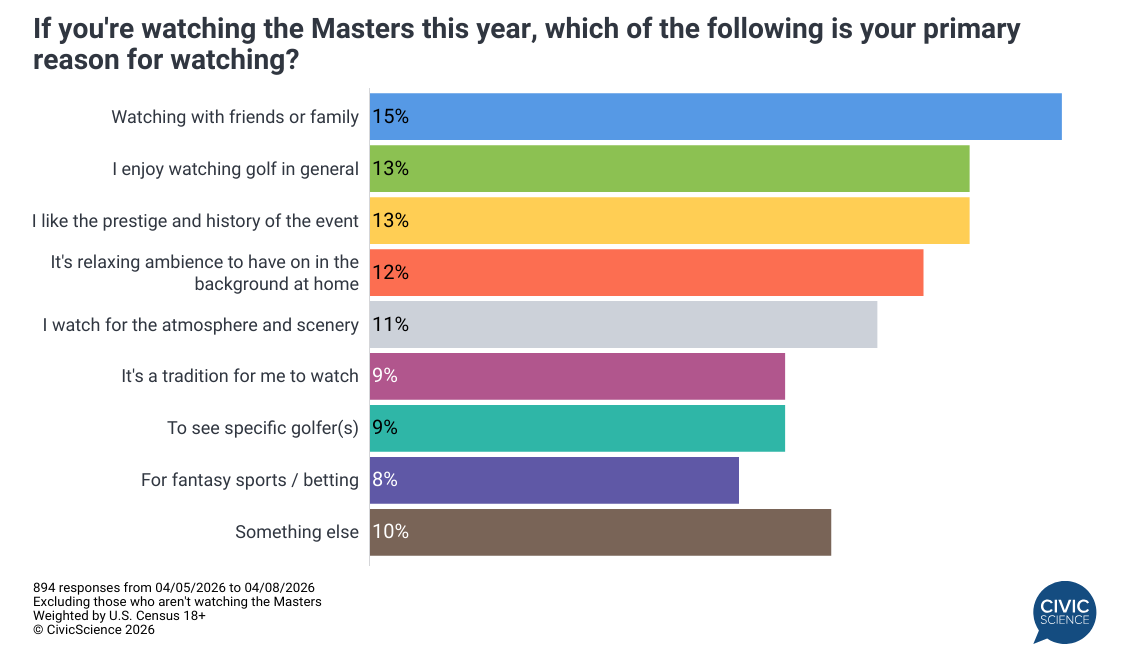
The “Why” behind tuning in suggests the Masters mean more than a sporting event: With no clear runaway winner among viewership drivers, the Masters holds a remarkably balanced appeal this year. Watching with friends or family (15%), a general enjoyment of watching golf (13%), and the prestige and history of the tournament (13%) are the narrow top three motivators. These motivations diverge by age, however: Gen Z is most likely to seek a social viewing experience, those aged 55+ value the history, and Millennials prioritize the tournament as a relaxing background.
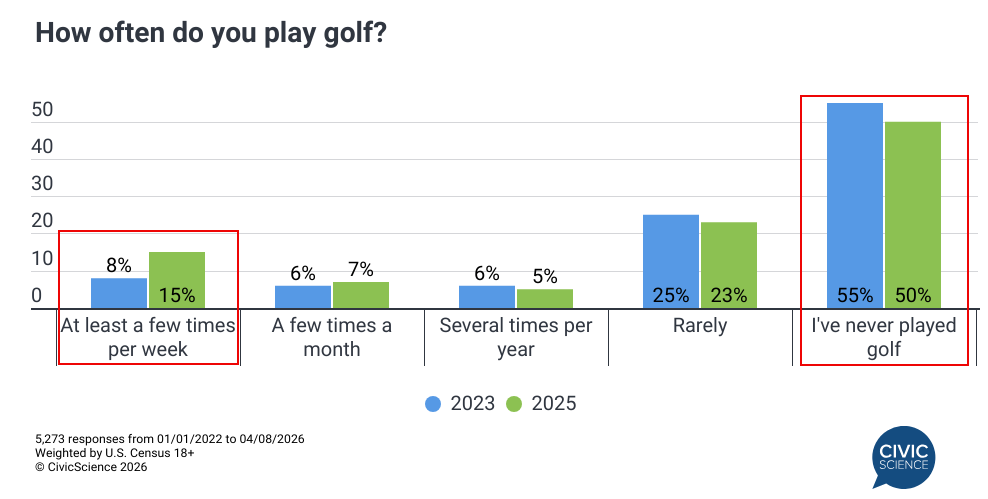
Zooming out on the big picture of golf today: This year’s Masters Tournament comes as the percentage of American adults who golf at least a few times per week has nearly doubled from 8% in 2023 to 15% so far in 2026. It’s not only that Americans are golfing more often, more Americans are taking up golf in general – 50% now tell CivicScience they’ve played golf with any sort of frequency, which is up from 45% in 2023.
When it comes to watching men’s golf overall, roughly 4 in 10 U.S. respondents report they watch with some frequency. This includes a “Core” group (13%) who never miss watching a men’s golf event throughout the year, and a more “Casual” segment (26%) who typically only watch the major tournaments or just the Masters. About six in ten, meanwhile, say they never watch men’s golf.
Additionally, the Netflix docuseries “Full Swing,” which follows professional golfers on and off the course, has shaped golf viewership for some Americans. CivicScience data finds that 7% of U.S. adults have been encouraged to start watching professional golf after watching the series.
The Masters (and the golf audience overall) is intent-rich, both in golf purchasing and beyond: The Masters typically marks the start of peak golf season – people are thinking about playing more and upgrading gear as the weather improves. That mindset naturally extends beyond the fairway into areas such as traveling, lifestyle purchases, auto, and discretionary spending. Here’s what the Core and Casual golf viewers in general are telling CivicScience about their upcoming plans and how they compare with each other and the average American:
- Golf equipment purchasing: Purchase intent for new golf equipment is exceptionally high, with 71% of Core golf viewers and 65% of Casual viewers at least ‘somewhat’ likely to buy new gear in the next six months – significantly outpacing the 29% among Gen Pop.
- Summer Travel: Golf viewers are significantly more likely than average to have summer travel plans, with 89% of Core and 95% of Casual viewers already planning summer travel, compared to 64% among Gen Pop. When it comes to their furthest trip of the summer, Core viewers are more likely than Casual viewers to say their furthest summer travel will be within their own state. Conversely, Casual viewers are more likely to say their furthest summer trip will be out of state and in a different region of the U.S. than their own.
- Used Car-Buying: Just 10% of U.S. adults tell CivicScience they’re ‘very’ likely to buy or lease a used car within the next three months. Casual golf viewers nearly double that at 19%, but the strongest intent lies among Core viewers, with 42% reporting a strong likelihood of soon acquiring a used vehicle.
- New Product Discovery: Core viewers are more likely than Casual viewers (and twice as likely as Gen Pop) to say their online discovery of new brands or products typically happens on brand/retail websites. Casual viewers, on the other hand, lead in reporting their online discovery usually comes from online marketplaces, such as Amazon.
Golf is the lens here, but the capability is universal. Brands across every category can use CivicScience’s consumer-declared data to define and reach their own precision audiences — whether that’s a core enthusiast, a casual browser, or a high-intent buyer — and activate them across targeting, lift studies, and acquisition campaigns.
Every April, Augusta sets the tone for the season ahead, and not just on the course. The data behind this year’s Masters audience reflects a sport in the middle of a growth moment, drawing in new players and viewers whose impact looks to extend well beyond golf in the months ahead. That’s what makes this particular tentpole worth paying attention to not just through April 12, but throughout the rest of 2026.