CivicScience is a consumer analytics and advertising platform that captures over one million survey responses daily. Turn real-time data into actionable insights here.
The impact of screen time on kids’ development is far from a new conversation. Yet, with an increasing number of school districts banning phone use, the topic of how much time children spend in front of a screen is once again in the spotlight.
How do Americans feel about the screen time their kids are getting, and what are the key motivators behind setting screen time limits? Here’s what the latest CivicScience data shows:
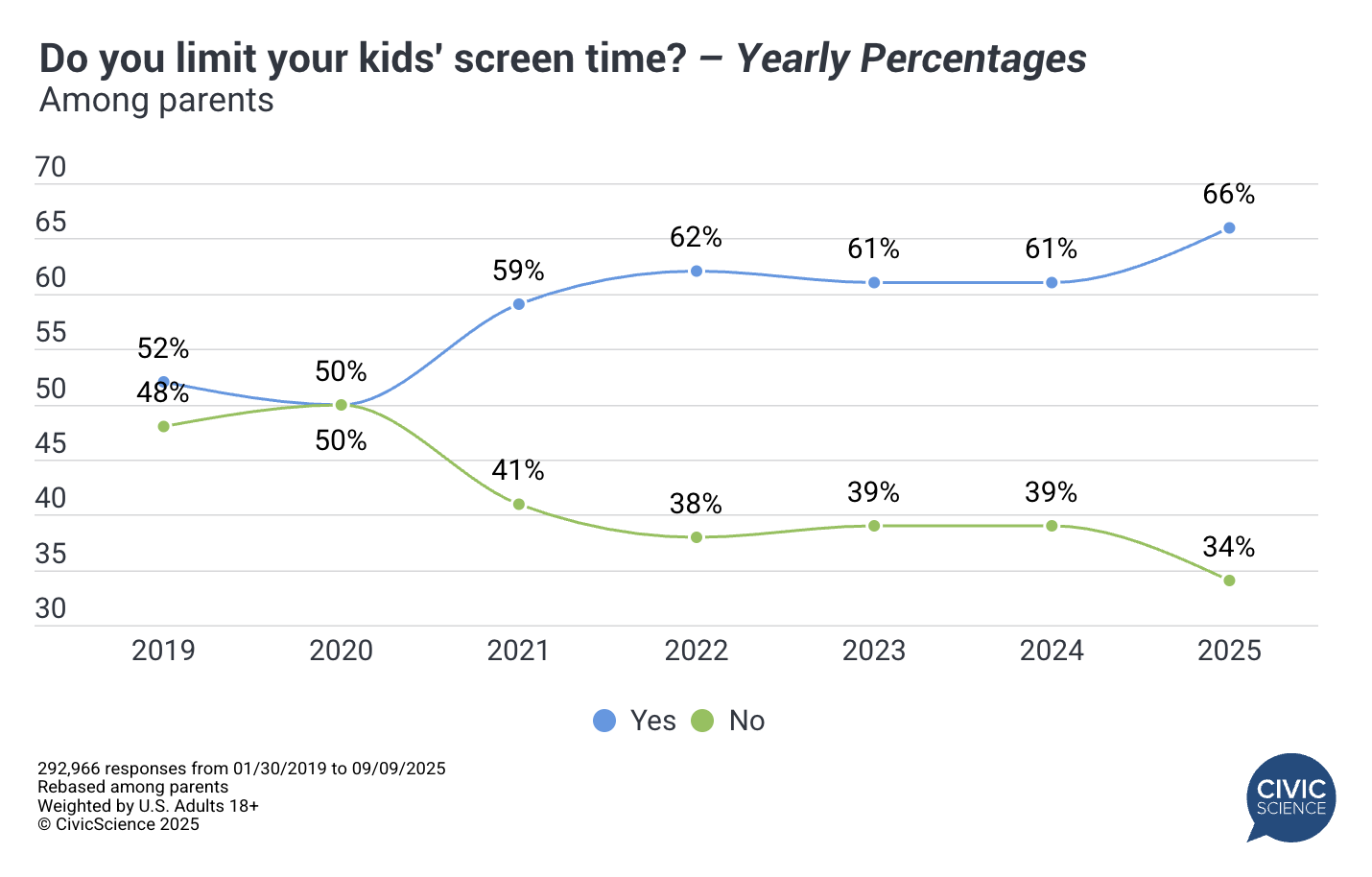
Currently, two out of every three U.S. parents say they limit their kids’ screen time in some way, up significantly from the 50% seen in 2020. Among them, the largest percentage (30%) say they limit their kids’ screen usage by time per day. Just under one in five (18%) only allow their kids to have screen time on weekdays for educational purposes, while 15% say their kids are only allowed to use screens on the weekend, and 3% do not allow any screen time at all.
Children’s age is a key factor when it comes to how screen time is monitored. Parents with children 3-5 years old are the most likely to limit screen time, with 85% indicating that this is part of their routine. This narrowly outpaces parents with children aged 6-11 years who limit how much time their children spend with a screen (84%). Even 85% of parents with children 0-2 years old also limit screen time, demonstrating how an awareness of screen usage is a part of life even for parents of the youngest kids. Meanwhile, parents of teenagers (aged 12-17) are by far the least likely to limit screen time (58%).
Let Us Know: Do you set screen-time limits for yourself?
Exploring a World Offline
Fresh data show that those who prioritize less screen time for their kids may be doing so to cultivate more in-person connections.
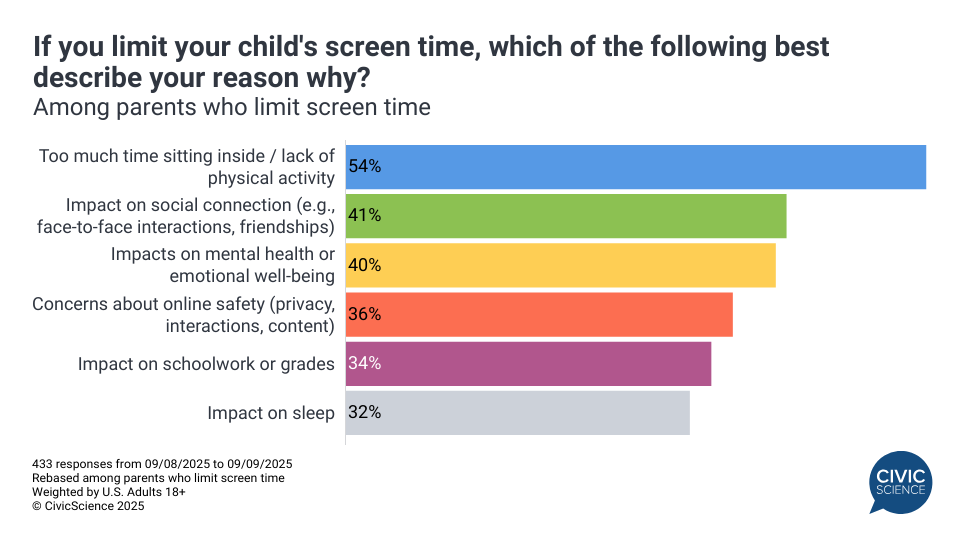
When asked directly, the largest group of parents (54%) said that ‘spending too much time inside and a lack of physical activity’ were the main reasons for choosing to limit how much time their kids spend in front of a screen. The impact on mental health and social connection came in second and third.
Parents who curtail their kids’ screen time are also more likely to prioritize activities outside of the house–such as going out to see a movie—as opposed to staying at home. This demographic is also more passionate about traveling for pleasure, another activity that requires interacting with the outside world.
Parents’ Own Screen Time and Device Addiction Are Key Factors
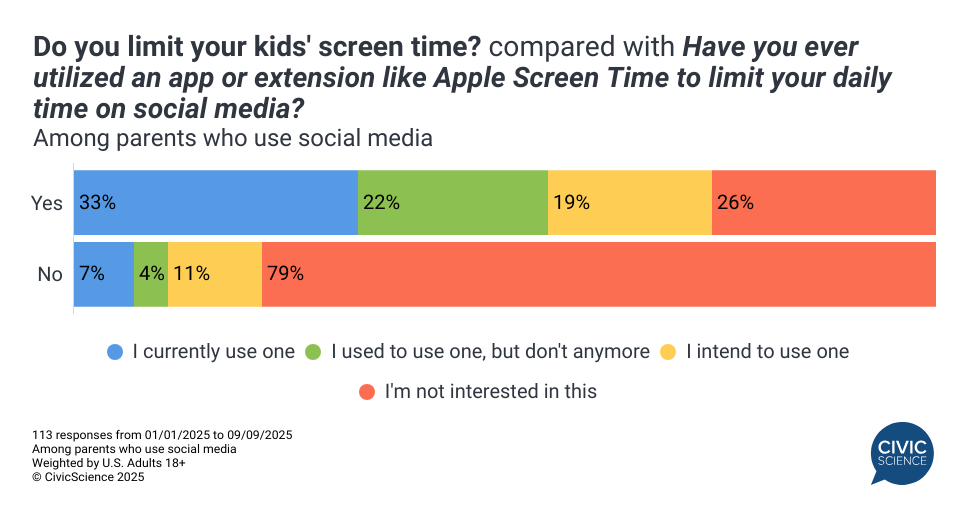
As the data show, parents aren’t just trying to crack down on their kids’ fun. One in three social media-using parents report they are currently using an app or extension (such as Apple’s Screen Time) to limit their own personal social media scrolling, while another 19% plan to do so.
This may be in part because those who limit their kids’ screen time are also more likely than non-limiters to consider themselves ‘somewhat’ or ‘very’ addicted to their digital devices (58% to 50%, respectively). This suggests that they know the perils of getting too attached to a screen and may be doing what they can to prevent the same level of dependency in the next generation. It also highlights why ‘too much time sitting inside’ was the biggest motivation for parents looking to get their kids’ screen time under control. Doing so isn’t just good for the kids; it could benefit the whole family.
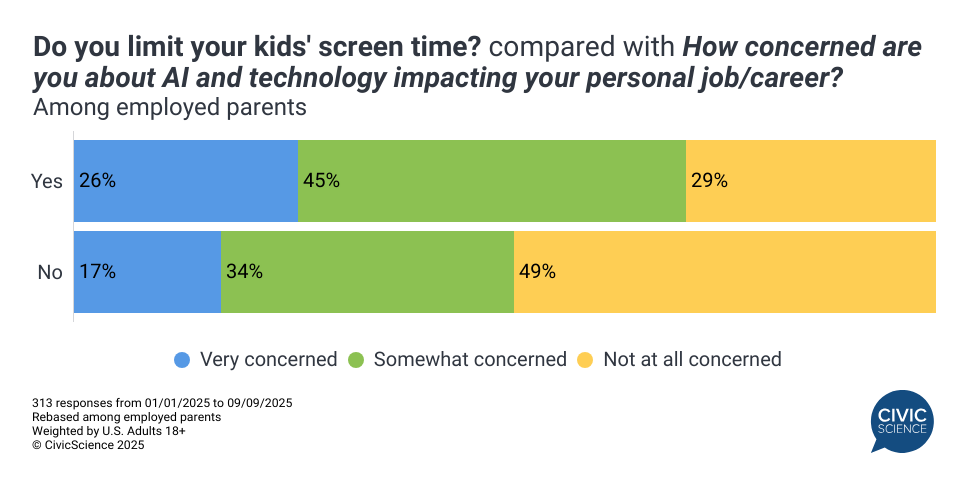
Beyond the general concern over screen time, parents who limit their kids’ screen time have other issues on their minds. Namely, those who limit the time their kids spend in front of a screen are more likely than non-limiters to be stressed. Specifically, this demographic shows the strongest concern about the impact of AI on their jobs and career outlook. With so much uncertainty, the decision to limit screen time–both for their kids and themselves–may be one of the few things they can control.
What Do You Think: Do you have screen time limitations before going to bed?
As it stands, parents are passionate about monitoring how much of the day is spent in front of a screen–both for their kids and for themselves. With stress and uncertainty top of mind for many of these screen time-sensitive parents, it seems that keeping an eye on screen usage isn’t just about cutting back, but about adding to life experiences that get them and their kids out of the digital world and into the real world.