CivicScience engages directly with consumers, collecting over one million survey responses daily, to turn real-time insights into high-performing advertising campaigns. See how leading brands use CivicScience to drive campaign performance here.
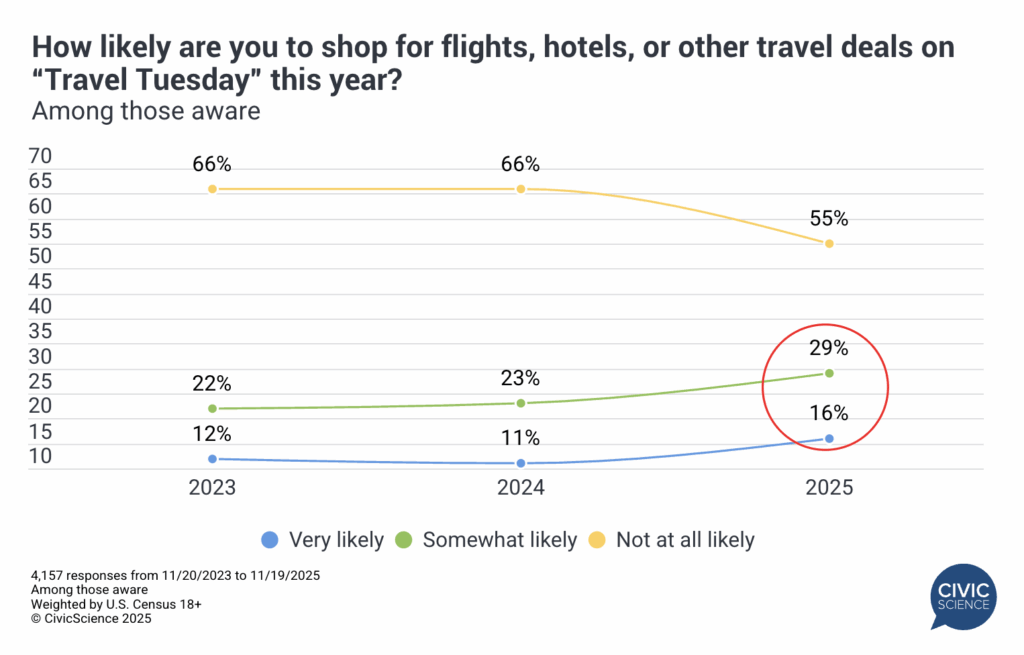
Thanksgiving weekend is prime time for many annual sales events, including the longstanding Black Friday and Cyber Monday. However, more recently, Travel Tuesday – which falls on the Tuesday after Thanksgiving (this year, December 2) – has emerged as a travel deal-centered event generating growing interest. CivicScience data show that among those familiar with the travel sales event, 45% say they’re considering shopping airline, hotel, and other Travel Tuesday deals – including 16% who are ‘very’ likely and 29% who are ‘somewhat’ likely to shop the deals. This represents a notable 11-point increase from last year, after intent remained steady from 2023 to 2024.
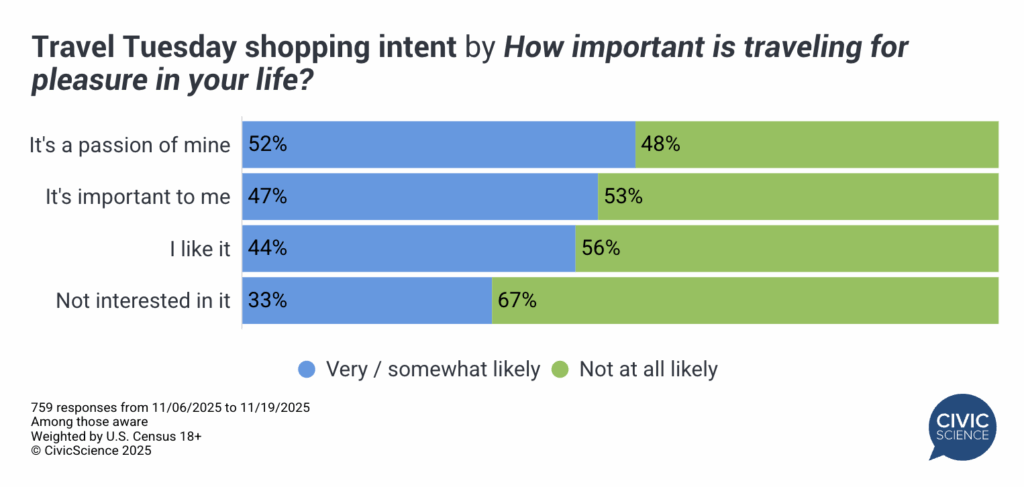
Travel Tuesday intent is strongest among Gen Z adults aged 18-29 and households with an annual expected income under $100K. And while it’s to be expected that this sales event might appeal most to those who prioritize leisure travel, CivicScience data show that even a third of consumers who say traveling for pleasure is ‘not at all’ important in their lives still express intent to shop the deals – a figure that increases with higher reported interest in leisure travel.
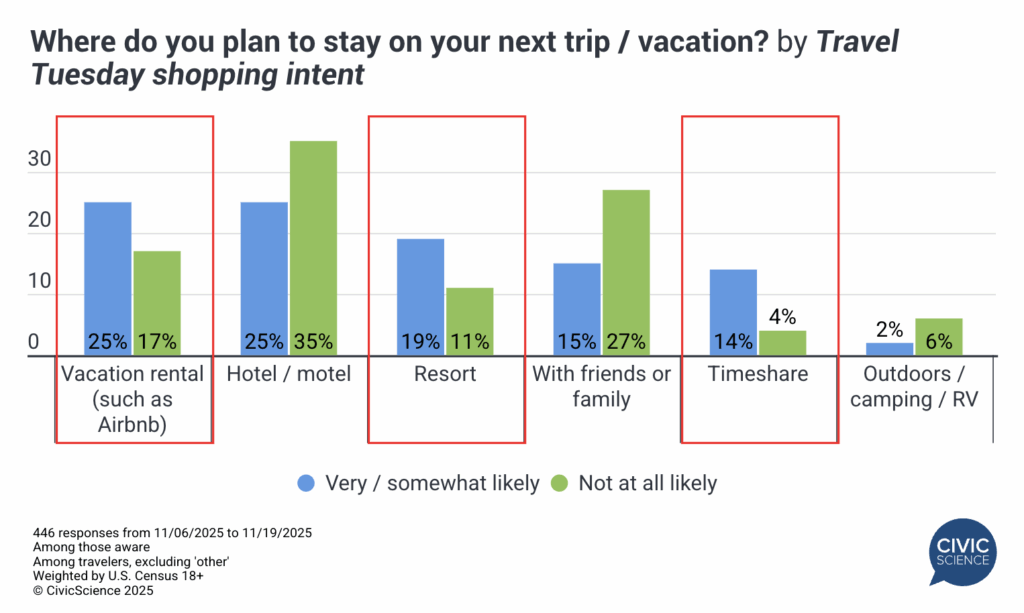
Those planning to shop Travel Tuesday deals also stand out in their upcoming accommodation preferences. They’re roughly twice as likely to plan a stay at a resort, nearly 10 points more likely to opt for a rental property, and far more likely to book a timeshare for their next trip. Conversely, those not planning to shop the sales event are about 10 points more likely to say their next stay will be at a hotel or motel, or with friends and family.
This suggests that Travel Tuesday shoppers may be using the event as an opportunity to score a deal to treat themselves. Additional CivicScience data support this, showing that Travel Tuesday intenders are over three times more likely to splurge on themselves (specifically on experiences), far less likely to plan on cutting back on travel due to rising prices, and are more than twice as likely to buy themselves a holiday gift this year.
Another reason they could be more likely to “splurge” on their travel plans is that they’re more likely to plan solo trips for leisure, which leads to increased flexibility in how they spend their budgets. While the majority of intenders plan to travel with others (54%), they’re nearly 20 points more likely to say they’re planning a leisure solo trip within the next 12 months (46% vs. 28% of those not shopping Travel Tuesday).
Travel Tuesday appears poised for a standout year, with heightened deal-shopping interest likely to propel travel plans into early 2026. And as CivicScience predictive data show, year-over-year improvements in well-being precede increases in travel intent one month later – including a subset of consumers who appear to lean on travel as a form of self-care. As well-being continues to shift into 2026, travel could become an even more central outlet for consumers seeking both value and emotional recharge. In that context, Travel Tuesday stands to play a dual role: a savings opportunity and a spark for the next wave of leisure planning amid persistent economic uncertainty.