CivicScience engages directly with consumers, collecting over one million survey responses daily, to turn real-time insights into high-performing advertising campaigns. See how leading brands use CivicScience to drive campaign performance here.
With Christmas just three days away, the holiday shopping window is closing in on its final hours. CivicScience’s ongoing holiday tracking shows that, as of the end of last week, 60% of shoppers were at least halfway done with their holiday shopping, an increase of eight percentage points from the week before.
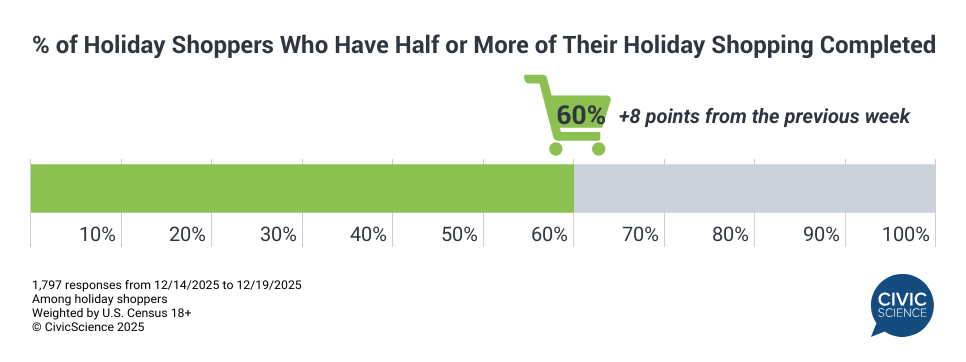
With less than half of shoppers making last-minute decisions on their holiday shopping, now is the time for brands and advertisers to reach these under-pressure consumers before they buy. Here are three key insights to know this week about the holiday season and how to reach those still checking off their lists:
1. More Americans Will Spend ‘Less’ on Holiday Meals This Year
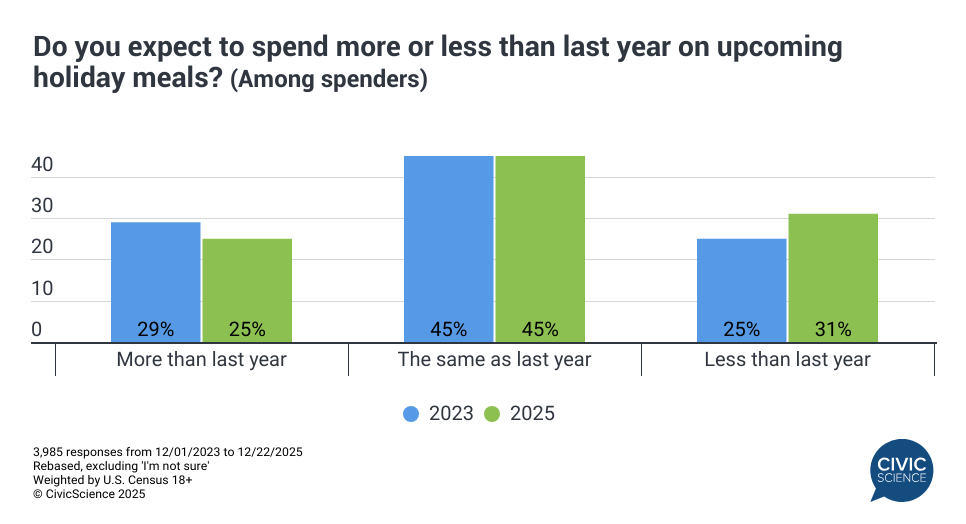
Currently, 25% of Americans with solidified holiday meal plans say they will spend ‘more’ on those holiday meals this year than they did in 2023–a four percentage point decrease. Meanwhile, 31% plan to spend ‘less,’ an increase of six percentage points since 2023 and a strong suggestion that shoppers’ finances look tighter in 2025 than they have in recent years.
Those who are spending ‘more’ on holiday meals this year are also spending more on their holiday shopping overall. This does come with a caveat, however: Those increasing spend on holiday meals lead the way in reporting they’re ‘more’ likely to use Buy Now, Pay Later services for holiday shopping this year. These consumers are the most comfortable with their current level of debt, but they aren’t shying away from adding to it to keep the holiday cheer on schedule.
2. Premade Holiday Meals Appeal to Stressed Shoppers
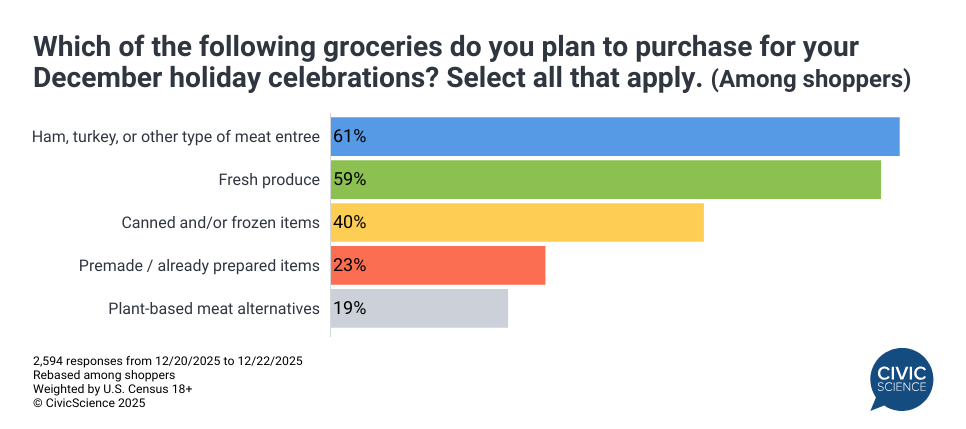
Speaking of holiday meals, when it comes time to purchase groceries for those meals, meat entrees and fresh produce are the most common items these shoppers plan to stock up on at the grocery store. This may be linked to the fact that 41% of respondents are cooking their holiday meal entirely from scratch, while 39% will do a mix of home-cooked and pre-made dishes.
Although those buying an entirely premade meal are in the minority (20%), this group is the most likely to report feeling stressed over the past week. And while they lead in being at least halfway done with their holiday shopping, opting for a premade holiday spread may help alleviate any last-minute pressure.
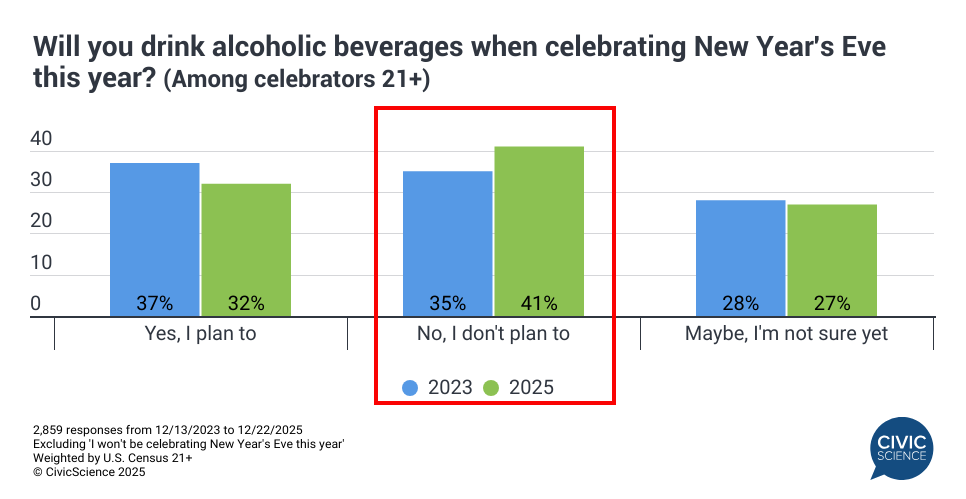
3. Many Will Opt to Stay Home and Forgo Alcohol for New Year’s Eve
Americans who don’t have to work are planning on a low-key New Year’s Eve this year, as 38% say they have no plans and 30% plan to stay home with family. Thirteen percent report they’ll attend a party, while 10% say they will host one, compared to just 4% who will head to a bar or club and 6% who say they’ll be doing something else. Those who are hosting or going out to celebrate skew younger. However, finances also play a role, as those making $50K or less lead the way in not having plans for the evening.
It’s worth noting that, among drinkers, while those hosting a New Year’s Eve party this year lead in sober curiosity, those staying home are the least curious about cutting alcohol from their lives. And as Dry January looms, the data also show 41% of those celebrating New Year’s in any fashion do not plan to drink alcohol to celebrate, an increase of six percentage points from 2023.
With the December holiday season reaching its final stretch, CivicScience will continue to stay on the pulse of consumer trends that brands, media companies, and advertisers will want to watch as we head into 2026.