CivicScience has the world’s largest proprietary database of real-time declared intent, allowing brands to activate high-performing advertising that drives up to 80% better performance. See how our partners achieve superior marketing outcomes here.
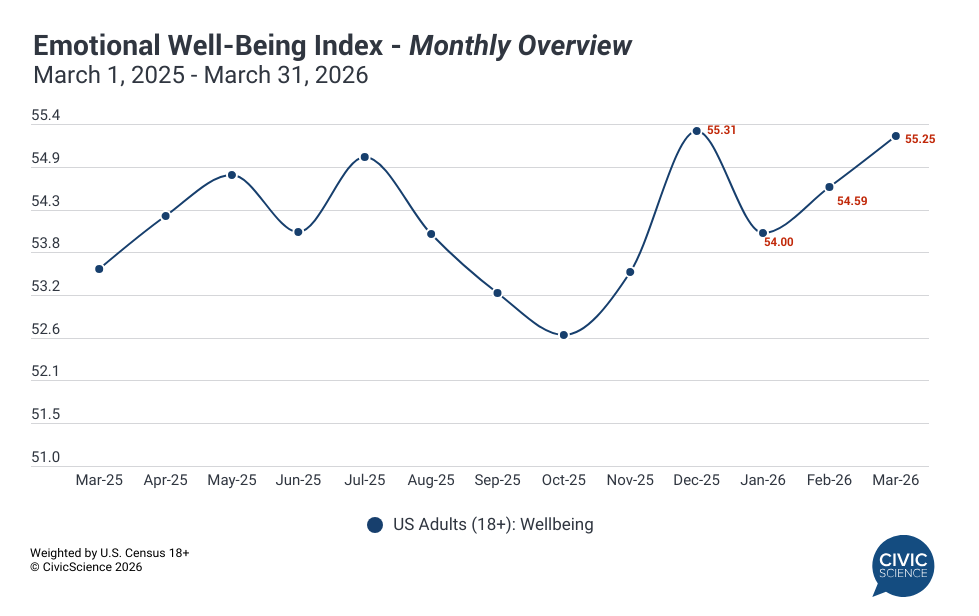
Each month, CivicScience data demonstrate how well-being shapes consumer spending intentions. The CivicScience Well-Being Index (WBI) offers a deep dive into the well-being of Americans aged 18+, delivering real-time insights for brands, media publishers, and advertisers looking to understand how intangible feelings translate into tangible spending.
The latest reading through the end of March 2026 shows that well-being among U.S. adults rose for a second month, increasing by 0.66 points to 55.25. This reflects a typical seasonal bump in well-being around this time of year, likely driven by improving weather and anticipation for upcoming travel; however, this time last year was an outlier, likely due to the impact of Trump’s tariffs.
This increase was led by adults aged 18-34, with emotional well-being rising 1.42 points. This bump was also supported by adults aged 35-54, who saw a 1.17-point increase in well-being. Conversely, older consumers saw a reversal in momentum. Despite leading the charge during February’s uptick, adults aged 55+ experienced a 0.45-point decline in well-being this month. However, this dip was not significant enough to offset the gains seen among younger age groups, keeping the overall national trajectory in positive territory.
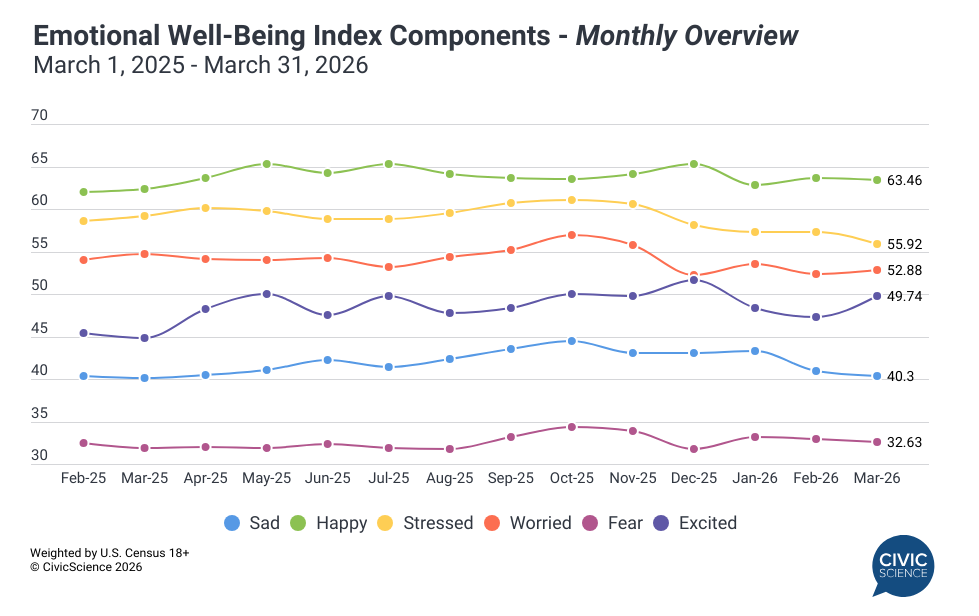
A look at the individual components of the WBI reveals a mix of shifts that ultimately continued the increase in well-being. The majority of negative emotions decreased for the second month in a row, led by stress (1.33 points), followed by sadness (0.67 points) and fear (0.34 points). Although worry rose by 0.5 points and happiness fell by 0.23 points, a substantial increase in excitement (2.43), likely linked to improving weather and anticipation for spring travel, ensured the overall WBI closed out the month on a high note.
In March, well-being continued its slow uptick, led by adults aged 54 and younger. A seasonal boost from improving weather and anticipation for spring travel helped lift Americans, even amid the ongoing conflict with Iran, as negative emotions continued to decline. For now, that appears to be enough to offset potential negative impacts from global events. Of course, feelings can—and do—change on a dime. As prices climb and the news cycle evolves hour by hour, whether this momentum can last remains to be seen. For businesses looking to stay ahead of these shifts, real-time insights, like those available to CivicScience clients, enable brands to stay nimble in an ever-evolving consumer landscape.