This is only a glimpse of the data available to CivicScience clients. Discover more data.
Major League Baseball is fast approaching its official midpoint of the season with the Home Run Derby and All-Star Game coming next week in Atlanta. So far, this season has been quite successful in terms of viewership for the league, and that is showing no signs of slowing down. How will this early-season surge translate to one of MLB’s signature events, the All-Star Game?
Gen Z Fans Step Up to the Plate
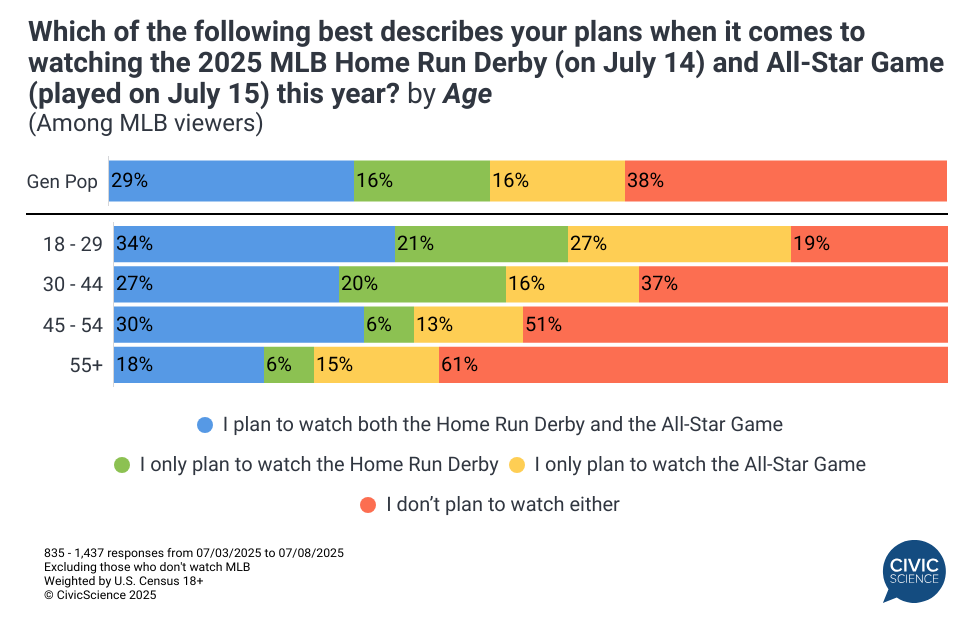
With the Home Run Derby, which will be held on July 14, less than one week away, CivicScience data suggest a majority of those who watch MLB will tune into at least one all-star event. But not all fans say they’ll be watching BOTH the Home Run Derby and the All-Star Game, though neither has a distinct edge over the other among planned viewers.
While CivicScience data from just prior to the start of the 2025 season showed signs of slipping engagement among 18- to 29-year-olds, new findings show strong intent to watch top events like the Derby and the All-Star game. In fact, the vast majority of Gen Z fans plan to tune in, including nearly two in five who intend to watch both events. However, interest falls off considerably among older age groups.
Let Us Know: Do you plan on watching this year’s MLB All-Star Game?
Why the All-Star Game Matters
The MLB All-Star festivities occur at a time with little competition from the other big four American professional sports leagues, offering a well-timed source of escape amid news churn and broader economic uncertainty. That may explain why viewers are more likely than non-viewers to report higher-than-usual stress levels over the past week (44% to 29%, respectively). But as additional data show, that stress isn’t stopping them from spending. Here are four more key insights to know about those who plan to watch either the All-Star events:

Cast Your Vote: Do you think James Wood will win the Home Run Derby?
Factors Shaping Viewership Have Shifted in Favor of Excitement
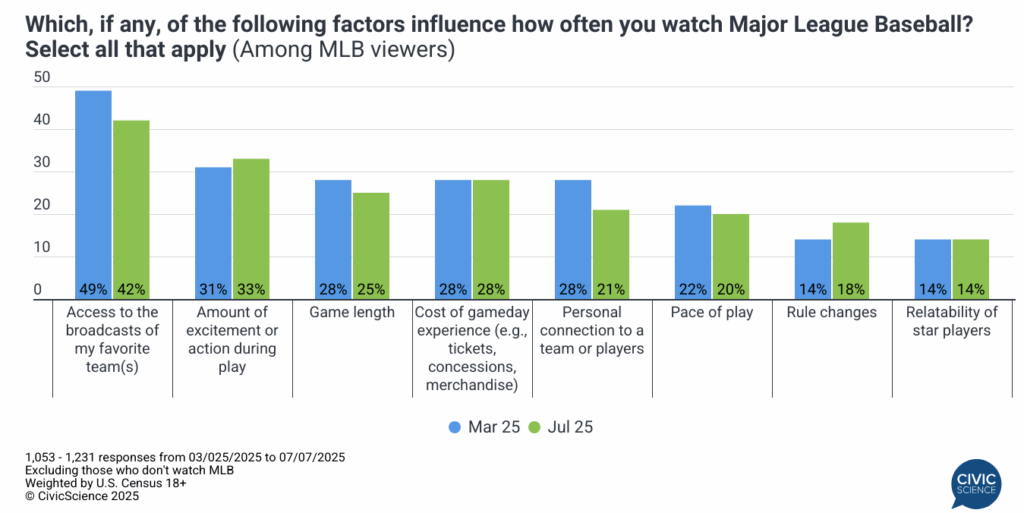
CivicScience previously polled MLB viewers about the influences that shape their viewership, with access to broadcasts, unsurprisingly, coming out on top. While this remains the leading influencer, the midseason has brought about several shifts. Amid a 162-game schedule, excitement and in-game action have become of greater importance to viewers, while access to broadcasts has become less of a concern. The influence of recent rule changes is also drawing more attention as the stakes rise heading into the second-half playoff push.
Use this Data: CivicScience clients use real-time insights like this to track what truly drives engagement and adjust strategies as consumer motivations evolve.
As MLB builds on a strong first half, the All-Star event serves as a noteworthy signal as to whether the league’s momentum with younger, engaged, and spend-ready fans can carry into the back half of the season and beyond. Additionally, in this era of economic volatility and consumer fatigue, sports audiences like these offer a vital touchpoint where brands, publishers, and advertisers can engage consumers who are still paying attention and ready to act.