We’re a hot mess, folks.
I wanted to write about my trip to Nashville and the wonderful people I met this week. Unfortunately, ugliness took that away.
To be fair, the number of Americans who celebrated, rationalized, finger-pointed, or otherwise made political fodder of the tragic murder of Charlie Kirk was a small minority. Social media and its algorithms create the illusion that these outliers are more prevalent than they are. The vast majority – including public figures and average people on both sides – said the appropriate things. Many said nothing, if only because their horror and denouncement go without saying.
At least that’s what I’d like to believe.
Shaking that belief are the selectively silent, those who expressed outrage or sympathy when Minnesota legislator Melissa Hortman and her husband were murdered in July, yet remained mum on Wednesday; Likewise, those who took time to denounce the events of Wednesday or flew their flags at half-mast, while having said nothing during Democrat-targeted atrocities. The selectively silent might all believe murdering someone in cold blood for their beliefs is abhorrent, but they certainly insinuate that one brand of it is less abhorrent than another. That’s not good enough.
These moments always beg the question of how we got here. Was it one divisive politician or another? Is social media or the click-chasing press to blame? Have those with power and wealth divided us to gain more? Or is this simply human nature, manifesting itself on some cyclical cadence? I personally think our foreign adversaries infiltrating our public discourse caused more of this than we realize, but I can’t prove it. Social science is futile in this regard.
We’ll never know whether we’ve always been at war with ourselves or simply made to believe we are, whether political tribalism caused our current state of moral decay, or if the latter caused the former. All we know is, somewhere along the line, any sense of shared orthodoxy or deal-breaking values across our citizenry faded. Incendiary political rhetoric and violence have become one of our last truly bipartisan traits. Every last one of us is culpable, if only because we find solace in believing we’re less culpable than someone else.
Most troubling is what we’ve embedded in our younger generations. This is the normal they know. It’s a main culprit in their shaky mental health, their social withdrawal, and radicalization among some. It explains a litany of things we see in our data, from the decline of alcohol consumption to the rise of AI “friends” to the power of nostalgia in media and brand marketing – a new type of nostalgia for seemingly simpler and safer times BEFORE THEY WERE BORN! At least the last example gives me hope they understand today’s normal is not normal.
I don’t know how we get ourselves out of this. We just need to be nice to each other until someone figures it out.
Here’s what we’re seeing:
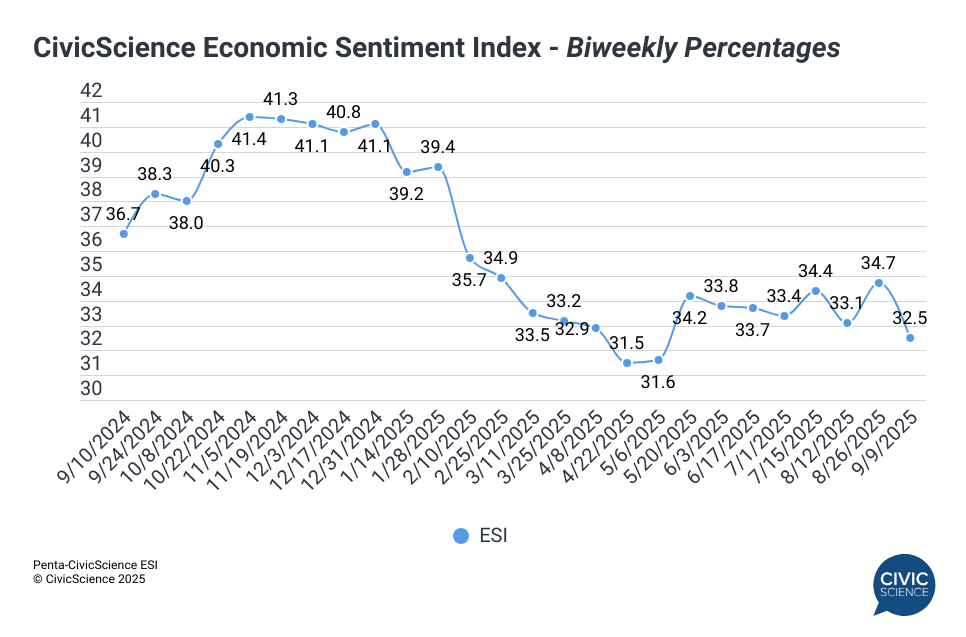
Consumer confidence reversed its short-term gains. Our Economic Sentiment Index plummeted this week, its biggest two-week drop in 8 months. Even the prospects of a likely rate cut next week didn’t assuage economic concerns about the housing market, the metric with the biggest drop in the latest reading. For the first time in my recollection, all five of our primary indicators fell by more than a full point. Notably, the data preceded Thursday’s news about hotter-than-expected inflation. But it does suggest people are feeling it.
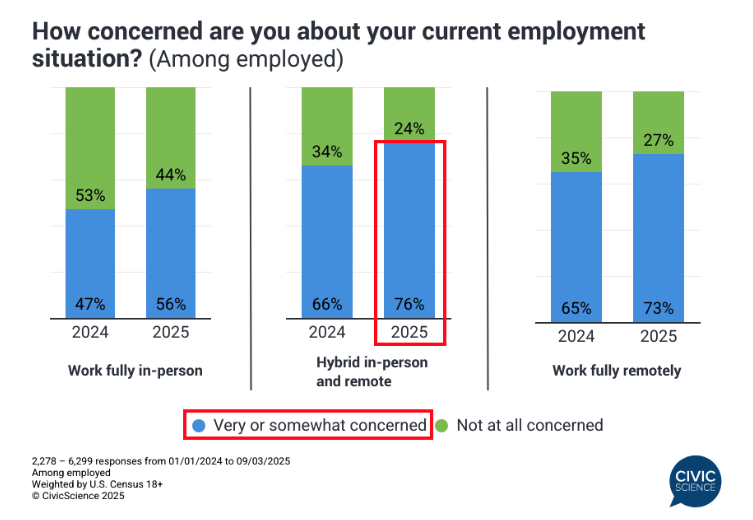
Meanwhile, job concerns among U.S. workers have surged over the past year, particularly among those in hybrid work situations. In our 3 Things to Know this week, we reported a major jump in job uncertainty among employed adults since 2024. White-collar types in hybrid and remote roles are the most concerned by far, though a majority of fully in-person workers are uneasy too. We also looked at Americans’ changing TV-viewing habits from a new dimension, namely the growing number of people who only watch clips of TV shows on social media. Finally, we found that a lot of Americans – three-fourths – believe brands try too hard to look cool on social media.
Vaccine skeptics are winning. The percentage of Americans who report being “very uncomfortable” with vaccinations has more than doubled since 2019, while those who are “very comfortable” dropped 20 points during the same time. When we looked at flu shots in particular, intent has remained steady since we first started tracking it in 2018, although there’s a significant disparity between higher and lower income groups. COVID vaccine intent has not fared as well. Barely over one in four U.S. adults say they plan to get the new version this fall, while 20% say they’d like to – they just don’t know if they’ll have access to it.

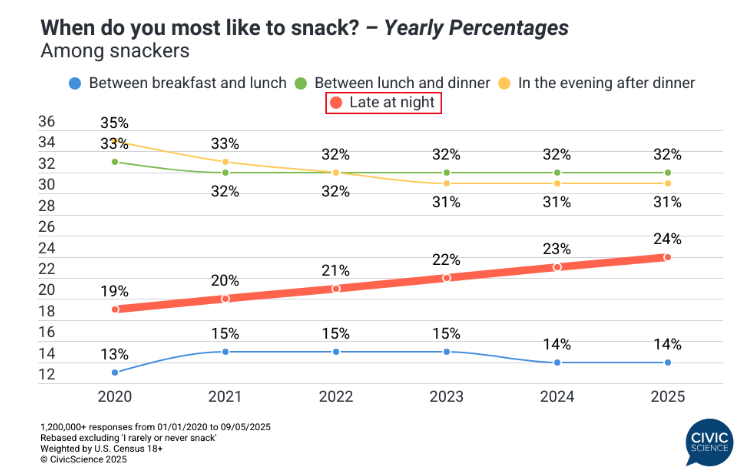
On a lighter note, late-night snacking has grown immensely in popularity in recent years. The number of Americans who raid the pantry or fridge after 10:00 p.m. has increased by over 25% since the beginning of the pandemic, while the percentage who say they snack during all other day parts has fallen over that same period. Those late-night snackers are more likely to say they eat fewer meals throughout the day, which is pretty self-explanatory. The 45+ crowd over-indexes in choosing savory snacks like chips or popcorn (guilty) while those 44 and under over-index in eating small meals and leftovers (because their metabolism still allows it).
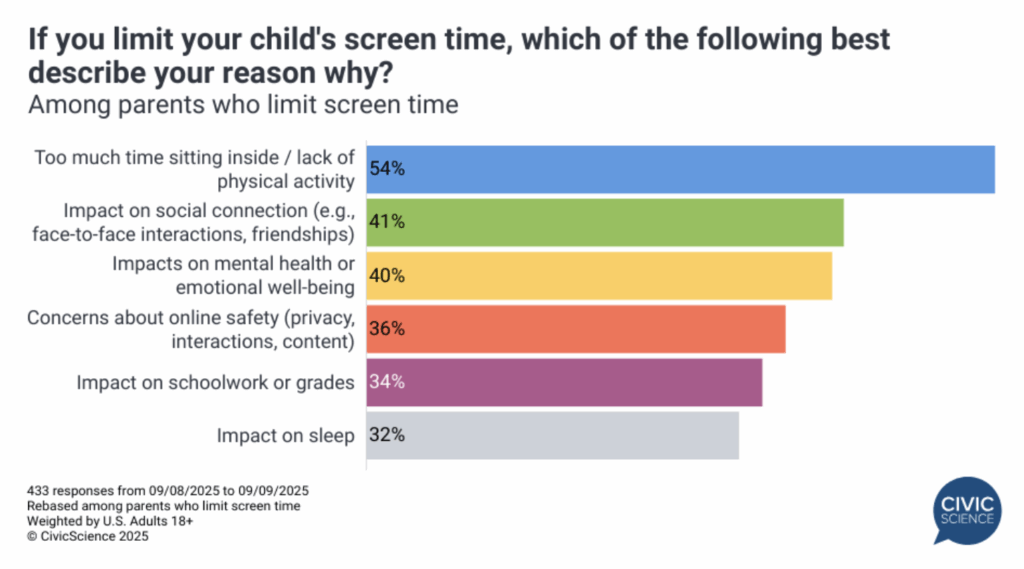
Parents are cracking down on screentime. Two-thirds of U.S. moms and dads say they put limits on how much time their kids can spend with a device or TV in their face, up from 50% in the COVID year of 2020 – when kids had little else they could do. Naturally, the rate is higher among parents of younger kids, peaking at 85% for parents of kids aged 3-5. Justifications range from concerns over lack of physical activity and socialization to schoolwork and sleep. Not wanting to let them see the news was not an answer option. It’s worth noting that parents who actively limit their own daily device use are much more likely to limit their kids’ time too.
Intent to watch NFL games this season is lagging among Gen Z. Perhaps because they’re only watching highlights on social media, only 22% of adults between the ages of 18-29 say they’re “very likely” to watch NFL games this year – well below the U.S. average of 43% and even below the 39% of Taylor Swift fans. In this well-rounded (er, oblong) profile of NFL fans this season, we also looked at the popularity of NFL RedZone (it’s popular), the game-day foods they prefer more than fans of other sports (pizza and tacos), and where they over-index as diners at various chain restaurants. Jersey Mike’s is a juggernaut among NFL sponsors. KFC is tops among non-sponsors.

The most popular questions this week:
Do you have a ‘green thumb’ when it comes to taking care of plants?
How fancy do you typically get with your wedding guest attire?
Would you be afraid to handle a nonvenomous snake?
How do you typically greet people in a professional setting?
Answer Key: I have whatever the opposite is; They absolutely should if they can; As fancy as I expect everyone else to be; Not scared, just grossed out; A hug (or bro-hug) if it’s appropriate and permissioned, otherwise a handshake.
Hoping you’re well.
JD