Where would we be without sports?
For starters, I’d hear from Noelle less often.
She called me on Monday, 10 minutes after news broke that Mike Tomlin was stepping down as Steelers coach. Comets come around more often than Steelers coaching vacancies. Tomlin had been the team’s only coach since Noelle was born, 19 years ago. We commiserated in our sadness over it, even though it was (hopefully) the best thing for Tomlin and the team.
Incidentally, it may have been the first time Noelle called me about something other than a streaming platform password since she left for college. It took the combination of fantasy football and, to a lesser but cliché extent, Taylor Swift, to get her hooked on the NFL. But here we are.
That’s just one tiny example of the countless ways sports affect lives, culture, and the economy. Bonds among families, friends, and even strangers form around our favorite teams or singular moments, creating a sense of community and a distraction from the harsh, chaotic, and lonely things in the world. The explosion of female sports fans over the past decade has taken it to an entirely different level.
It also explains why sports are such a financial juggernaut. Putting aside ticket sales and team merchandise, which will account for roughly $30 billion in U.S. revenue this year, secondary businesses like fantasy and online betting will do over $100 billion. Advertising and sponsorships will exceed $70 billion. The fifty biggest pro sports teams in the U.S., combined, are worth over $350 billion, with valuations continuing to skyrocket. It’s no wonder private equity is moving so hard into team ownership…unfortunately.
But nowhere is the power of sports more profound than in the media industry. Live sports have almost single-handedly kept linear television (plus cable and satellite) alive – at least until the big streaming platforms gobble up the media rights. Over one-third of U.S. households signed up for one or more streaming services last year, purely to access otherwise inaccessible sporting events. Many of those subscribers will cancel when an event or season comes to an end – but many will not. It’s the ultimate carrot to dangle when luring new users into your orbit.
As if things weren’t booming enough, 2026 will be a banner year in sports media. The Winter Olympics in February (on NBC/Peacock) and the World Cup this summer (on FOX) will boost annualized sports ad spending, gambling, and merchandise sales – not to mention tourism – to record heights, during the otherwise slowest times in the U.S. sports calendar.
There’s a reason – several of them actually – why so much of our work focuses on sports, studying sports fans, and advertising to them. They spend more money, even in non-sports-related categories, especially when their favorite teams are doing well. They’re more likely to be loyal not just to sports teams but also to brands.
And, selfishly, I simply – and deeply – love sports.
Here’s what we’re seeing:
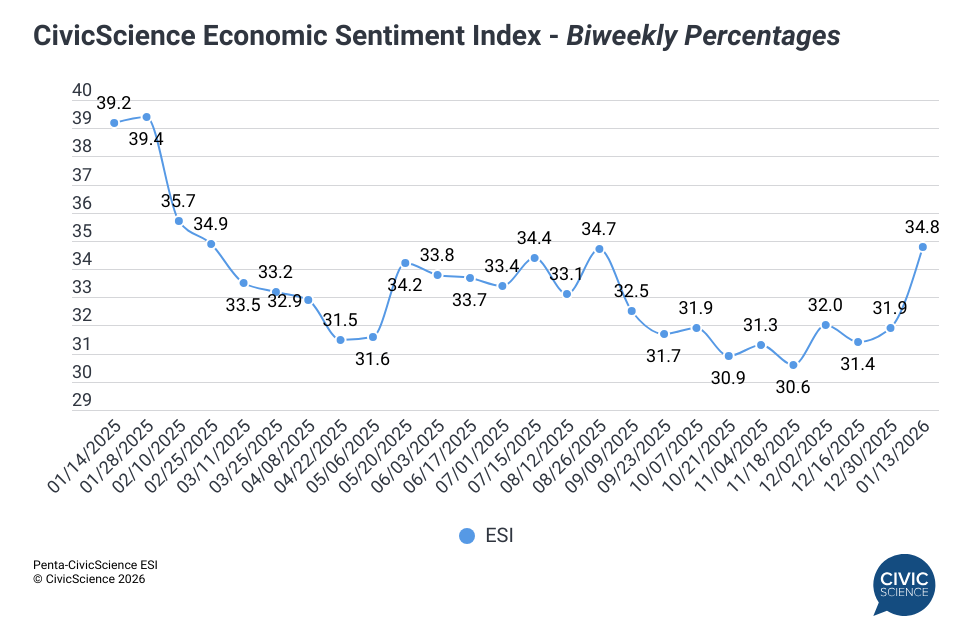
Consumer confidence started off the year on a heater. Our Economic Sentiment Index surged over the past two weeks, building on the modest gains we saw in the final reading of 2025. Numbers are still down significantly, year over year, but this represents the biggest two-week gain we’ve seen since the summer of 2022. All five major indicators increased by nearly two points or more, led by respondents’ outlook for their personal finances, the job market, and the housing market. It’s too early to know exactly why or whether it’s the beginning of a trend, but it certainly means something.
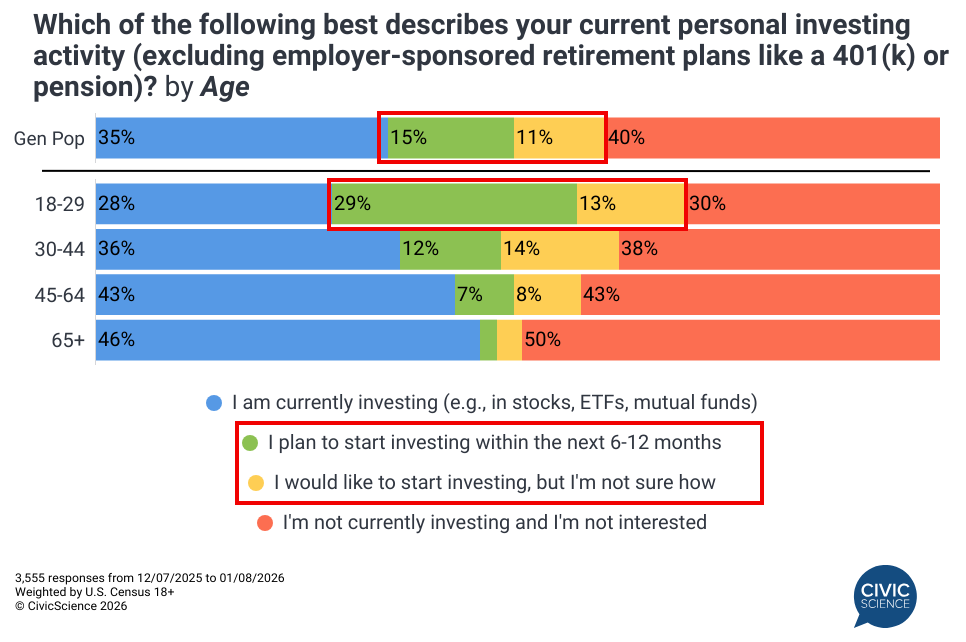
Gen Z is looking to jump into the markets in 2026. Hopefully they’re not buying in at the crest, but apparently, younger U.S. adults are thinking hard about jumping into the investment game. What’s interesting (and an opportunity for those in the investment trade) is the share of those “intender” Zs who want to invest but have no idea where to begin (see: financial literacy). Finding and targeting these newbies could be very lucrative for fintech firms, maybe not in the short term, but certainly over their full lifetime value.
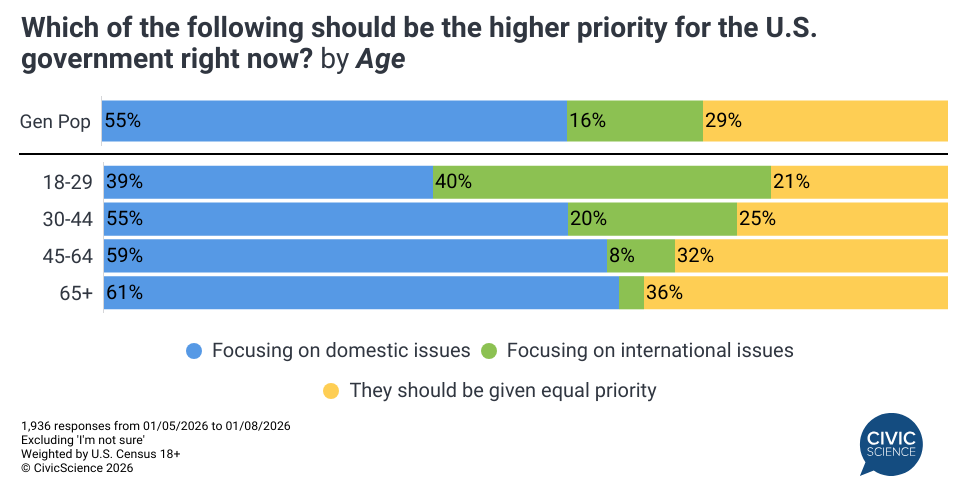
The coming tax season could bring welcome relief to retailers. In our 3 Things to Know this week, we looked at Americans’ early expectations for their April tax returns, finding an increase among those who expect a bigger refund check (which the Big Beautiful Bill will allegedly deliver). Unlike last year when the ill-timed Liberation Day stunted discretionary spending over the summer, a larger percentage of those expecting a refund plan to spend their money on home improvement, travel, and/or retail. We also examined the continued reticence among the majority of U.S. adults to convert to electric cars and why people (save for Gen Z) want the federal government to focus more on domestic issues than international ones.
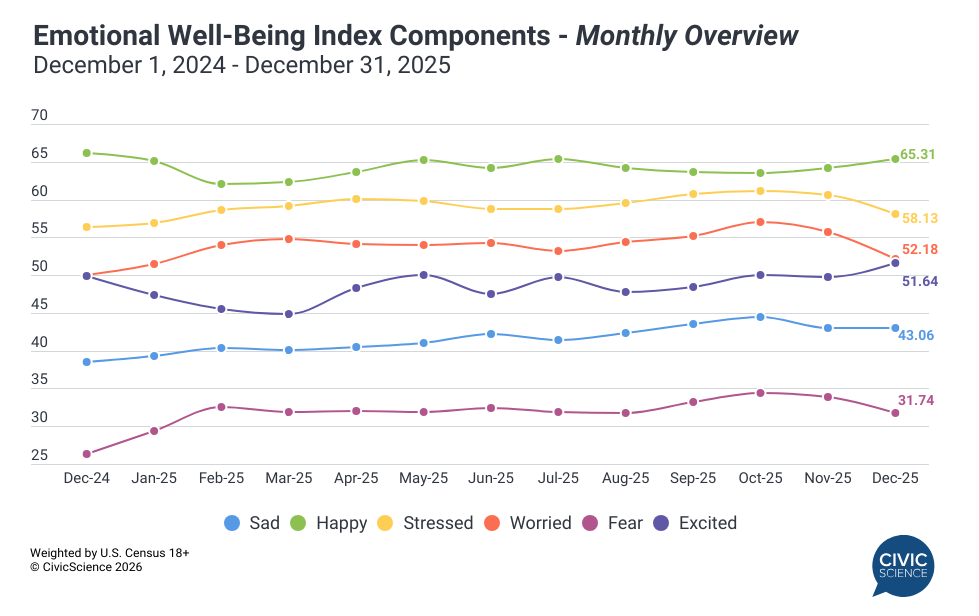
Improved emotional well-being is corresponding with a lot of the current economic optimism we’re seeing. After bottoming out in October, our Emotional Well-Being Index showed steady improvement in November and December. Our collective sense of fear and anxiety has been falling for the first time in well over a year. Time will tell if post-holiday credit card and BNPL bills, the unrest in Minneapolis, or the broader geopolitical landscape in early January slows the upswing, but Americans are definitely headed into the new year with some wind in their sails.
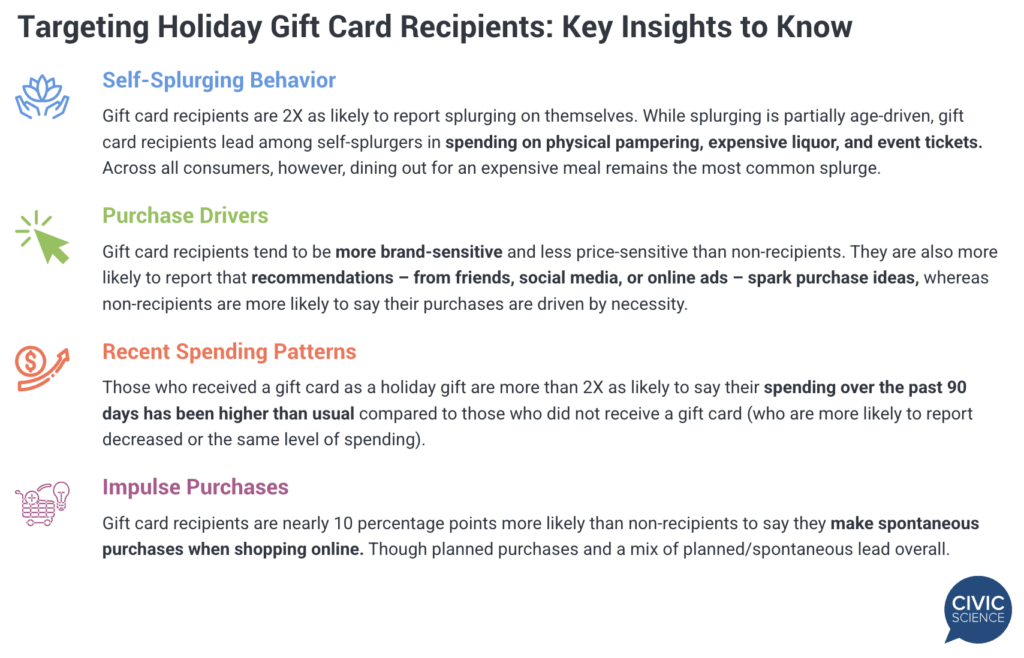
In related news, more Americans are planning to (or already did) spend their holiday gift cards on well-being categories. Over 56% of U.S. adults reported receiving at least one gift card (retailer, credit card, Amazon, etc.) during the recent holiday season, a four percentage-point increase over last year. Among recipients, the largest subsets plan to use those cards to purchase essentials (like groceries) or apparel, but both of those categories fell YoY. We saw growth among those planning to spend their gift cards on experiences (restaurants, travel, etc.), beauty, and health & wellness items. Here’s what you need to know about them:
More awesomeness from the InsightStore™ this week:
- Beyond Yoga is taking a formidable run at Athleta and Lululemon in the athleisure game;
- At CES last week, I joined a star-studded panel of people from Google, Roku, Samsung, and PWC, talking about the future of streaming TV. Check it out.
The most popular questions this week:
Do you think humans will walk on the moon again in your lifetime?
How concerned are you, if at all, about the quality of drinking water on airplanes?
Do you consider yourself an early adopter when it comes to new technology?
Do you ever feel judged by bartenders when ordering drinks?
Do you play a musical instrument?
Answer Key: That presumes we actually did it the first time (just kidding); Am I supposed to be? I never thought about it before. Damnit!; Not really; Not any bartenders I care about; Yeah, with the callouses on my fingers to prove it.
Hoping you’re well.
JD