CivicScience has the world’s largest proprietary database of real-time declared intent, allowing brands to activate high-performing advertising that drives up to 80% better performance. See how CivicScience partners achieve superior marketing outcomes here.
1. U.S. adults are changing their purchasing habits amid ‘shrinkflation’ in grocery stores.
The majority of Americans report seeing the effects of shrinkflation on their regular grocery trips, with 58% of U.S. adults reporting they have noticed smaller packaging without a drop in price on ‘several items,’ 26% noticing it ‘once or twice,’ and only 16% not noticing it at all.
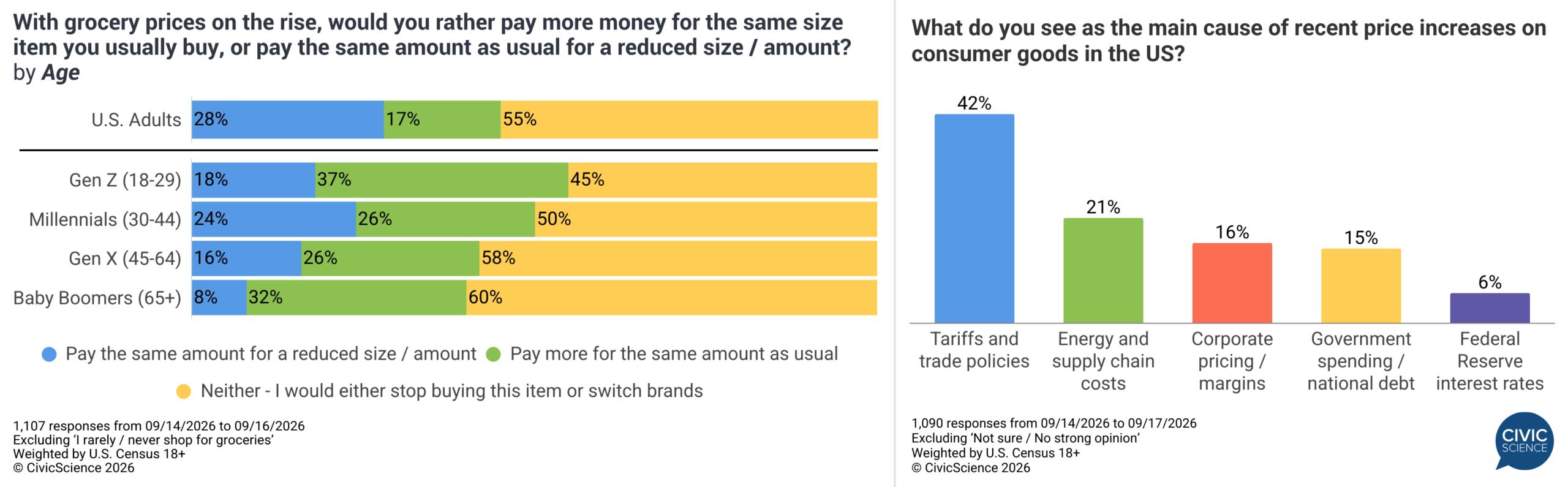
When asked whether they would still buy a product that had either increased in price but not in size or had shrunk while the price stayed the same, 55% of respondents said they would either switch brands or stop buying the item altogether. Examining the data by age, U.S. adults under 45 are more likely to continue purchasing a product that has changed in size or price. In fact, nearly one-quarter (24%) of Millennials aged 30-44 say they’d still pay the same amount for a reduced product. Older generations, however, are the most likely to stop purchasing entirely or switch brands when faced with this choice.
As for the cause of these price spikes, the plurality of U.S. adult respondents cite tariffs and trade policies as the primary reason. Energy and supply chain costs (21%) and corporate pricing and margins (16%) round out the top three causes.
Let Us Know: How concerned are you, if at all, about rising grocery prices?
2. Over half of Americans are now at least ‘somewhat’ concerned about their current employment situation.
Following the first interest rate hike since 2023 and a decline in consumer personal financial health outlook for the first time since March, recession anxieties are mounting.
Over the last four years, concerns about an economic downturn have steadily increased. More than two in five (44%) U.S. adults report they are ‘very’ concerned, and 38% are ‘somewhat’ concerned, about a recession hitting in the near future. Baby Boomers aged 65+ set the pace, with 54% ‘very’ concerned, compared to 38% ‘very’ concerned for Gen Z (18-29) and Millennial counterparts.
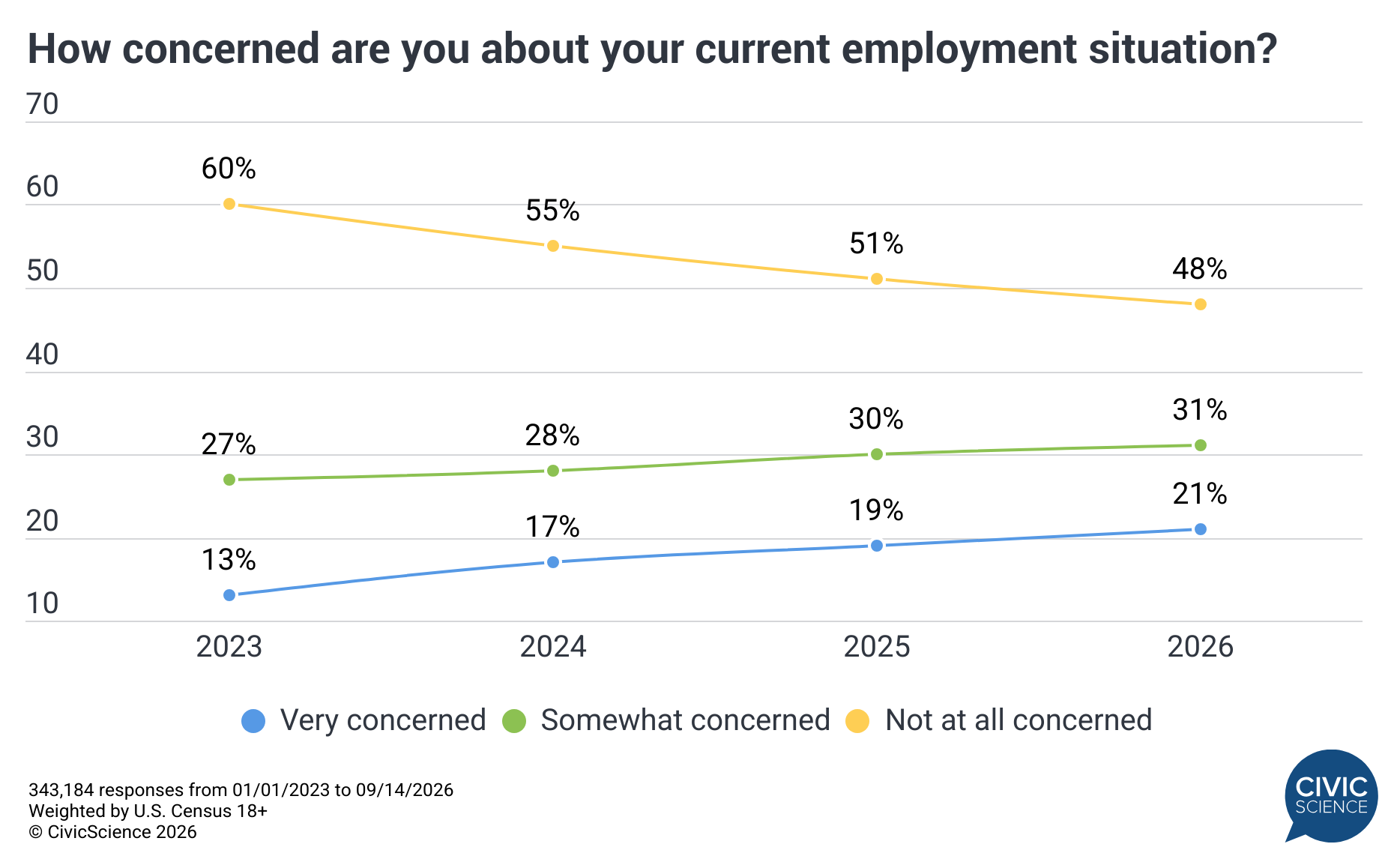
Coinciding with the rising economic anxiety, employment concerns have also steadily increased since 2023. CivicScience data show nearly one-quarter of adults (21%) are ‘very’ concerned about their current work situation. Another 31% say they’re ‘somewhat’ concerned, marking a bleak milestone with the majority of Americans now feeling anxious about their current employment.
Self-reported Democrats report the greatest overall concern, with 61% saying they’re at least ‘somewhat’ concerned about their employment situation. Despite this, Republicans represent the highest proportion of respondents who are ‘very’ concerned about their job status at 26%. Independents appear to be the least concerned about their current employment, as 53% say they have no concern at all.
Take Our Poll: How concerned are you, if at all, about the current state of the US job market?
3. Fall coffee season is here, but Americans are slightly more likely to order flavors other than pumpkin spice.
Pumpkin spice season, also known as fall, is gearing up for its peak in October, and with it come a myriad of flavored lattes.
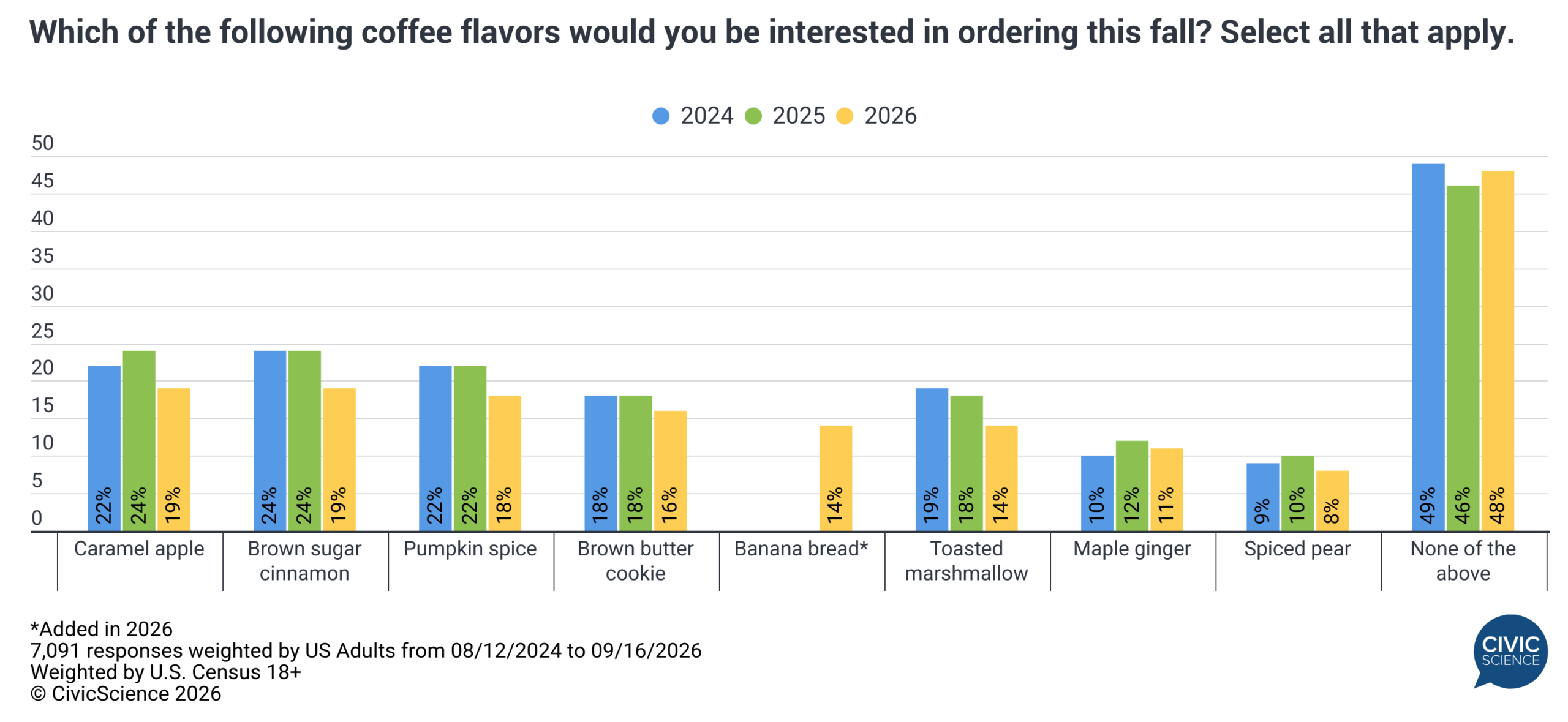
For the first time since 2024, interest in all fall flavors is down compared to this time last year. Still, caramel apple and brown sugar cinnamon remain the top favorite flavors among interested consumers, both at 19%, closely followed by the classic pumpkin spice (18%).
A recent addition to the fall flavor lineup, banana bread garnered a 14% interest level this year – outpacing established seasonal options such as maple ginger (11%) and spiced pear (8%).