CivicScience engages directly with consumers, collecting over one million survey responses daily, to turn real-time insights into high-performing advertising campaigns. See how leading brands use CivicScience to drive campaign performance here.
1. Nearly half of U.S. adults (led by Gen Z) expect 2026 to be better than 2025, but overall optimism has declined compared to last year.
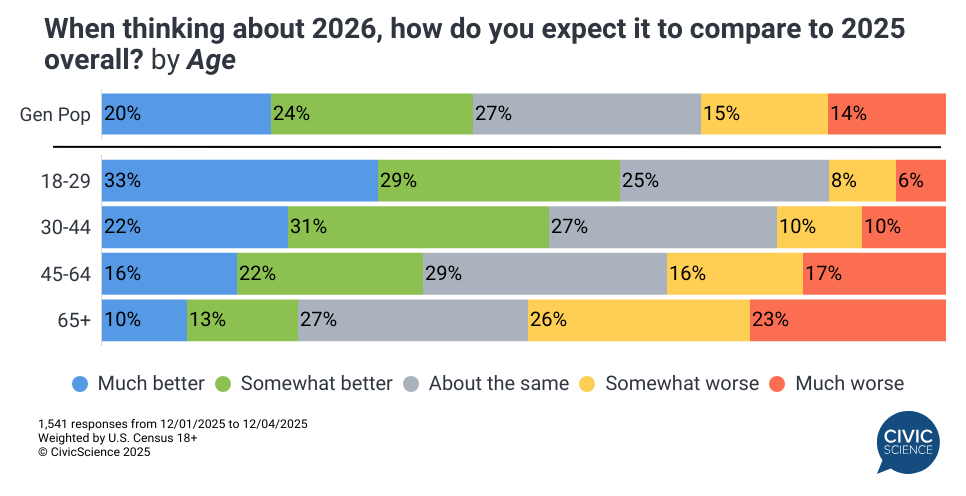
As 2025 winds down, new survey data from CivicScience reveal that Americans are mixed on how it went compared to 2024. Thirty-six percent of adults aged 18+ tell CivicScience that they feel 2025 has been a ‘better’ year overall than 2024, while 41% reported it has been ‘worse’ than last year.
Looking ahead to 2026, optimism shows a measurable decline compared to the previous year’s outlook. While 44% of the Gen Pop anticipate that 2026 will be better than 2025, this marks a notable drop from the 51% who were optimistic about 2025 in the post-election period of 2024. Gen Z adults (18-29) stand out as the most optimistic demographic, while Americans 65+ are by far the most pessimistic, indicating a persistent divergence in overall outlook across age groups.
Take Our Poll: Are you more motivated by the past, the present, or the future?
2. Forty percent of the Gen Pop say they search for new recipes at least monthly, with social media and video platforms playing a key role in their discovery process.
The pursuit of new culinary experiences is a significant, though not universal, activity among Americans. Consumer-declared data show that 40% of U.S. adults actively search for new recipes at least once a month, including 19% who do so weekly, indicating a strong appetite for variety in home cooking. Conversely, 33% of respondents seek new recipes only once per year or less.
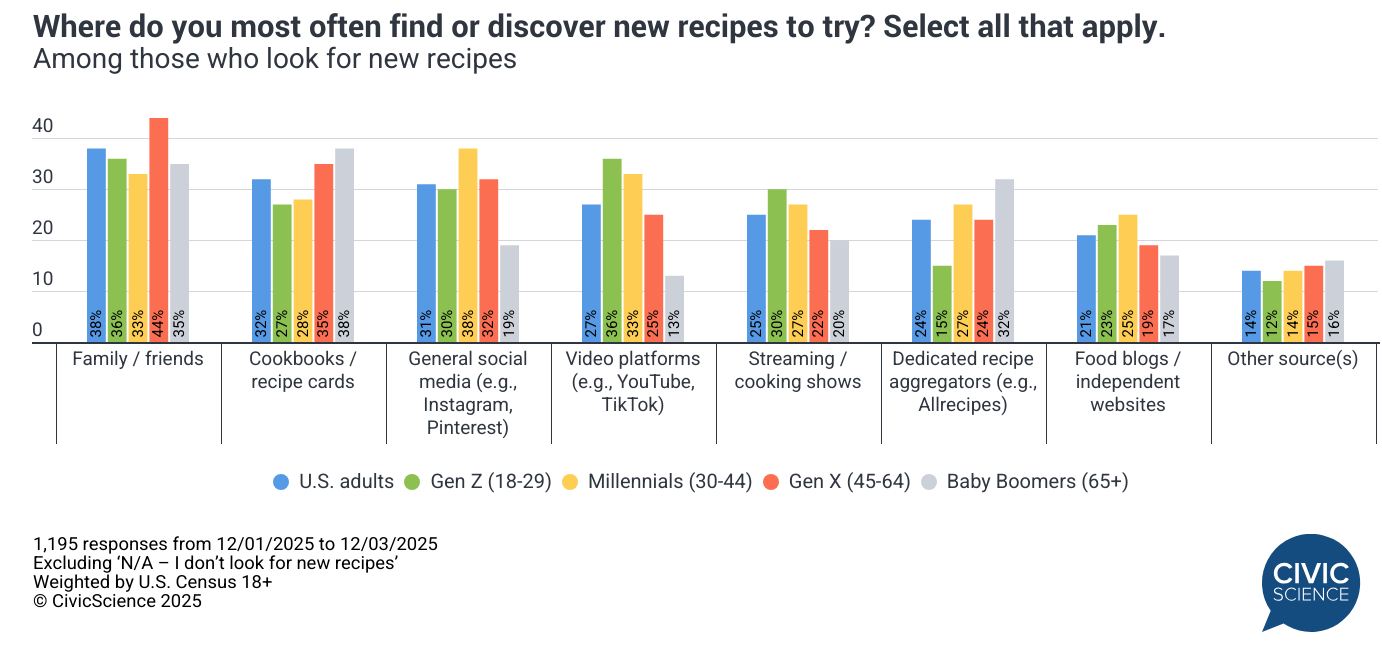
The primary sources for recipe research are traditional interpersonal and physical media (family/friends and cookbooks/recipe cards), alongside social media and video platforms. While means of searching follow expected lines by generation, it’s worth noting that 32% of adults 65 and older also use either general social media (19%) or video platforms (13%). They also far over-index their counterparts in turning to dedicated recipe aggregator websites (e.g., Allrecipes), underscoring the need for content creators to utilize a variety of distribution channels.
Weigh In: Do you usually stick to the recipe?
3. The short-form video app Vine has reemerged as diVine, and while most people haven’t heard of it yet, TikTok users show notable interest. Its ban on AI-generated content is a particular draw.
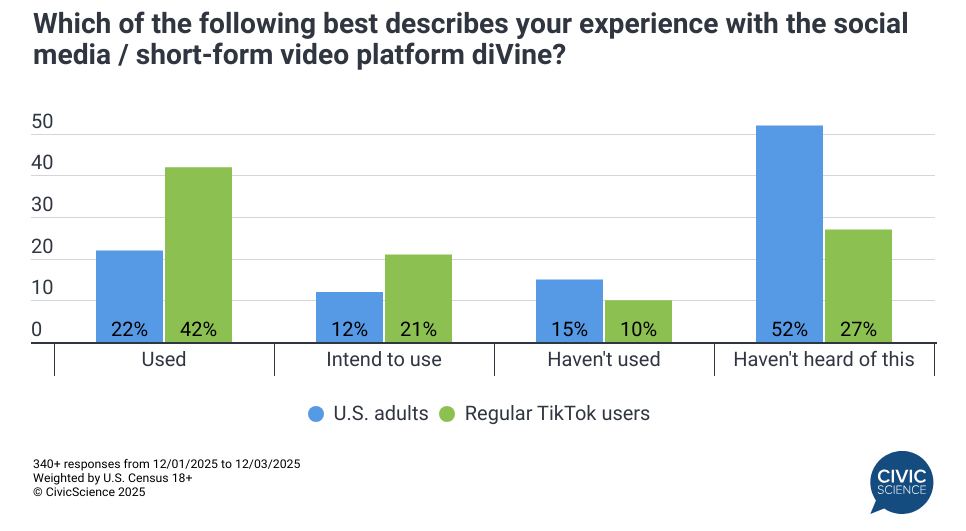
The social media/short-form video sharing platform Vine—which was shut down nearly nine years ago—was revived last month under the name diVine. So far, most Americans (52%) say they haven’t heard of the app, although this falls to only 27% among regular TikTok users. TikTok users are nearly twice as likely as the Gen Pop to say they have already tried diVine. The script is similar in terms of intent, with 21% of TikTok users planning to try it, compared to 12% of U.S. adults.
The platform distinguishes itself from other social media with its ban on AI-generated content, a feature that is driving heightened interest in the app, particularly among TikTok users.