CivicScience engages directly with consumers, collecting over one million survey responses daily, to turn real-time insights into high-performing advertising campaigns. See how leading brands use CivicScience to drive campaign performance here.
The U.S. consumer landscape is increasingly diverse, yet meaningful multicultural differences in consumer habits and sentiment still go overlooked. Acknowledging this reality is a constant imperative, but Black History Month brings it into sharper focus, serving as a time to reflect not only on cultural impact but on lived experiences more broadly. CivicScience’s ongoing tracking of self-reported data from U.S. adults 18+ continues to reveal nuanced distinctions in how Black Americans (non-Hispanic) feel, spend, and engage with brands. Those differences are particularly notable in areas such as spending intent, brand loyalty, and media preferences.
Spending Intent: Black Americans Balance Personal Financial Optimism With Broader Economic Concerns
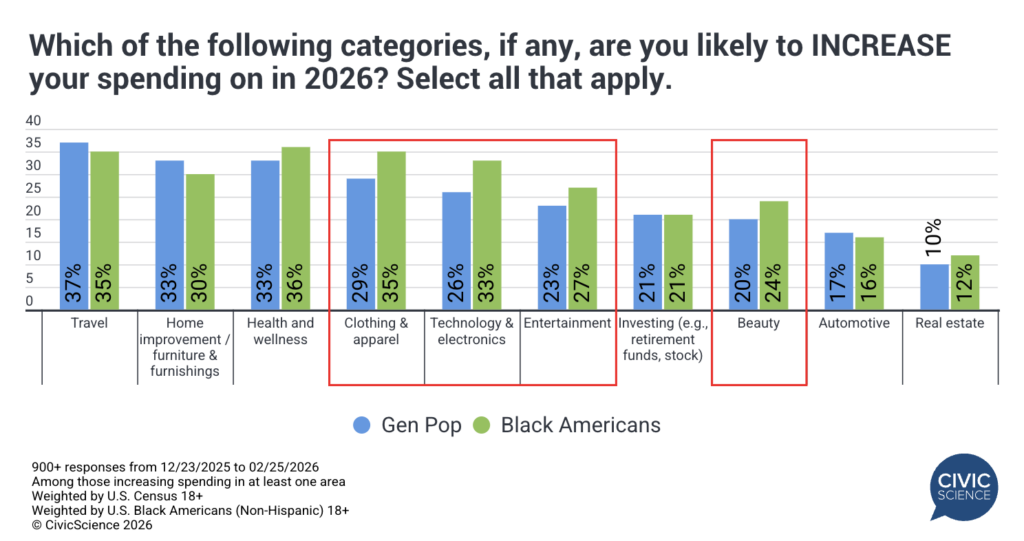
As Americans continue to reassess where they plan to spend and save, Black consumers are more likely to express relative financial optimism and willingness to spend in select categories. Compared to the Gen Pop, Black Americans are more likely to say they intend to increase spending on tech and electronics (+7 points), clothing and apparel (+6 points), beauty products (+4 points), and entertainment (+4 points).
While plans to cut back outweigh intent to increase spending across most areas for all consumers, Black Americans are less likely than the Gen Pop to reduce spending across the categories studied.
This outlook aligns with broader sentiment trends: 46% of Black Americans say they expect their personal financial situation to improve, compared to 32% of the Gen Pop. At the same time, one in five anticipate their situation worsening, reflecting the economic uncertainty many consumers continue to navigate.
Financial flexibility, however, adds important context. Even as many expect improvement ahead, broader concerns about the economy, job market, and major purchases remain elevated. Black consumers also outpace the Gen Pop in concern about relying on Buy Now, Pay Later (BNPL) services to manage household expenses in the months ahead, and they are five points more likely to say they are already using a BNPL service for this purpose.
Overall, the data suggest that Black Americans are approaching spending intentionally, balancing personal optimism with active financial management.
Brand Loyalty: The Closing Gap Between Valuing Brand and Price
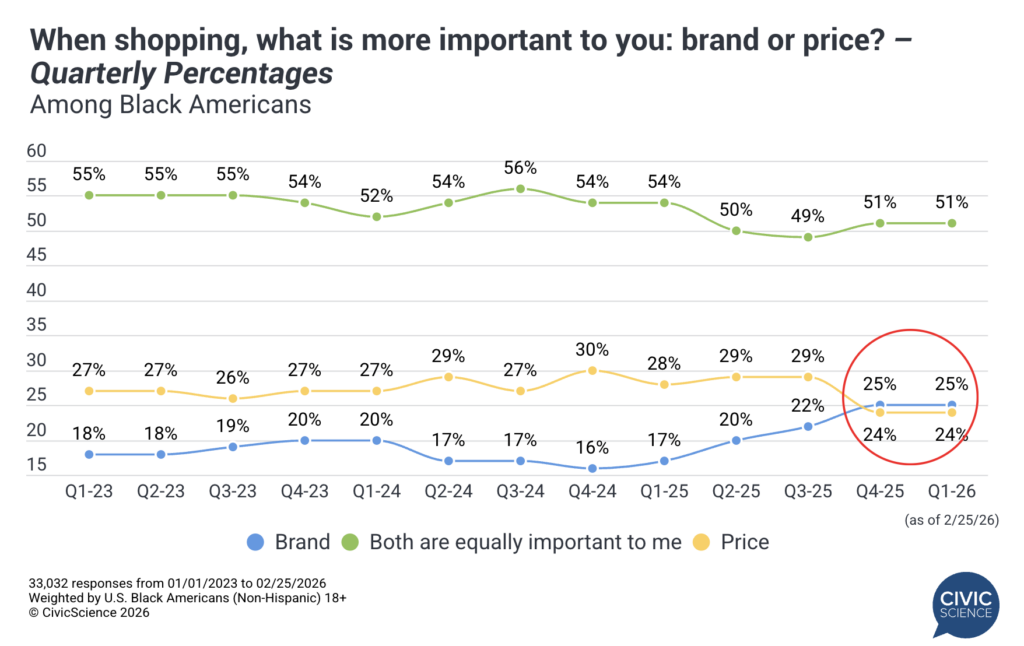
Brand loyalty is common and strong across all consumers, but the factors driving that loyalty differ. Since Q4 2025, Black Americans have begun valuing ‘brand’ slightly more than ‘price,’ the first time this has occurred in CivicScience observations. While the lead for brand over price is narrow, it marks the closest the gap has been over the reported period and a significant shift from historical trends. By contrast, the Gen Pop has consistently said price matters more than brand.
Self-reported brand loyalty among Black Americans has shown modest but meaningful growth in recent years. On average, in 2025, 90% reported being at least ‘somewhat’ loyal to their favorite brands, slightly outpacing the Gen Pop at 88%. More notably, Black Americans are seven points more likely to describe themselves as ‘very’ emotionally connected to their favorite brands (20% vs. 13%).
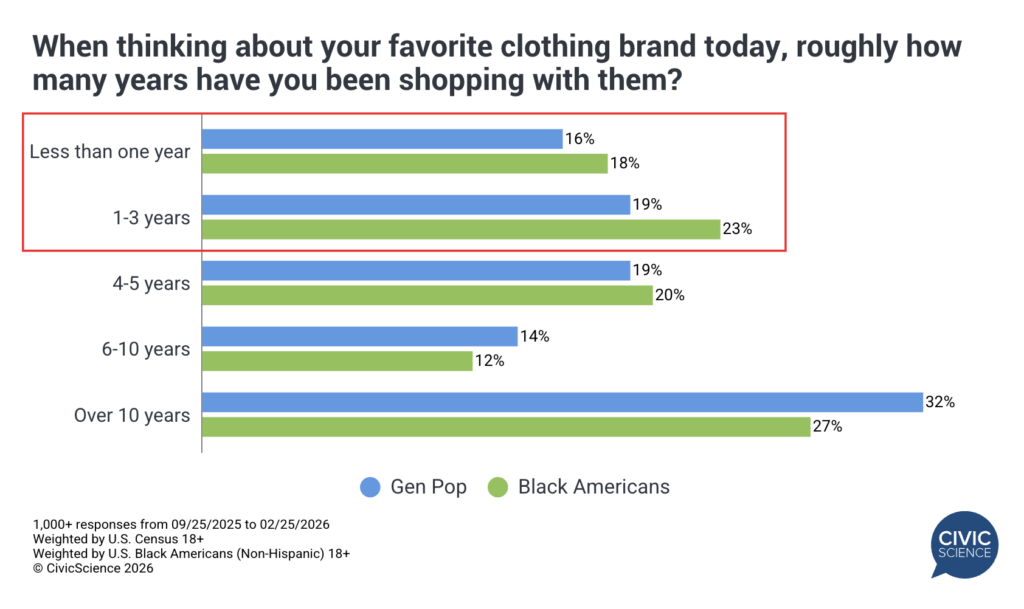
At the same time, the timeline of that loyalty differs. When looking at apparel, for example, Black Americans are more likely to report having shopped with their favorite brand for fewer than three years, while the Gen Pop is more likely to cite relationships lasting over five years. This suggests that while emotional connection may be strong, brand relationships among Black consumers may also be newer.
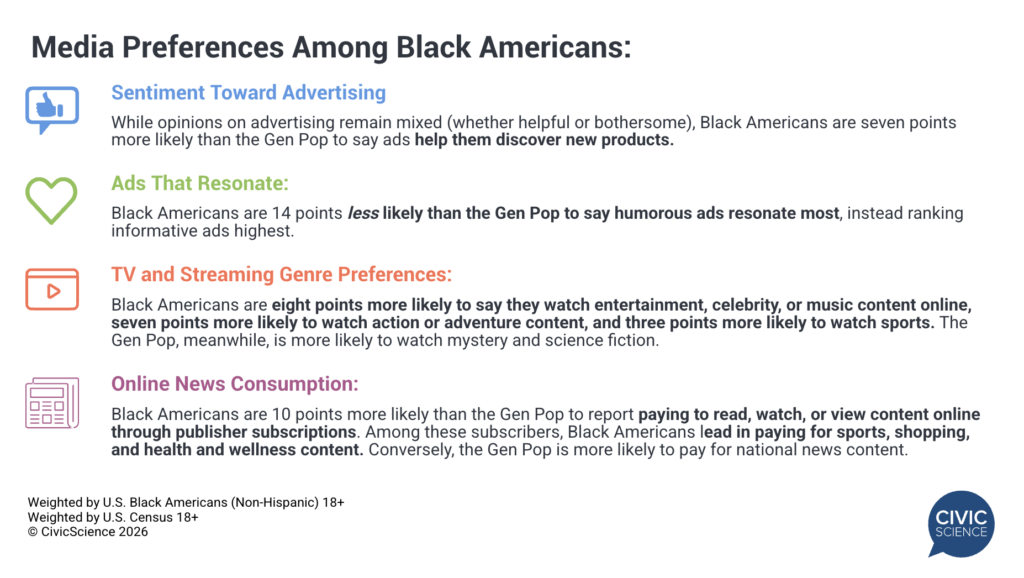
Media Preferences: How Online Engagement Shapes Purchase Decisions
Spending patterns and brand loyalty tell part of the story, but how consumers engage with brands and media reveals what ultimately influences purchase decisions. Here’s what Black Americans are telling CivicScience about advertising and digital engagement, and how they compare to the Gen Pop.
Overall, no single narrative captures the full American consumer experience. Life experiences, spending outlooks, brand loyalty, and media engagement are just a few of the factors that shape how consumers discover and engage with brands. For organizations seeking to authentically connect with and represent diverse audiences, hearing directly from consumers is essential.