CivicScience has the world’s largest proprietary database of real-time declared intent, allowing brands to activate high-performing advertising that drives up to 80% better performance. See how CivicScience partners achieve superior marketing outcomes here.
New research from CivicScience has identified a significant consumer trend over the past several years — brand loyalty among consumers is rebounding. Understanding what’s driving loyalty amid this shift requires looking beyond demographics.
That’s where CivicScience’s Psychographic Drivers Analysis comes in. This analysis identifies the demographic and psychographic attributes most predictive of specific attitudes, behaviors, and opinions. Importantly, among the 160 attributes in the analysis, those most predictive of brand loyalty are not demographic but psychographic.
Revisiting the six product categories CivicScience recently studied highlights just that. First, examining psychographics among the three categories with the highest share of consumers who are ‘very’ brand loyal: automotive, shoes and footwear, and personal electronics:
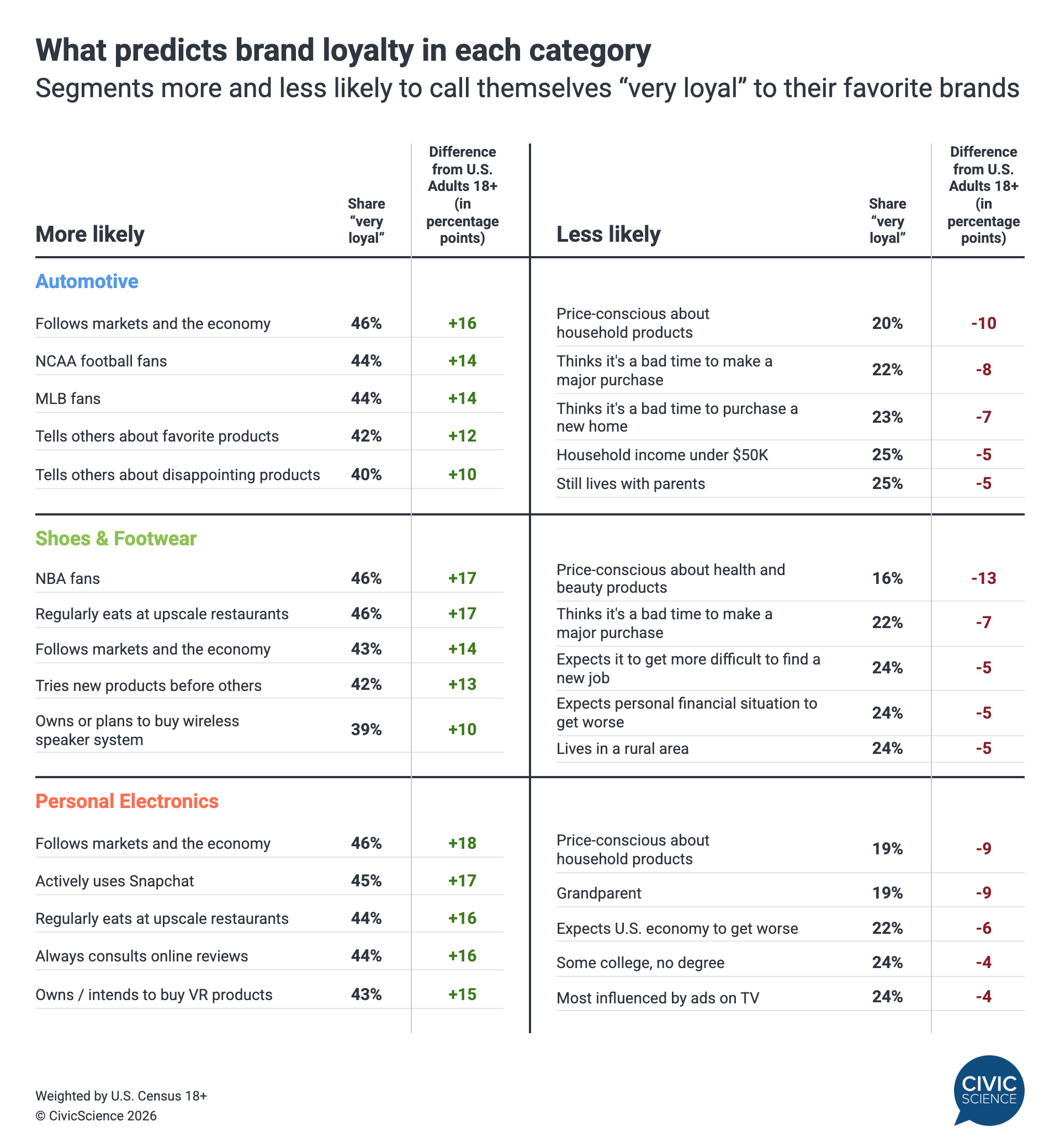
Key Takeaways: Some of the same attitudes and habits appear to recur whether the purchase is a car, a pair of shoes, or a phone. Adults who follow markets and the economy closely a noteworthy example: they are 14 to 18 percentage points more likely than average to call themselves ‘very’ loyal in all three of the above categories. For these consumers who track prices, rates, and headlines, staying with a trusted brand may be a calculated choice, a way to limit risk in an uncertain economy. The most loyal consumers in these categories also tend to be those who research purchases, recommend brands to others, and try new products before their peers. For advertisers and publishers, the implication is that loyal buyers can be identified by how they think and can be reached where they already spend their attention: college football and baseball for automotive, the NBA for footwear, and Snapchat for electronics.
At the other end of the scale, price consciousness is a strong indicator of lower loyalty, particularly in footwear, where adults who are price-conscious about health and beauty products are 13 percentage points less likely than average to be very loyal. Hesitation about big purchases also signals lower loyalty in the automotive and footwear sectors. Lower-income adults, those still living with their parents, and rural residents are somewhat less likely to be very loyal, as are electronics consumers most influenced by TV ads.
In Everyday Categories Like Beauty, Clothing, and Fast Food, Loyalty Follows Brand Values
Across these three categories, brand values are a common thread. Adults who favor socially conscious companies are 11 to 14 percentage points more likely than average to be very loyal to beauty, clothing, and fast-food brands. Beyond that shared trait, each category attracts a distinct kind of loyal consumer. In beauty, loyalists look to the future with confidence, expecting their incomes to rise and planning to invest more. Beauty loyalty also runs high among tech enthusiasts and early adopters, such as those who own or plan to buy augmented reality (AR) products, as well as among fans of travel, home, and cooking content. Clothing loyalists are closely tied to social media, both as active X (formerly Twitter) users and as shoppers influenced by their feeds. Fast-food loyalists are quick to try new foods and share news about new products, and reality TV fans also rank among the most loyal.
Unlike market watchers, who tend to remain loyal, consumers who are pessimistic about the economy are among the least loyal. Expectations that jobs will be harder to find, personal finances will worsen, or the broader economy will decline appear across all three categories. Price consciousness signals lower loyalty, too, and often crosses categories, with price sensitivity about electronics showing up in beauty and about household products in clothing. Rural residents, higher-income adults, and graduate degree holders each register somewhat lower loyalty in one of the three categories.
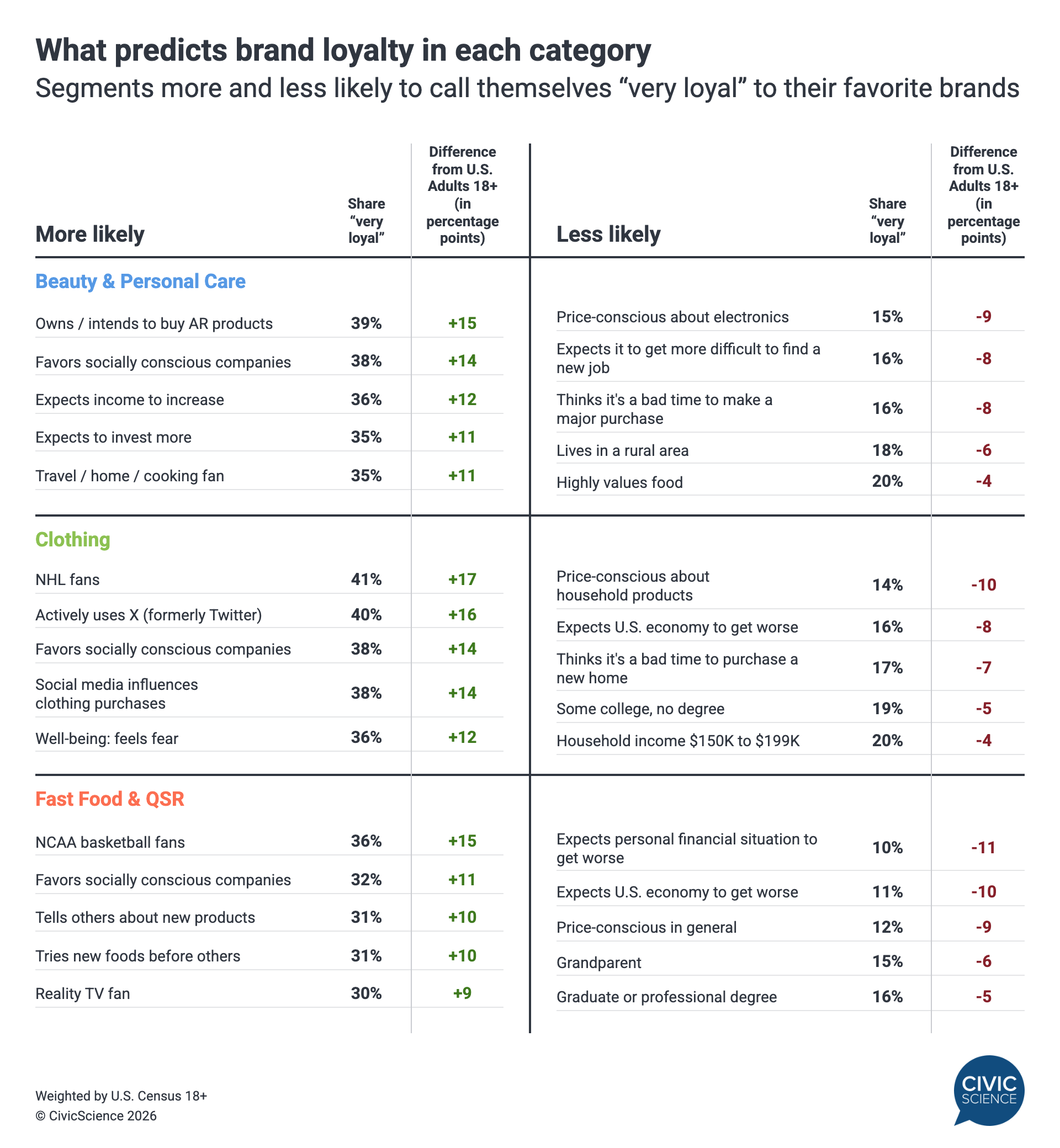
Across the six categories studied, a clear portrait of the loyal consumer emerges: brand loyalists tend to be informed, outspoken, and drawn to brands that share their values. Yet the traits that stand out shift depending on the purchase, from sports fandom and word-of-mouth in automotive to financial optimism in beauty and curiosity about new foods in fast food. Psychographics capture both the common foundation and those category-specific differences, something that demographic data can only scratch the surface of.
This analysis builds upon findings from CivicScience’s new white paper, “The Resurrection of Brand Loyalty,” which explores the drivers of this shift and its implications for the future of consumer engagement. Explore the brand loyalty white paper below for additional analysis and findings.