CivicScience has the world’s largest proprietary database of real-time declared intent, allowing brands to activate high-performing advertising that drives up to 80% better performance. See how CivicScience partners achieve superior marketing outcomes here.
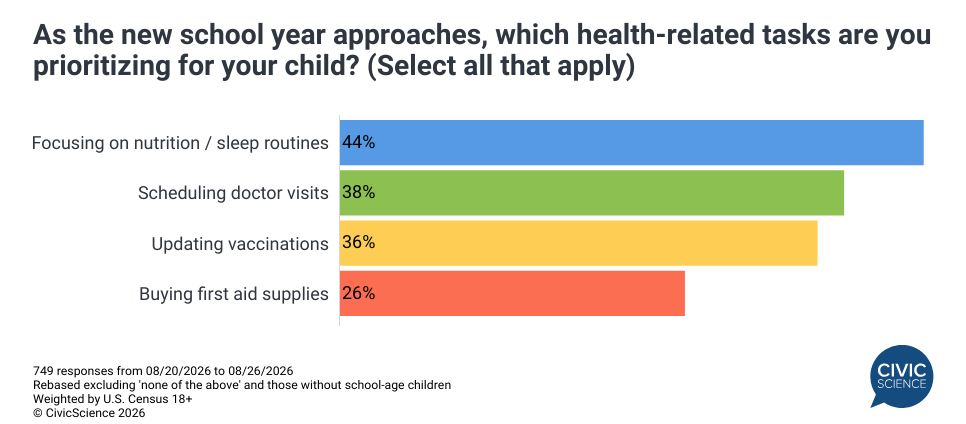
As most students head back to school within the next couple of weeks, parents are once again weighing the health considerations that come with the start of a new academic year. From establishing healthy routines to scheduling doctor visits, families are preparing for the transition into the school year in various ways.
Looking more closely at these habits, CivicScience data show that nearly 9 in 10 parents (87%) emphasize at least one health-related action for the new school year. Among them, prioritizing their children’s health across distinct tiers this season. At-home wellness routines take the top spot, with 44% focusing on their children’s nutrition and sleep. Clinical care forms a strong second tier, with 38% scheduling doctor visits and 36% updating vaccinations, while purchasing first-aid supplies trails further behind at 26%.
For many parents, vaccinations are a regular part of the preparation before the school year begins. Among parents who schedule vaccinations for their kids, 42% schedule them before school starts, compared with 24% who wait until the school year is underway and 34% who only do so when required by the school.
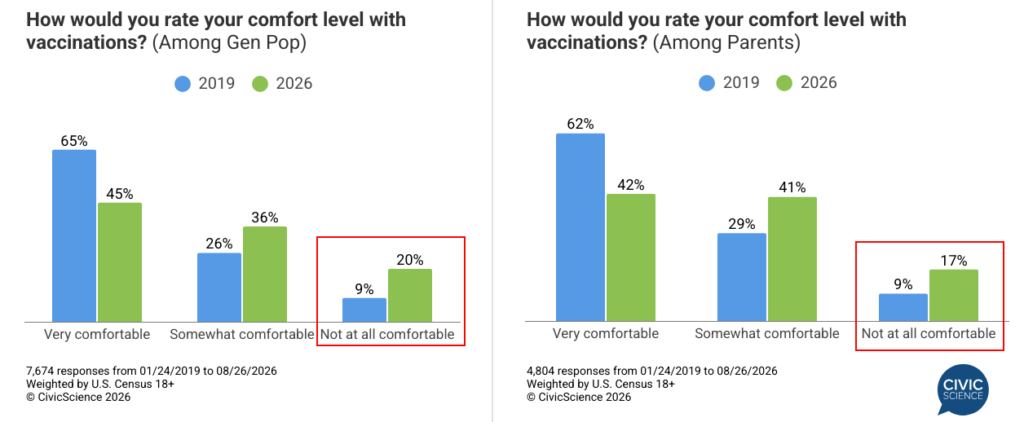
Comfort With Vaccines Has Shifted Dramatically Since 2019
While vaccinations are a yearly routine for many, these decisions are being made amid a changing vaccine landscape. Today, 20% of U.S. adults say they are ‘not at all’ comfortable with vaccines – an 11-percentage-point increase from pre-pandemic levels in 2019. A similar pattern exists among parents: 17% express zero comfort with vaccines, up from 9% in 2019, though that figure represents a noteworthy recovery from a peak of 23% in 2025.
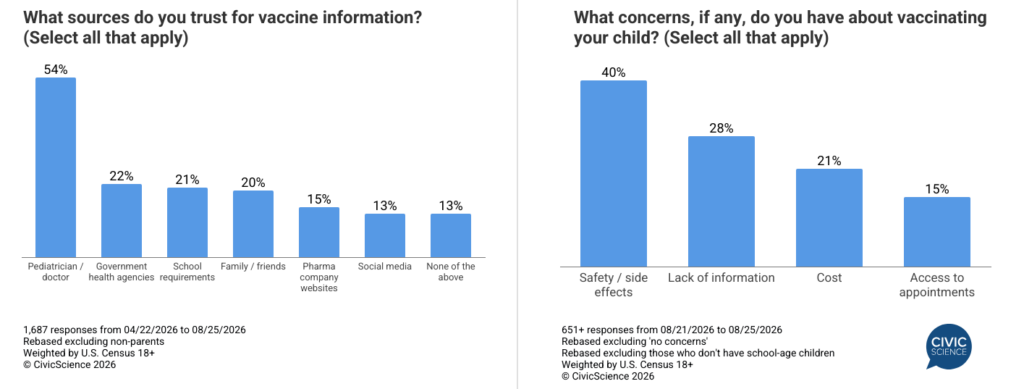
Beneath the surface of this hesitation is how parents gather information and evaluate safety today:
- Trusted Sources: As parents navigate this shifting environment, the sources they gather information from are deeply fragmented. Pediatricians and doctors are the single most relied-upon source, yet only 54% of parents report trusting them for vaccine guidance. The remaining reliance is spread across secondary influences such as government health agencies, school requirements, and personal networks, while 13% of parents say they do not trust any of these channels.
- Primary Concerns: Meanwhile, just 36% of parents with school-age children say they don’t have any concerns about vaccines. Among those concerned, safety and side effects are the leading issues for parents, followed distantly by a lack of sufficient information. Cost and appointment access are far less common barriers.
Weighing Vaccine Safety Against Classroom Illness
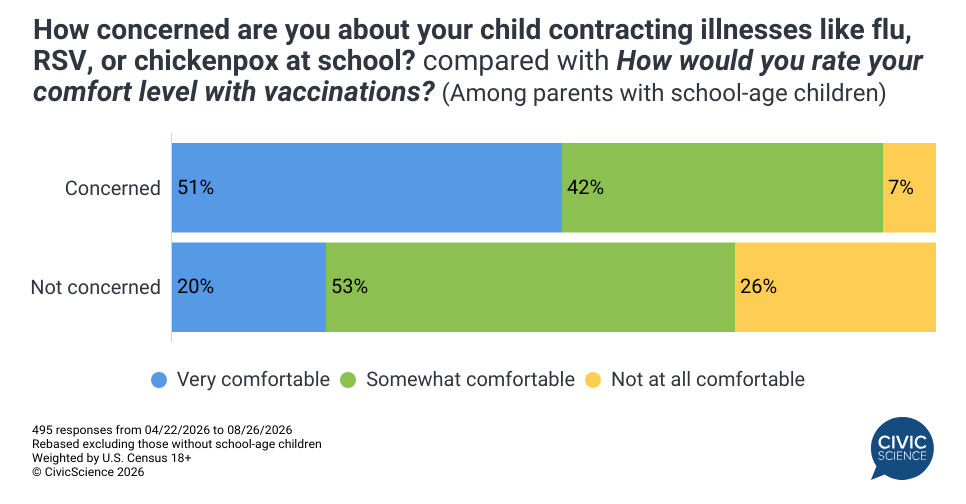
These concerns create a complex balancing act as parents face an equally pressing concern: the classroom itself. Fifty-nine percent of U.S. parents are at least ‘somewhat’ concerned about their child contracting an illness such as the flu, RSV, or chickenpox while at school. But this anxiety strongly correlates with comfort with vaccines. Parents who say they’re worried about their children getting sick at school are far more likely to report a general comfort with vaccines when compared to those who are unconcerned.
Flu Shot Intent Holds Steady
As flu season looms, 59% say they plan to get a flu shot this year, up slightly from 57% in September 2025. Last year’s flu season turned out to be particularly severe, which may be playing at least somewhat of a role in this uptick. Even still, uncertainty has edged up slightly. The share of Americans who say they are unsure whether they will get a flu shot increased by two percentage points year-over-year, suggesting that while intent remains strong, some consumers are still weighing their options as the fall sickness season approaches.
And among parents, it’s worth noting that flu vaccine intent remains unchanged since September 2025: 55% plan to get their flu shot, 33% will not, and 12% are unsure.
The decision to vaccinate is rarely cut and dried. As parents navigate competing fears, mixed sources of information, and school deadlines, understanding where these trade-offs lead will be critical as the school year unfolds.