This is only a glimpse of the data available to CivicScience clients. Discover more data.
It’s safe to say that GLP-1 medications are becoming a household name. With 57% of Americans familiar with the term “GLP-1,” it’s no longer necessary to mention weight loss medications or specific drug names for context. This familiarity is reflected in usage. This month, 19% of respondents say they are currently using or are interested in taking a GLP-1 medication for weight loss purposes.
The latest edition of the CivicScience GLP-1 Consumer Tracker illuminates the most up-to-date information on barriers to entry, healthy lifestyle choices, well-being, and retail behavior. Here are three key takeaways from our most recent GLP-1 trends report.
1. Access is Becoming More Prohibitive
About one in five U.S. adults consider themselves ‘very well-informed’ about the potential benefits and side effects of GLP-1 drugs. However, the larger issue isn’t with the effects of the medication, but the cost. Currently, 30% of Americans interested in weight loss say they do not use a GLP-1 medication because of cost or insurance coverage, as insurers cut back on GLP-1 coverage. That number is up from 22% in Q1 2024.
While cost and insurance coverage remain the leading reasons why consumers have stopped taking a GLP-1 medication, that percentage is down from early April data. Instead, the percentage of former users citing shortages or difficulty in accessing these medications has increased to 23%, up from 17% in mid-December. As more Americans become aware of the benefits and seek out weight-loss medications, the growing demand is becoming increasingly tangible.

Take Our Poll: Have you taken or considered taking medication to help with weight loss?
2. GLP-1 Users Want Products to Meet Their Needs
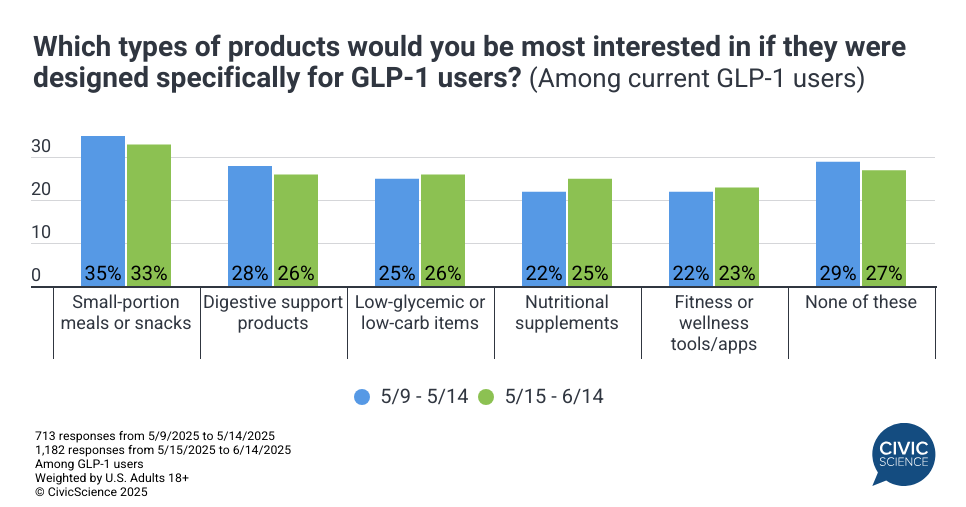
About one in three current users say they have come across products marketed specifically for GLP-1 users, and more than half of current users would be more likely to purchase some products if they catered specifically to those on GLP-1 medications. While it’s unsurprising that users would be interested in products tailored to them, the type of product they desire shifted from May to June. Interest in nutritional supplements, low-glycemic/low-card items, and fitness or wellness tools/apps all increased, while small-portion food items and digestive support products each fell slightly.
Let Us Know: What do you think of low-carb pizza options?
3. Self-Care is a Lifestyle
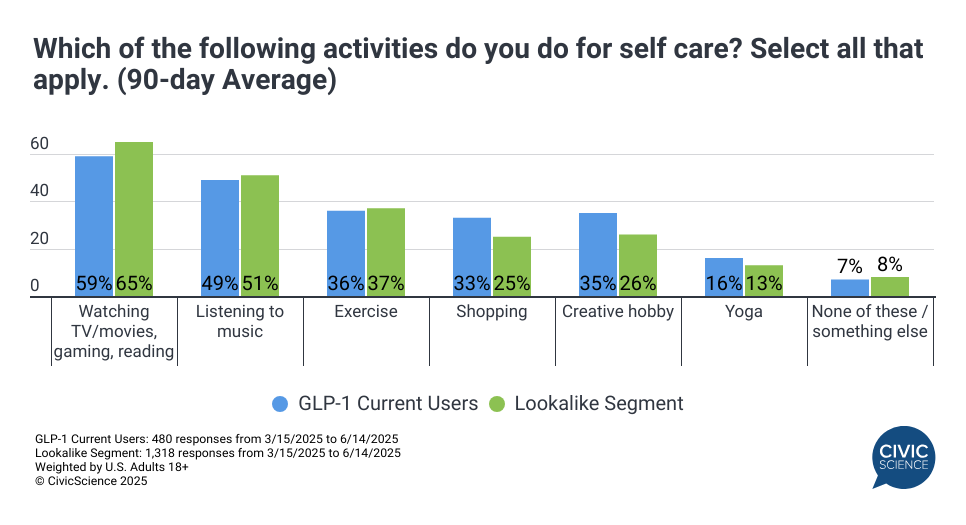
While weight loss is one aspect of health, taking care of the body and mind also factor into overall wellbeing. As the data show, current GLP-1 users tend to favor shopping, creative hobbies, and yoga as their self-care activities more so than a look-alike segment (those who exhibit similar characteristics but don’t currently use a GLP-1 drug). Given that these activities activate the brain, it may not be surprising that CivicScience Wellbeing Index scores rebounded among GLP-1 users in June, thanks to a decline in reported strong feelings of sadness and fear.
Use this Data: CivicScience clients use real-time data like this to track what specific segments prioritize and how they change over time. This allows them to refine their strategy to retain current customers and identify potential new ones where they’re most engaged.
CivicScience’s GLP-1 consumer data provides invaluable insights into how these medications are transforming consumer behavior and influencing various industries in real-time. In order to thrive amidst market volatility and the gradual unfolding of a new normal, you need strategies to handle wide-ranging societal impacts across multiple industries. Join CivicScience Founder and CEO, John Dick, for a data-driven live webinar to explore how U.S. consumers are responding to financial pressures in the food and beverage space and what it means for your business strategy. Register for the webinar today by clicking here.