CivicScience engages directly with consumers, collecting over one million survey responses daily, to turn real-time insights into high-performing advertising campaigns. See how leading brands use CivicScience to drive campaign performance here.
With 35% of the U.S. workforce self-identifying as managers – those with formal authority to lead – the latest quarterly idealis and CivicScience Pulse of the U.S. Workforce Report reveals that leadership today is one of the most powerful levers of employee experience. However, the system is ready for a redesign. While managers tend to report more positive workplace experiences than non-managers (e.g., greater trust in their CEOs, stronger feelings of belonging), effectiveness lags. The data indicate that formal managers require additional support to lead with impact, while informal leaders require greater access to leadership opportunities.
Here are three key findings from the report that highlight the current state of management and why the future of leadership depends on activating both:
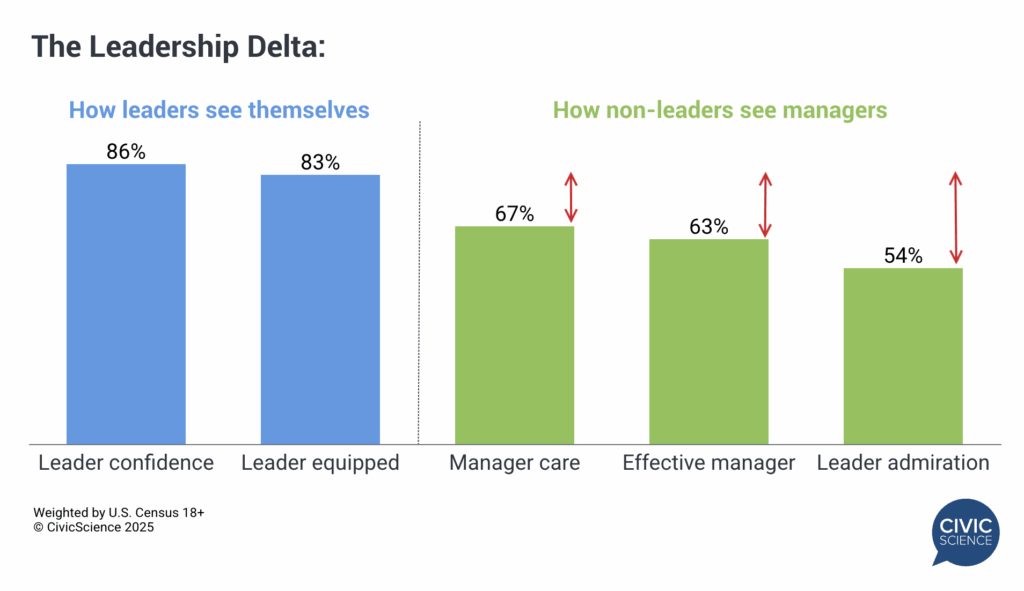
1. The leadership delta is now a trust deficit, and the care deficit is hindering performance.
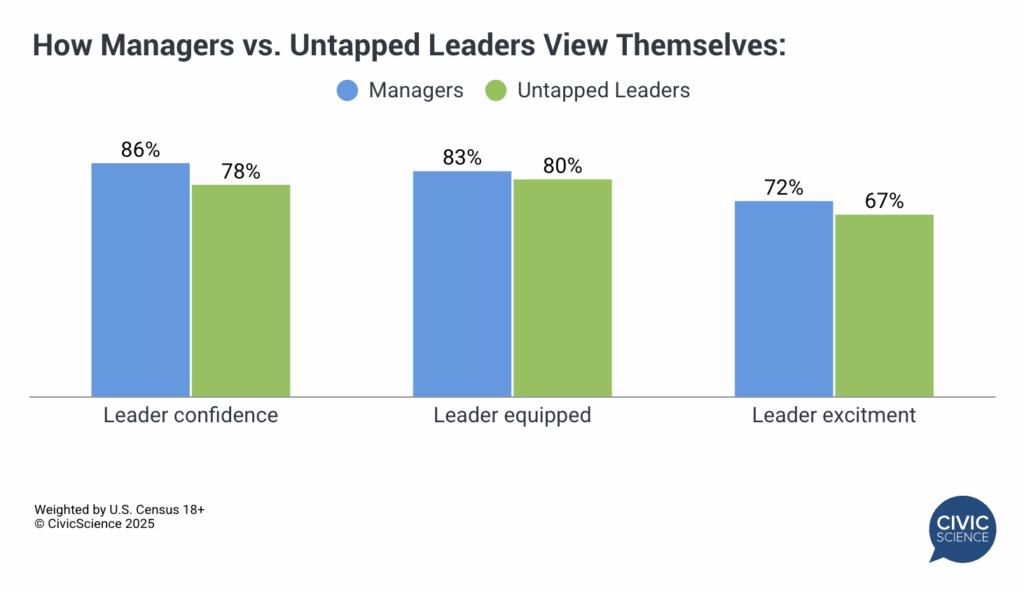
Confidence levels among managers are high today. Nearly 9 in 10 express strong confidence in their leadership abilities, and more than 8 in 10 believe they have the necessary skills to lead others.
While managers feel confident in their leadership, less than two-thirds of employees feel their manager is effective, only 54% admire their leader, and about one in three say that their manager doesn’t care about them personally. This leadership delta, the gap between how leaders see themselves and how others perceive them, is quietly eroding trust, engagement, and performance across organizations. Leadership isn’t about how capable managers feel; it’s about how credible they are to the people they lead.
2. The talent bench is there and not fully utilized.
While a third of American workers manage others, the remaining 65% represent a powerful yet often overlooked source of leadership. Half of them – 31% of the total workforce – consider themselves leaders without a formal title. The full paid report highlights key demographics within this untapped market – a segment eager and ready to lead.
Although they don’t currently manage others, 78% of these “untapped leaders” say they are confident in their ability to lead, which is only eight points lower than that of formal managers. They bring energy, optimism, and belief in their leadership potential, yet many still find the idea of managing people intimidating. What’s missing are structured opportunities, mentorship, and support to turn that belief into capability, and that confidence into action.
3. Both managers and untapped leaders need additional support.
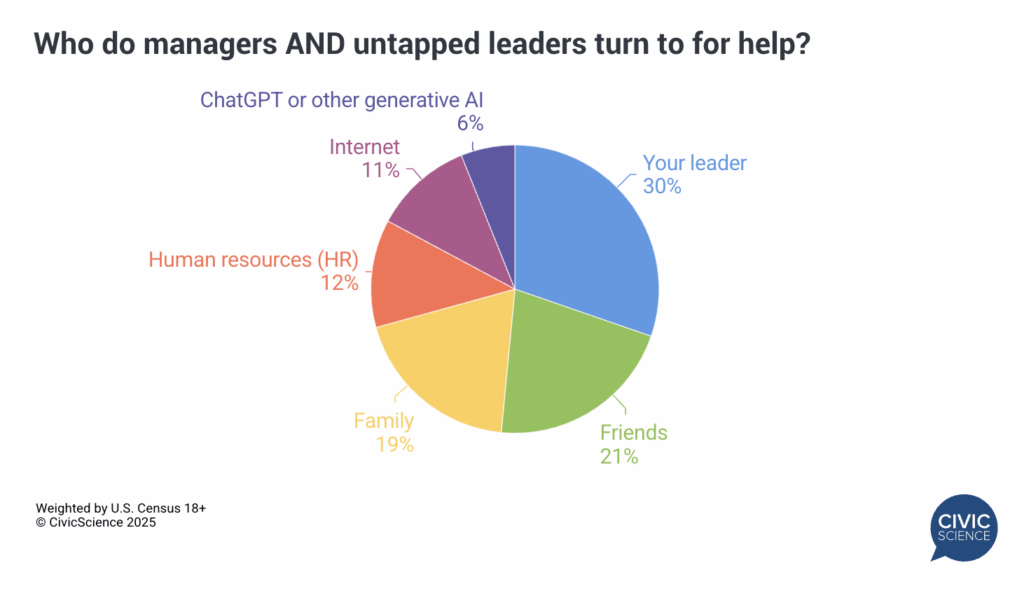
Managers who overestimate their effectiveness and the untapped leaders who feel ready to step in share a common need for support. The data show that they are most likely to turn to their own leaders for help – and are more likely to seek guidance from friends and family than from HR.
Those in financial services and health services are more likely than average to turn to HR and less likely to rely on family. In contrast, leaders working in education and leisure and hospitality tend to over-index on seeking support from friends and family, and are less likely to seek help from HR or tools like ChatGPT.
As workplaces continue to evolve amid constant change, formal leadership alone won’t carry organizations forward. The future of work will be shaped by those who redesign leadership as a shared system, one that activates potential, fosters credibility, and connects people and technology to lead together.