CivicScience engages directly with consumers, collecting over one million survey responses daily, to turn real-time insights into high-performing advertising campaigns. See how leading brands use CivicScience to drive campaign performance here.
The Super Bowl has officially come and gone, and this year’s game broadcast will go down as the second-most-watched Super Bowl on record. Though many tuned in for the game itself, Americans were increasingly excited about seeing the ads this year. How did those ads land, and what does it mean for brands in the weeks and months ahead?
By comparing self-reported purchase intent before and after the game, CivicScience identified 10 brands across three industries that saw a significant increase in purchase intent among Super Bowl viewers.
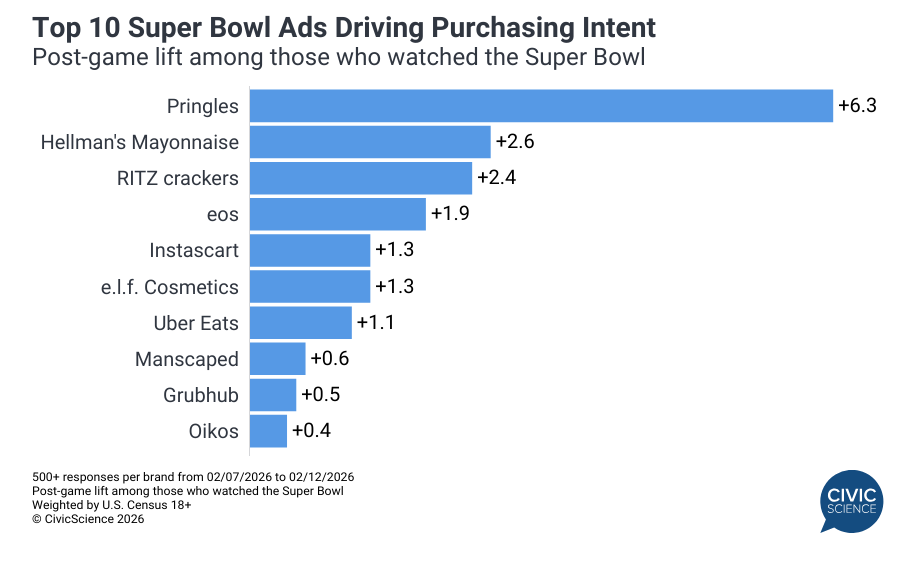
Food brands lead as three of the top five performers in lift in purchasing intent from pre- to post-game, likely benefiting from the fact that many are already in the mood for food during the game itself. However, non-food advertisers also saw significant gains; beauty brand eos and delivery service Instacart rounded out the top half of the study with noteworthy lifts in self-declared intent.
Key Audience: The under-45 (18-44) Super Bowl audience was a key focus of the advertising during the game, and CivicScience data pinpoints the areas where lift was even more pronounced among this high-value audience. Most notably, lift significantly outpaced viewers overall in Uber Eats (+4.3 points), eos (+3.1), with this audience gravitating toward beauty and delivery platforms.
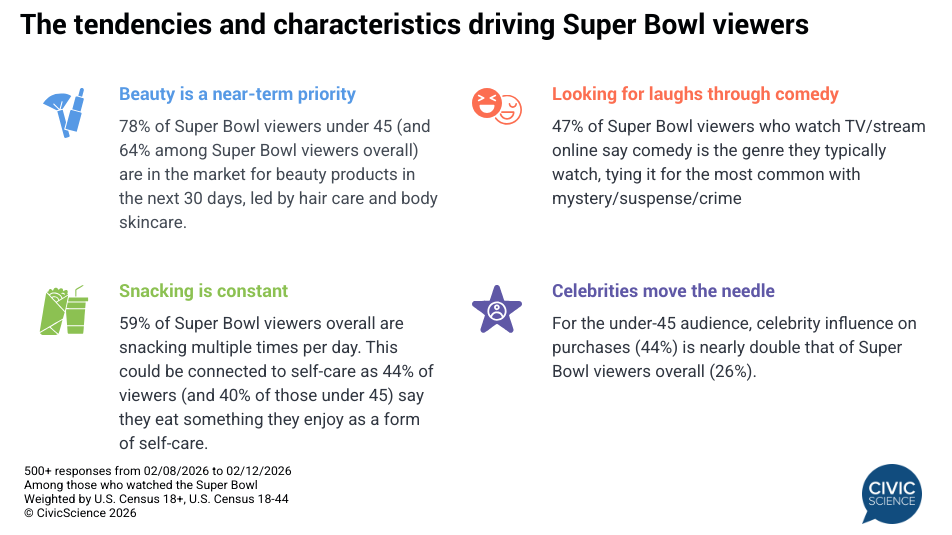
Additionally, 63% of these viewers under 45 also say they will seek more information about the brands advertised post-Super Bowl, outpacing Super Bowl viewers overall by nearly 20 points (44%) – further highlighting that this is an audience worth re-engaging with beyond the Super Bowl.
The Data Driving Intent Shifts
Why did certain ads land among viewers? Self-reported data suggests a strong alignment between the leading brands and consumer tendencies:
Reaching the Under-45 Super Bowl Viewer
The game is over, but the race to win over high-value viewers aged 18–44 is just beginning. To move beyond assumptions and drive authentic engagement, brands should lean into real-time, self-declared signals that define this audience:
- Viewers under 45 are most likely to say they’ve used the internet for entertainment, finance/banking, and shopping over the past week (compared to the leading categories of news and information gathering among Super Bowl viewers 45+). That said, the under-45 group reports that they find ads most relevant on retail websites (35%), outpacing viewers 45+ by 16 points.
- Video is important in their decision-making process as 46% ‘always’ or ‘often’ use video for research and purchasing decisions, more than 3X as likely as viewers over 45 (15%).
- Viewers 18-44 are far more likely than viewers 45+ to use AI-powered tools to help them make decisions (67% to 19%, respectively). Clothing and accessory shopping is the under-45 audience’s leading use for AI-supported research, whereas tech purchases lead among 45+ users.
The Super Bowl ads are just the start of many customer journeys. It’s about re-engaging with them in meaningful ways and meeting them where they are online that will drive long-term engagement. This transition from a viewer watching an ad to a customer making a purchase is fueled by the personal motivations surfaced in this data.