CivicScience has the world’s largest proprietary database of real-time declared intent, allowing brands to activate high-performing advertising that drives up to 80% better performance. See how CivicScience partners achieve superior marketing outcomes here.
American wallets are being pulled in a variety of directions all at once right now. The holiday shopping season is soon to ramp up, back-to-school is here, gas prices continue to remain high, and the list goes on. And while there are many avenues for paying for and managing those priorities, credit cards are particularly enticing, especially for Gen Z, who are likely building their credit history and scores.
Younger Consumers, Especially Gen Z, Drive Near-Term Credit Card Application Interest
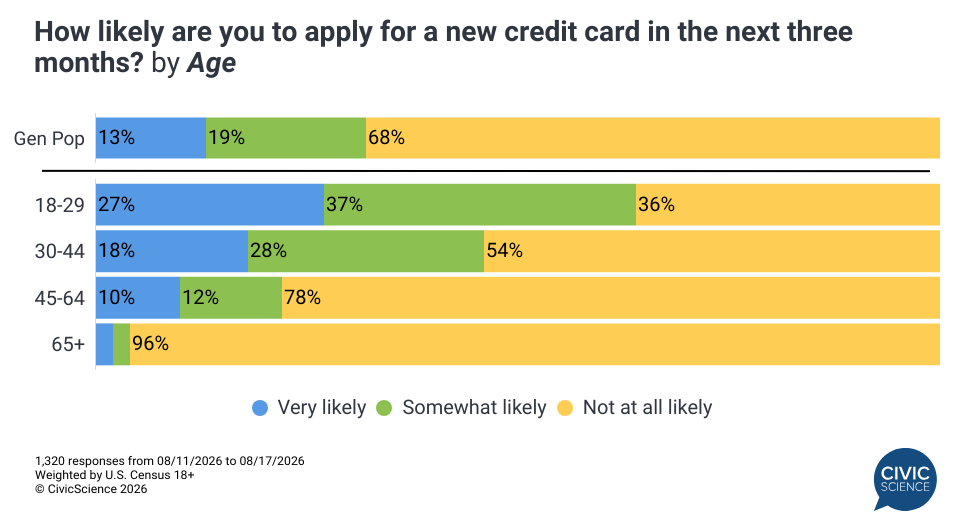
Whether credit cards are intended to serve as a temporary lifeline to get by or help make a major purchase, new consumer-declared data from CivicScience shows that just under one-third of U.S. adults are considering applying for a new credit card in the next three months. Among them, a highly concentrated 13% say they’re ‘very’ likely to apply in the next three months.
Much of this upcoming interest is driven by younger consumers: Gen Zers aged 18-29 are notably the most interested, with 27% reporting they’re ‘very’ likely to apply within the next 90 days, compared to just 10% of Gen X and 2% of those 65+. Additionally, recent CivicScience data also suggest a correlation between consumers’ planning for severe weather and their near-term interest in applying for a new credit card.
New Credit Card Are Most Likely to Support Essential Purchases, Credit Management, and Accessing Rewards
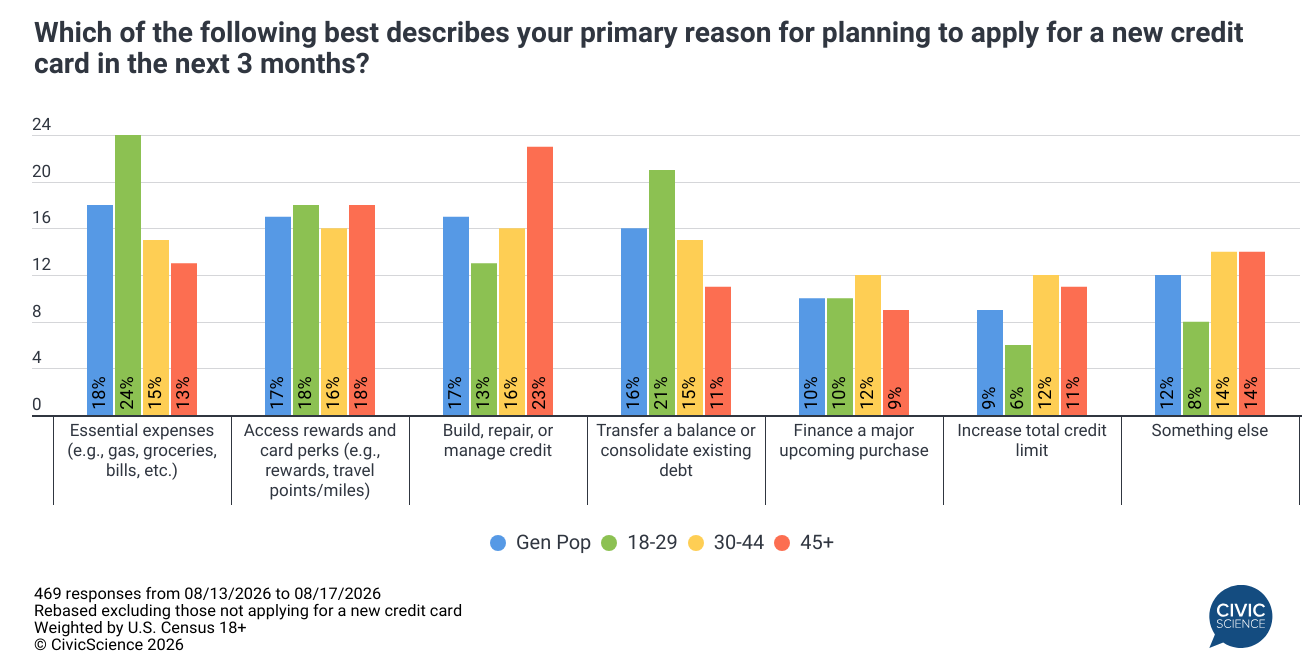
Consumer-declared data on the motivations for a new credit card vary, with no runaway favorite. That said, those looking for a new credit card in the immediate future are more likely to cite pressing practical needs such as supporting essential purchases and building/repairing/managing their credit. A similar percentage is interested in applying for a credit card to access rewards and perks. Conversely, they’re comparatively less likely to be driven to a new credit card by an upcoming major purchase or an increased credit limit.
However, these motivations diverge sharply when looking across age groups. Gen Z is driven by immediate financial pressures as they’re the most likely to seek a new card for essential expenses, transfer a balance, or consolidate existing debt. Millennials split their priorities with a slight skew towards rewards and credit management. Meanwhile, older adults aged 45 and up are most focused on building, repairing, or managing credit, while caring far less about balance transfers and paying for essentials.
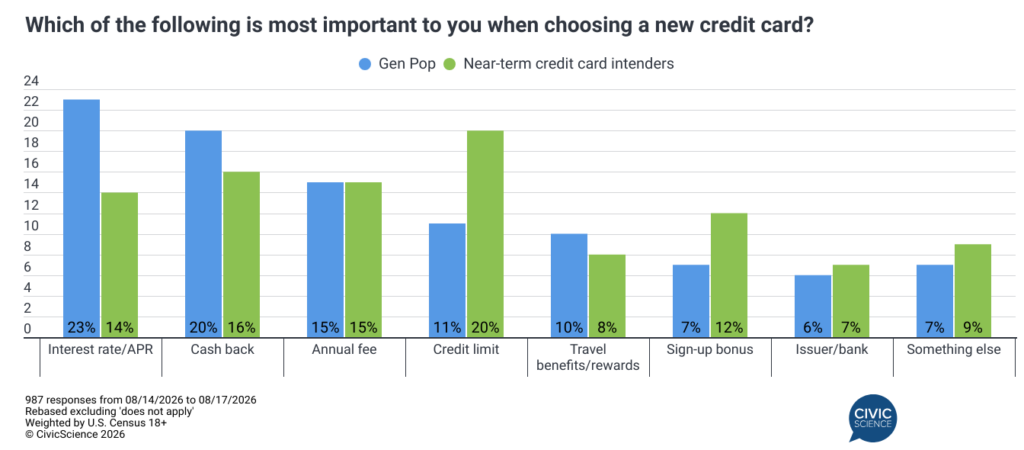
When the time comes to choose which credit card to apply for, those likely to apply in the next 90 days hold a very different view from the average. While Gen Pop emphasizes borrowing costs and cash-back, likely credit card applicants gravitate toward immediate benefits. Applicants are far more likely than average to cite the credit limit they can secure as their top factor when choosing a new credit card. They also over-index in their interest in a sign-up bonus. And while factors differ between the two groups nearly across the board, the Gen Pop and near-term applicants align in their belief that who issues the card matters least among the factors studied.
How to Reach Consumers Interested in Applying for a New Credit Card
A key advantage of CivicScience is that its always-on, consumer-declared data enables clients to reach audiences where they are, at the right moment when they’re making purchasing decisions. A glimpse into the data highlights a few key areas where the financial sector could engage those likely to apply for a new credit card, compared to the average consumer.
- Streaming Subscriptions to Watch Sports: More than half (56%) of near-term credit card applicants tell CivicScience they’re likely to subscribe to a new streaming service specifically to watch sports this year (among sports fans). This is far higher than the 32% among Gen Pop.
- Weekly Grocery Shoppers: 77% of near-term card intenders say they shop for groceries at least once per week, five points higher than the average American adult (72%).
- Source for Financial Product Research: Near-term intenders are slightly more likely than average to turn to family/friends and financial news/websites to learn about financial products. They are also four points more likely than Gen Pop to turn to financial aggregators such as Bankrate or NerdWallet.
- Type of Ads that Resonate Most: Intenders are nearly twice as likely as Gen Pop to say that emotional ads resonate with them most (excluding ‘none of the above’).
Capturing market share in the current credit environment demands a clearer focus on how cards solve immediate lifestyle and budget priorities. Brands that pair relevant incentives with targeted, high-impact placements will be best positioned to convert active interest into long-term growth.