CivicScience has the world’s largest proprietary database of real-time declared intent, allowing brands to activate high-performing advertising that drives up to 80% better performance. See how CivicScience partners achieve superior marketing outcomes here.
With devastating tornadoes, severe weather outbreaks, and wildfires hitting hard this summer, the harsh reality of the weather’s impact is ever-present. It comes on the heels of 2025, which had the third-highest frequency of natural disasters creating $1 billion or more in damages since 1980.
Given recent severe weather, how are consumers feeling about its impacts, and what actions are they taking in response? Here’s what the latest in consumer-declared data from CivicScience show:
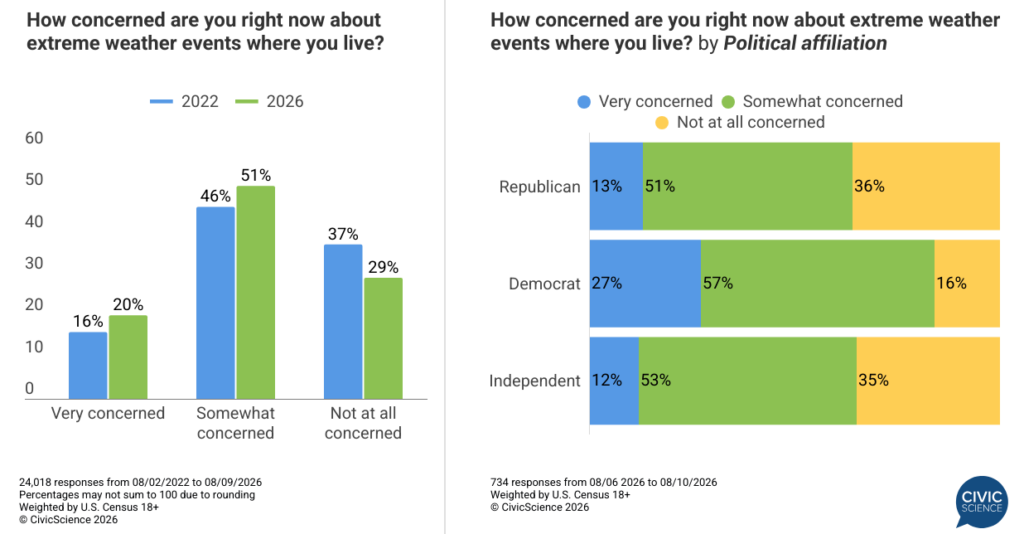
A growing majority of Americans are anxious about extreme weather hitting home, with concern spanning political lines.
In 2022, a majority of American adults (62%) told CivicScience they harbored at least some level of concern about extreme weather impacting where they live. Today, that percentage is up to 71%, while the unconcerned share has fallen from 37% to 29%. And while one in five say they’re ‘very’ concerned – with most people being ‘somewhat’ concerned – strong concerns climbed four points over the same period.
With climate and environmental issues serving as hot-button political issues, party alignment unsurprisingly correlates with the intensity of concern. Data show self-described Democrats are 2X as likely as their Republican and Independent counterparts to be ‘very’ concerned. Nevertheless, a majority of each political affiliation expresses at least some concern about severe weather impacts.
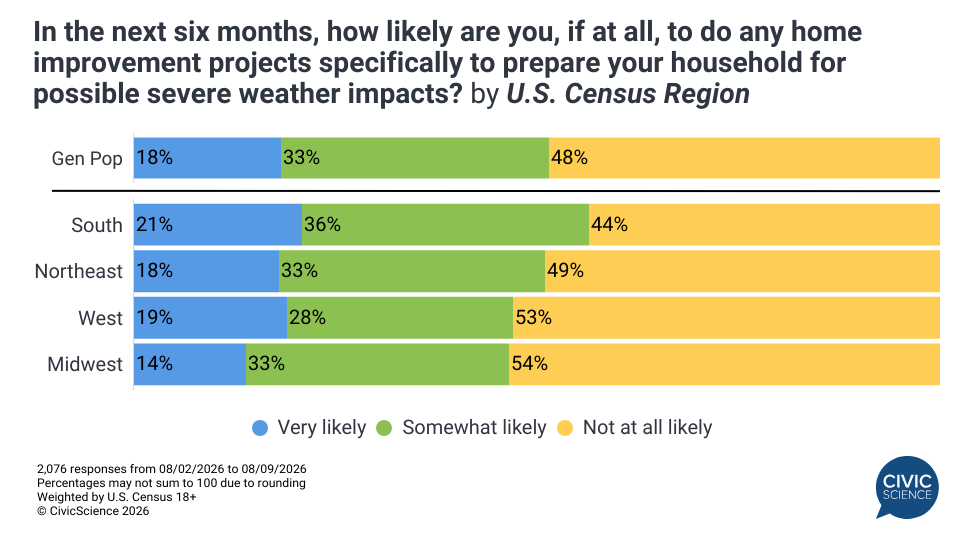
Nearly a fifth of consumers are ‘very’ likely to undertake home improvement projects in anticipation of future severe weather, with an additional third at least ‘somewhat’ likely to do so.
New forward-looking, consumer-declared data from CivicScience show 51% of U.S. adults are considering taking on home improvement work in the next six months (18% ‘very’ likely and 33% ‘somewhat’ likely) to prepare for future severe weather events. Americans living in the Southern U.S., who have to contend with hurricanes and a fall severe weather season, are most likely to plan home projects specifically for weather prep, whereas those in the Midwest and West are the least likely in general to take on any projects.
These severe weather planners stand out from the average American in a few key ways.
Using fresh, consumer-reported (not inferred) data, CivicScience can pinpoint how those planning weather-driven home improvements differ from the average American, giving brands and advertisers a key advantage in reaching them at exactly the right time. Here’s what the data show:
- New Credit Card: Just under half (48%) of these near-term severe weather planners say they’re likely to apply for a new credit card in the next three months, up from 32% of the Gen Pop.
- Using Video for Product Research: A video strategy is essential in engaging this audience – 44% of severe weather planners say they ‘always/often’ use video (online, social, streaming, TV, etc.) to learn about products or make purchase decisions. Thirty-seven percent of U.S. adults say the same.
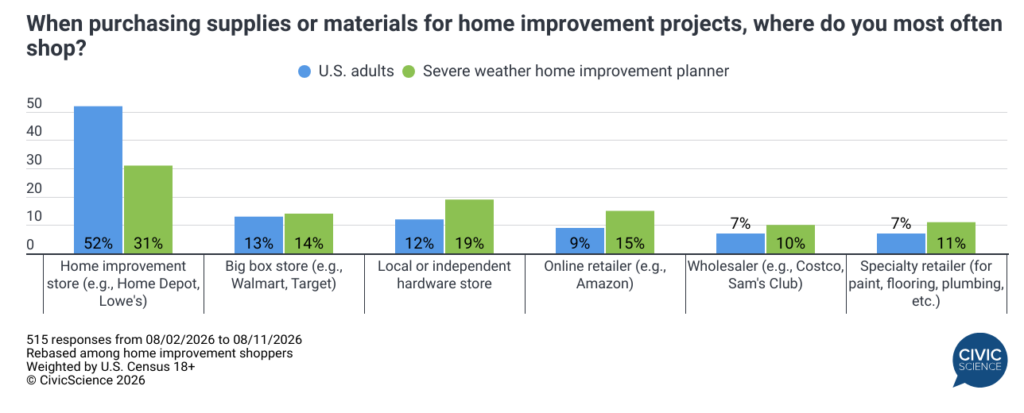
- Home Improvement Supply Shopping: These severe weather planners are much less likely than average to shop for home improvement supplies at home improvement stores like Home Depot or Lowe’s, and instead shop at online retailers and local/independent stores.
Aside from home improvements, nearly 60% of U.S. adults are taking small steps to prepare for severe weather, such as stocking up on food and supplies.
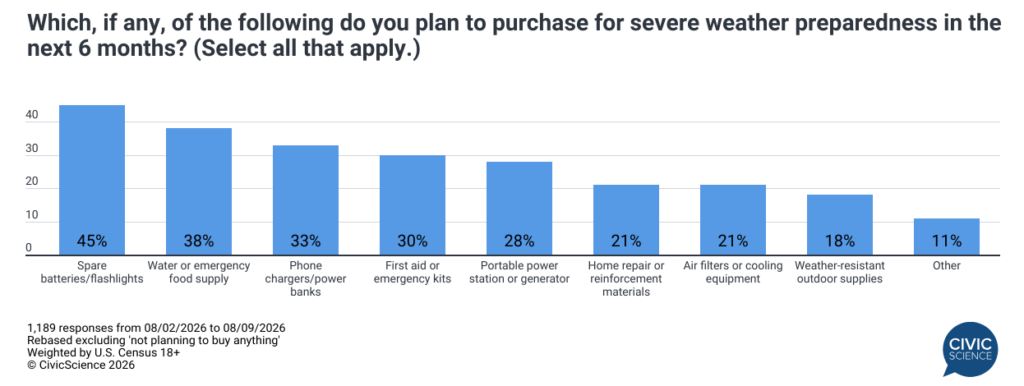
Americans are also taking other measures to prepare for severe weather that don’t require the time and investment of a major improvement project. Data show that 57% of U.S. adults plan to purchase at least one of the items in the chart below to prepare for possible severe weather impacts. Among these intenders, products for power outages are most common, such as buying flashlights, power banks for electronics, and emergency food/water. Air filters, weather-resistant outdoor supplies, and home repair supplies are less common.
The weather is an inescapable fact of life that affects everyone in some way. Americans are increasingly worried about the effects when that weather ramps up to severe levels. But as the frequency of severe weather events increases, that anxiety is translating into consumer action and proactive purchasing. Real-time consumer intelligence from CivicScience enables brands to identify these shifting habits and deliver relevant solutions right when household safety is top of mind.