CivicScience has the world’s largest proprietary database of real-time declared intent, allowing brands to activate high-performing advertising that drives up to 80% better performance. See how our partners achieve superior marketing outcomes here.
1. Four in ten convenience app users are using them more often than they did last year, while nearly one-quarter say these apps are an everyday necessity.
Americans are increasingly turning to convenience apps such as food delivery services (e.g., DoorDash, Uber Eats) or grocery delivery services (e.g., Instacart, Walmart+). Among those who use these services, 40% say they’re using them more often now than they were this time last year, including 19% using them ‘much’ more often. Just under one-quarter (24%) of users are using them less frequently.
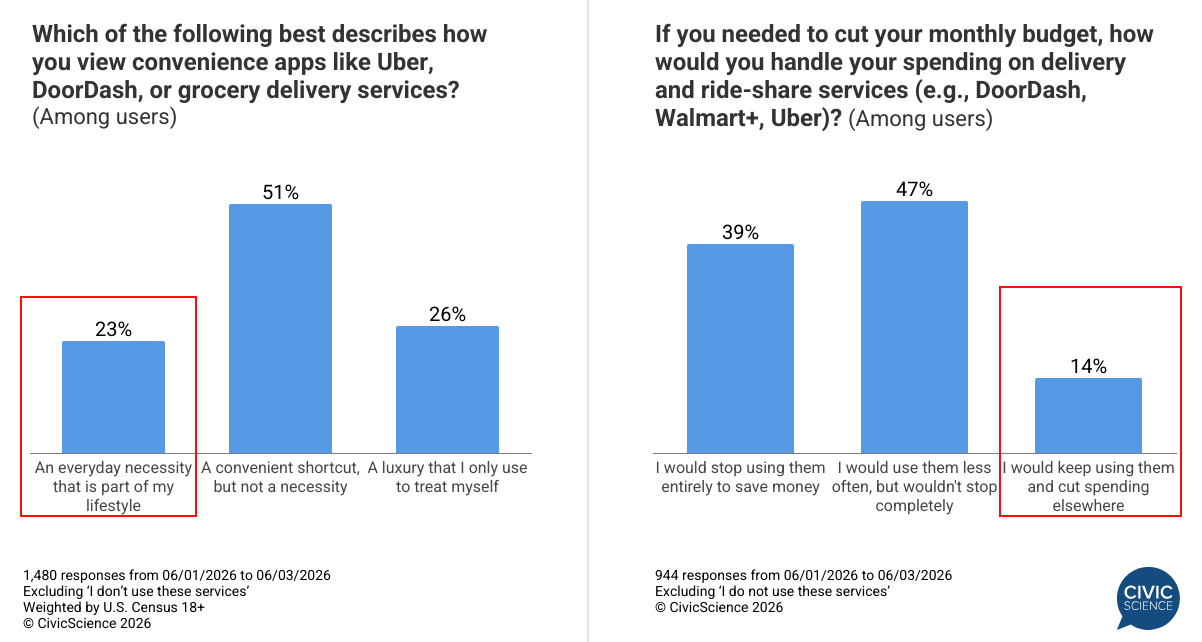
However, consumers view the value of these convenience platforms through very different lenses. While 23% of users consider these apps an ‘everyday necessity’ for their lifestyle, a slim majority see them more as a helpful shortcut rather than a must-have. This mindset shapes how consumers say they would react if times got tough: if forced to trim their monthly budgets, about half of users would scale back their usage frequency rather than stop entirely, while a smaller, highly dedicated contingent would actively protect their delivery budget by cutting expenses elsewhere.
The Weekly Pulse report goes in-depth to profile the consumers who rely on these convenience apps. CivicScience clients and Media Partners have access to the full Weekly Pulse report. To learn more about how you can access it, click here.
Let Us Know: How many times per week would you say you order takeout or delivery, on average?
2. American use of Buy Now, Pay Later services is trending up, driven by consumers under 45 and women.
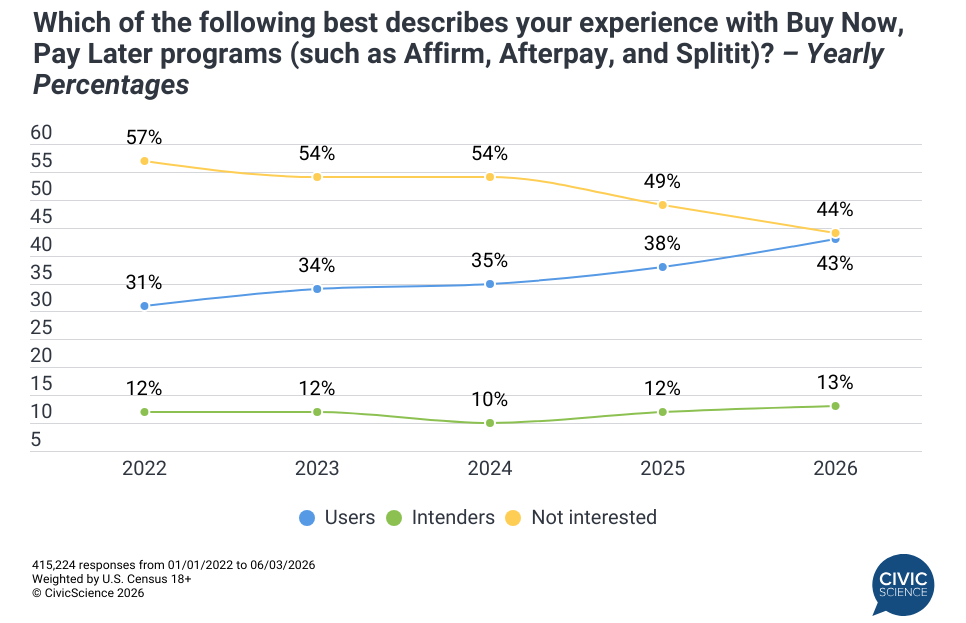
The adoption of Buy Now, Pay Later (BNPL) programs has seen steady upward momentum over the last few years, with the share of active users rising significantly over the past year to reach 43% in 2026. This growth is overwhelmingly driven by younger consumers, with a striking 57% of both Gen Z and Millennials reporting use of these services. In stark contrast, older generations remain highly resistant to the trend, with the majority of those aged 65+ expressing no interest in integrating BNPL into their financial habits. Women also outpace men when it comes to BNPL adoption (46% to 41%, respectively).
Consumer-declared data show this short-term financing option is most commonly used for purchases in clothing and apparel, groceries, and electronics.
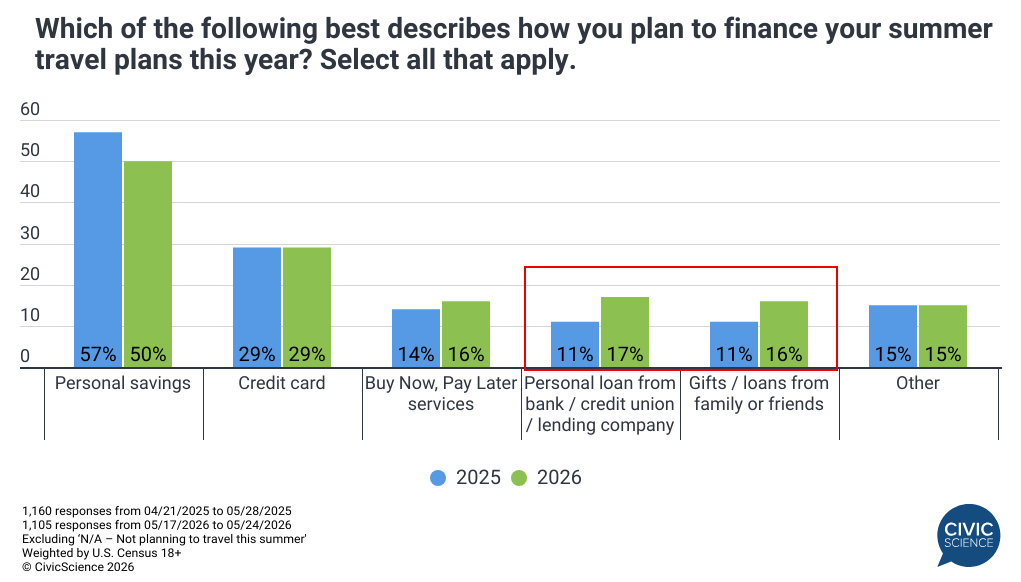
3. While personal savings remain the primary funding source for summer travel this year, more Americans say they will turn to personal loans or lean on family to keep travel plans intact.
As Americans gear up for summer travel amid rising inflation, they are shifting away from traditional savings toward flexible financing. While turning to personal savings remains the most common option, fewer travelers are doing so than last year. To make up the difference, more vacationers will use personal bank loans or ask friends and family for financial help. Meanwhile, credit card use is holding steady, while Buy Now, Pay Later is up slightly, highlighting that even when cash is tight, consumers are determined to take their summer trips by spreading costs.
Take Our Poll: How willing are you to pay for premium travel upgrades?