CivicScience has the world’s largest proprietary database of real-time declared intent, allowing brands to activate high-performing advertising that drives up to 80% better performance. See how our partners achieve superior marketing outcomes here.
1. The majority of American adults are at least ‘somewhat’ concerned about the Cyclosporiasis outbreak, and it’s significantly impacting how some shop at the grocery store.
With thousands of confirmed cases spanning multiple states, the ongoing Cyclosporiasis outbreak has many Americans on edge. New CivicScience data show 58% of U.S. adults are either ‘very’ (25%) or ‘somewhat’ (33%) concerned about the spread of Cyclosporiasis. Just 24%, meanwhile, say they aren’t aware of the outbreak. While no deaths have been reported so far, the infection caused by the microscopic parasite Cyclospora can last for weeks and cause severe, unpleasant gastrointestinal issues.
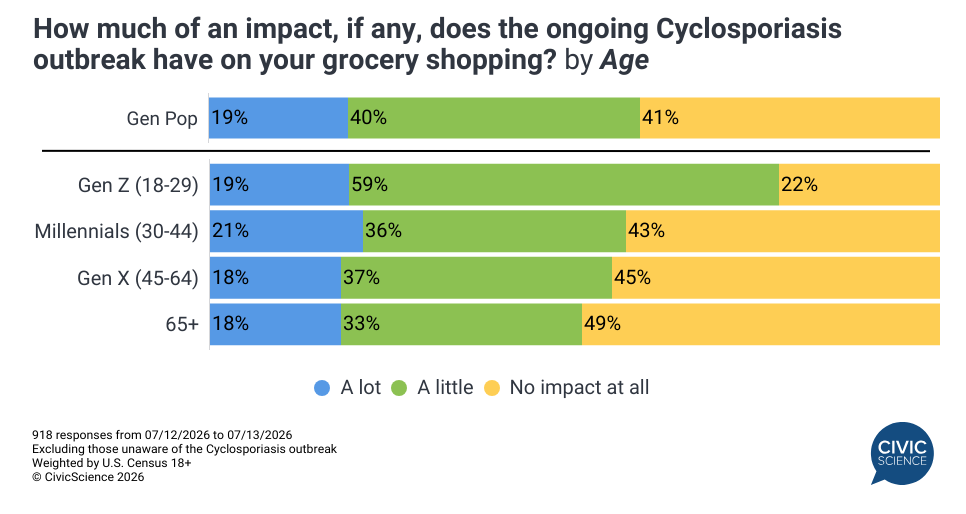
That concern is also manifesting at the grocery store. Nearly one in five tell CivicScience that Cyclosporiasis has ‘a lot’ of influence on their current grocery shopping habits, while another 40% say it has at least ‘a little’ impact. A look by age reveals that Gen Z (18-29) is the most likely generation to report any impact at all, with 78% saying the outbreak has affected their grocery shopping to some degree, while Millennials (30-44) are narrowly the most likely to report strong impacts, likely a proxy for parental status and concern for their children.
2. Sixty-nine percent of American student loan debt holders are stressed about repayment, a significant increase from 56% in 2022, as the SAVE plan officially ends.
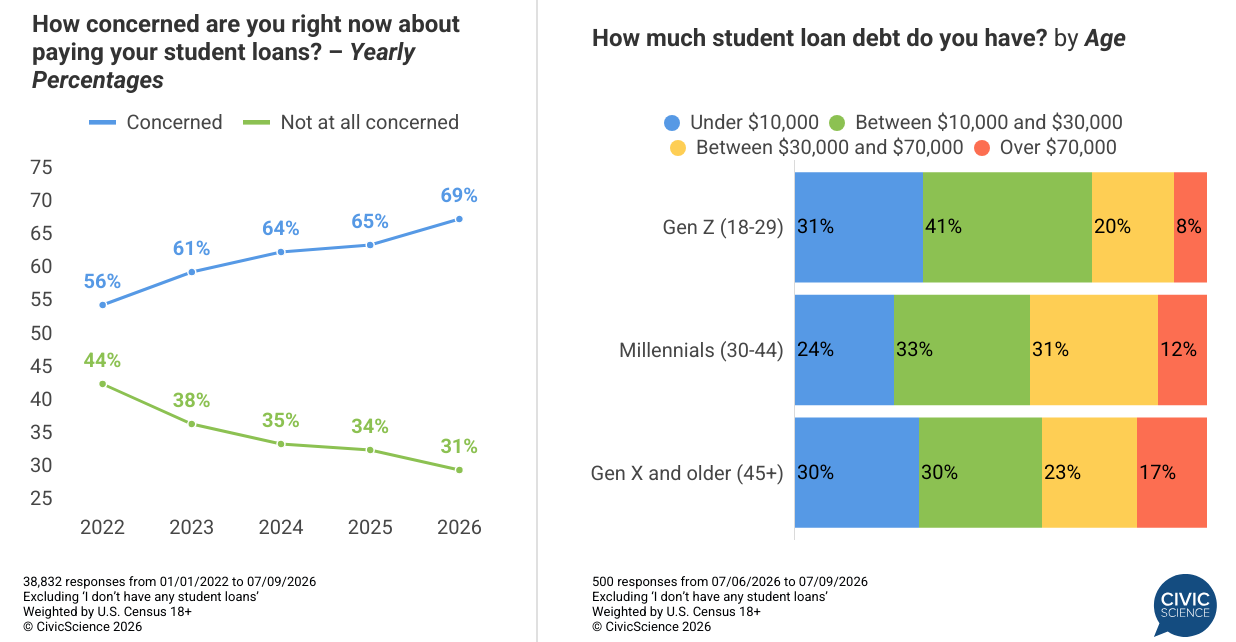
Consumer anxiety about repaying student loans is on the rise. The latest CivicScience data show 3 in 10 Americans with student loan debt are ‘very’ concerned about repaying those loans, while 39% are ‘somewhat’ concerned. Overall, 69% of student loan debt holders are at least ‘somewhat’ concerned, a significant jump from 56% in 2022. This heightened anxiety coincides with the official end of the federal SAVE plan this month, which has forced millions of Americans into a stressful 90-day window to select an alternative repayment structure or risk automatic enrollment in more expensive options.
When examining the size of outstanding student debt, most borrowers have balances under $30,000, but the financial burden varies significantly across demographic groups. Gen Z borrowers are heavily concentrated in the $10,000 to $30,000 range (41%), while older generations (Gen X and up) are the most likely to carry heavy debt loads exceeding $70,000 (17%). Gender differences also emerge, with women more likely than men to hold smaller balances of under $10,000 (34% to 23%, respectively). Under the newly enacted federal guidelines, in which repayment timelines and terms are directly dictated by total debt amounts, these demographic splits highlight which consumer groups will face the longest payment commitments.
Take Our Poll: Do you feel stressed about your current level of personal debt?
3. One in two U.S. adults is now likely to seek a new job, but a “dream job” is no longer enough to guarantee acceptance if it fails to meet job-seeker requirements.
Workers are more interested in looking for a new job than they were this time last year, with the percentage reporting that they are at least ‘somewhat’ likely to search for a new job in the next 12 months rising from 42% in July 2025 to 50% in June 2026. Of course, some of this intent is likely out of necessity amid the current job market and layoffs.
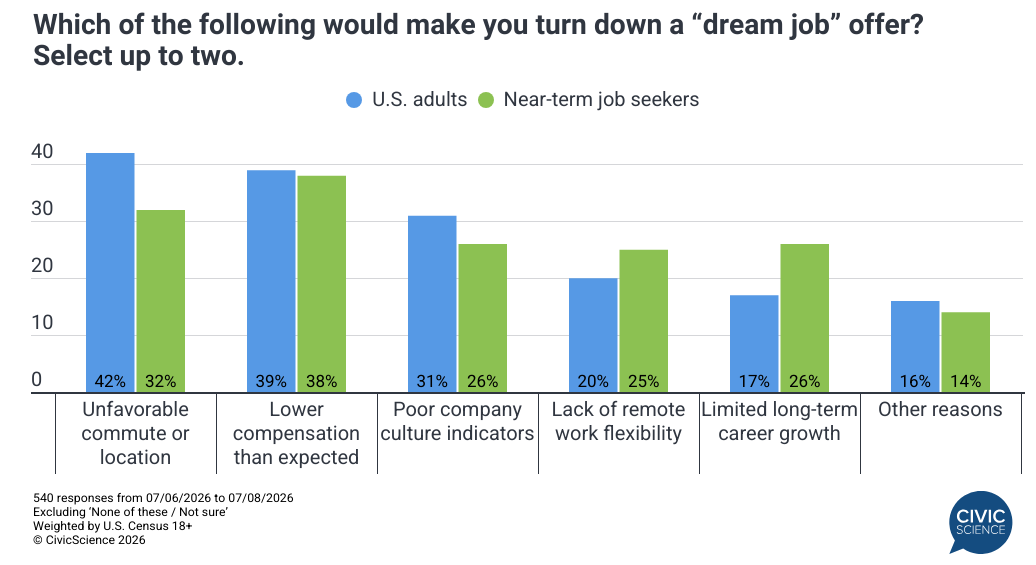
Even when offered a “dream job,” there are certain hard lines modern professionals aren’t willing to budge on. For the Gen Pop, an unfavorable location or commute is the clear leading red line, followed by less-than-expected compensation and red flags about company culture. And while those ‘very’ likely to search for a new job in the next 12 months align with Gen Pop on compensation concerns, they notably outpace the average American in prioritizing long-term career growth and remote-work flexibility. Strikingly, these imminent seekers are critical of every aspect of an offer, with at least a quarter flagging each primary option they studied as a potential deal-breaker.
Let Us Know: How often would you say you casually look for a new job during an average week?