CivicScience has the world’s largest proprietary database of real-time declared intent, allowing brands to activate high-performing advertising that drives up to 80% better performance. See how our partners achieve superior marketing outcomes here.
July 29th is a momentous occasion for wing lovers everywhere as it marks the celebration of National Chicken Wing Day. To celebrate this delectable day, CivicScience asked Americans to weigh in about their wing preferences. Here’s what the consumer-declared data reveal:
1. One in five Americans eats chicken wings at least once per week, led by Gen Zers.
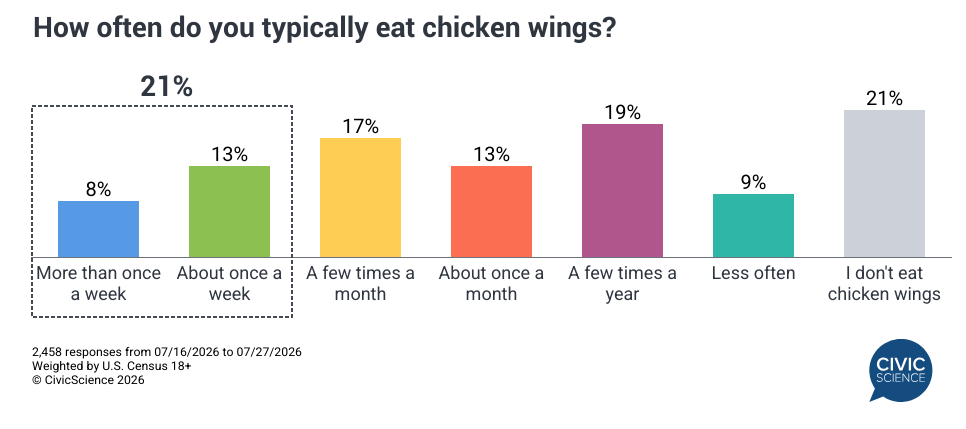
America loves wings, so much so that it made Wingstop the fastest-growing restaurant chain last year. New CivicScience data show more than 1 in 5 U.S. adults (21%) eat chicken wings once per week or more, with a dedicated 8% enjoying them multiple times a week. Another 30% say they have them at least once a month, while 21% don’t eat chicken wings at all.
Wing consumption frequency heavily correlates with age. Thirty-nine percent of Gen Z adults (18-29) say they eat wings at least weekly (just 9% don’t eat them at all), followed by 31% of Millennials (30-44). Americans over 45, by contrast, are much less frequent consumers, 13% of Gen Xers and just 4% of those aged 65+ eat chicken wings weekly or more.
2. Buffalo-flavored wings only narrowly lead as America’s go-to wing flavor.
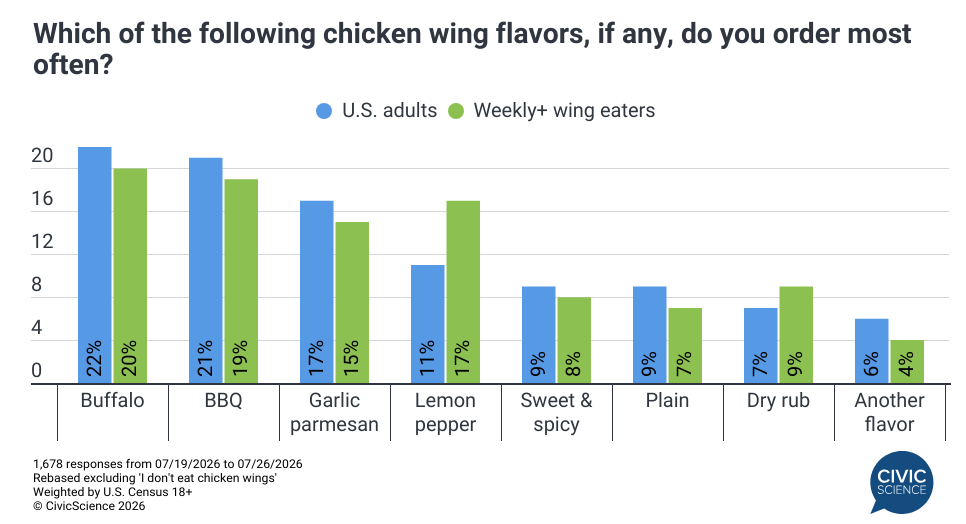
While buffalo wings are the classic chicken wing variation, CivicScience data show they face a lot of competition – 22% of chicken wing fans overall most often order buffalo wings, just ahead of BBQ (21%) and garlic parmesan wings (17%) to round out the top three. While the wing connoisseur who eats wings weekly or more largely aligns with Gen Pop, these avid wing-eaters have a particular preference for the lemon pepper variety and are slightly more interested in dry rub wings.
In terms of wing style itself, 33% of U.S. adult respondents say they most prefer drums, while 24% lean towards flats. The plurality (42%) of wing lovers, however, say either drums or flats are fine and have no favorite between the two options.
3. Takeout is the #1 way to order wings, while frequent consumers most often consider wings as a side or snack.
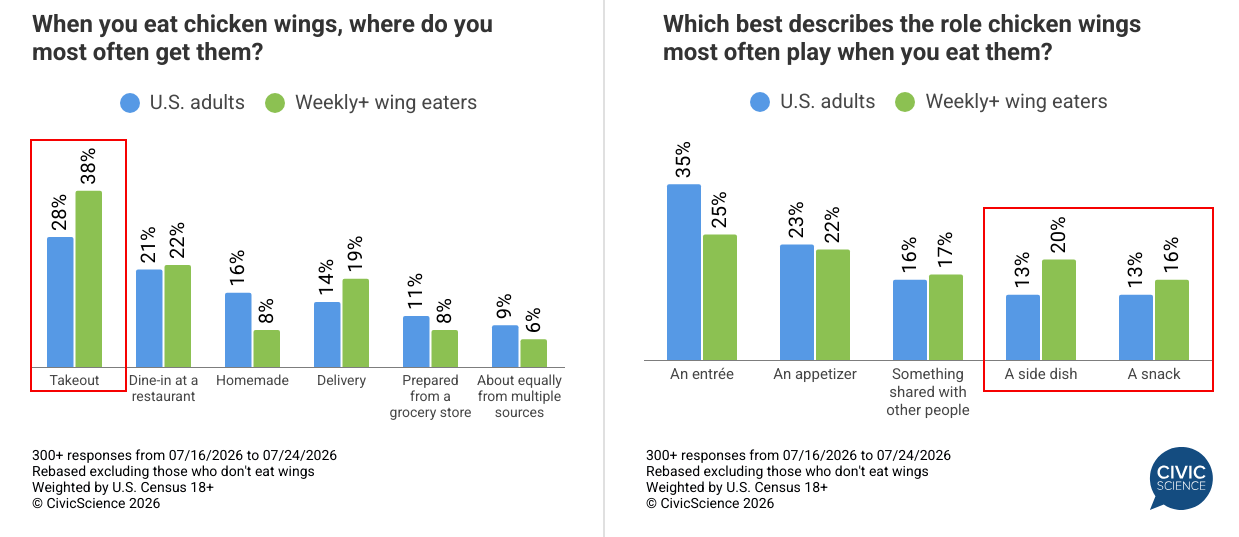
When they’re ready to satisfy the wing craving, Americans most often order them via takeout (28%), eat them while dining in at a restaurant (21%), or opt to make them on their own (16%). But these trends don’t tell the full story. America’s most frequent wing consumers exhibit a much stronger tendency toward takeout and delivery, a trend likely driven by younger consumers who gravitate toward third-party food-ordering apps. These weekly wing enjoyers are also two-times less likely than average to prepare homemade wings when their craving hits.
A similar pattern emerges in how wings fit into a meal. While general consumers primarily consider wings an entree or appetizer, the high-frequency wing consumer is more likely to eat them as a side dish or snack.
4. Why frequent wing eaters should be on brands’ radars for more than just food.
These dedicated wing lovers aren’t just a high-value, highly engaged audience for the restaurants in the wing business. Additional Consumer-reported data show weekly+ wing enjoyers are active consumers in other areas across other industries too. Compared to the average American, they are:
- More than twice as likely to have already begun their winter holiday shopping (34% to 16%).
- 31% are ‘very’ likely to subscribe to a new streaming service specifically to watch sports this year, outpacing the average American by more than 2-to-1 (14%).
- Nearly half (44%) are ‘very’ interested in learning a new do-it-yourself (DIY) skill in the next 30 days, 20 points higher than average.
Whether it’s ranch over blue cheese or lemon pepper to-go, Americans’ devotion to chicken wings is undeniable. But as the data shows, high-frequency wing fans bring more to the table than just a love for wings. Their active habits across retail, streaming, and lifestyle trends make them an audience to watch year-round.