CivicScience has the world’s largest proprietary database of real-time declared intent, allowing brands to activate high-performing advertising that drives up to 80% better performance. See how CivicScience partners achieve superior marketing outcomes here.
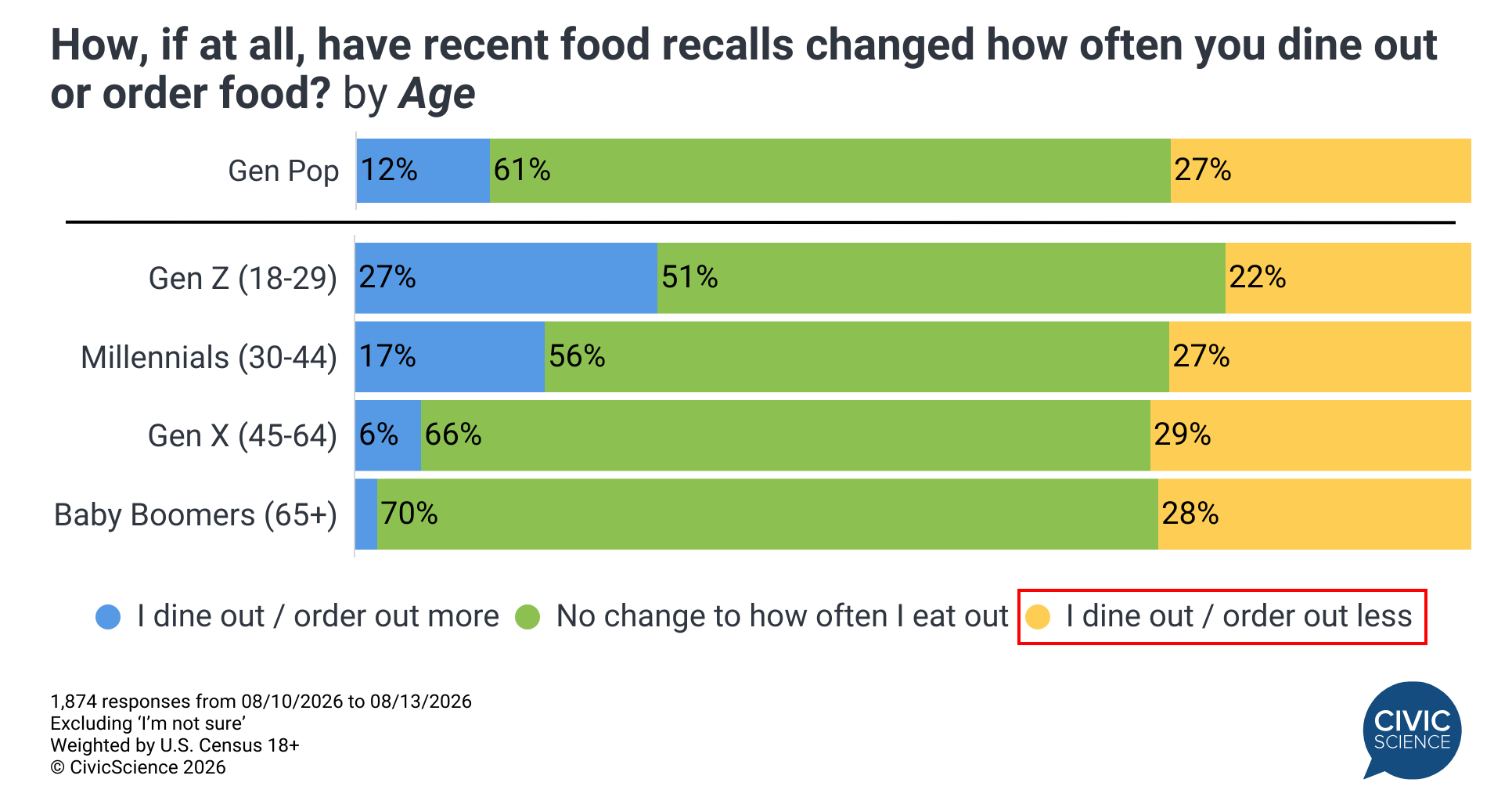
1. Food recalls hit home for many Americans, but only 27% say they’ve decreased how often they dine out.
Amid a flurry of active food recalls, CivicScience data show 2 in 5 U.S. adults report having either purchased a recalled item or knowing someone who has, though notable differences exist across demographic groups. Forty-two percent of Gen Z respondents, aged 18-29, and 26% of urban respondents state that they have purchased a recalled product. In contrast, Baby Boomers (65+) and rural residents were the least likely, with 87% of those 65+ reporting no personal connection to the recent recalls.
Additional data show these food recalls are having at least somewhat of an impact on dining habits. More than one-quarter (27%) say they’re dining and ordering out less often, with Gen X leading the trend (excluding ‘I’m not sure’). Meanwhile, a small minority of consumers – 12% overall – report dining out or ordering food more frequently.
2. Local TV news is the go-to source for emergency severe weather news, but not all generations agree.
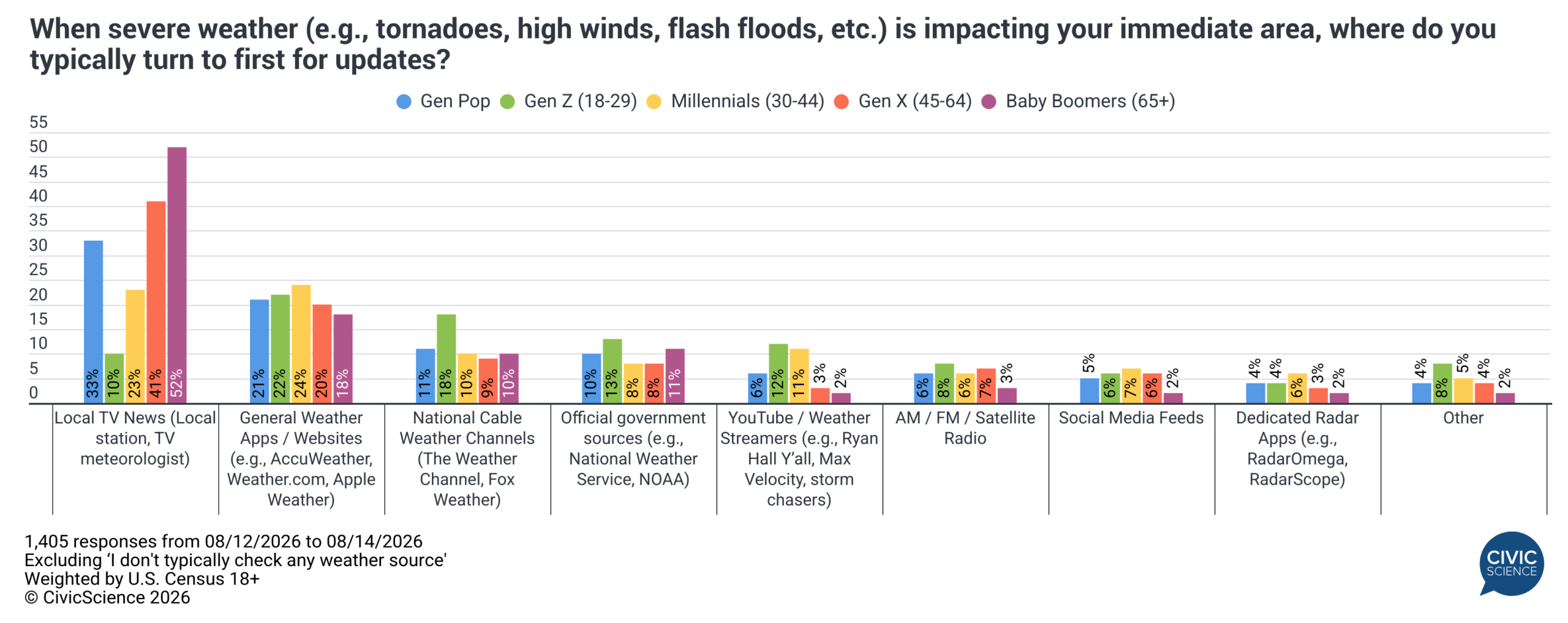
For portions of the U.S., severe weather has been a frequent feature this summer. CivicScience has recently found that some Americans are taking a proactive approach to prepare for future impacts, but where do they turn when the storm is actually hitting home? According to new consumer-reported data, Americans are most likely to turn to their local TV news first when severe weather rolls in, coinciding with an overall rise in interest in local TV news. General weather apps and websites follow in a distant second, while all other sources are much less common overall.
However, consumer sources for severe weather vary drastically by age. Data show that 52% of Baby Boomers and 41% of Gen X report turning to their local station/meteorologist when severe weather is impacting them, rates far higher than those of their younger counterparts. Meanwhile, Gen Z prefers to check apps and sites like AccuWeather, followed closely by national cable weather channels like The Weather Channel. While YouTube and live streaming are emerging spaces for severe weather coverage, with upstarts like Ryan Hall Y’all and Max Velocity bursting onto the scene, they remain uncommon sources of coverage. That said, Gen Zers are twice as likely as Gen Pop to check a weather live stream when severe weather hits.
Let Us Know: Which kind of severe summer weather are you most concerned about in your area?
3. The prevalence of sports betting has consumers across political parties wanting more regulation in the industry
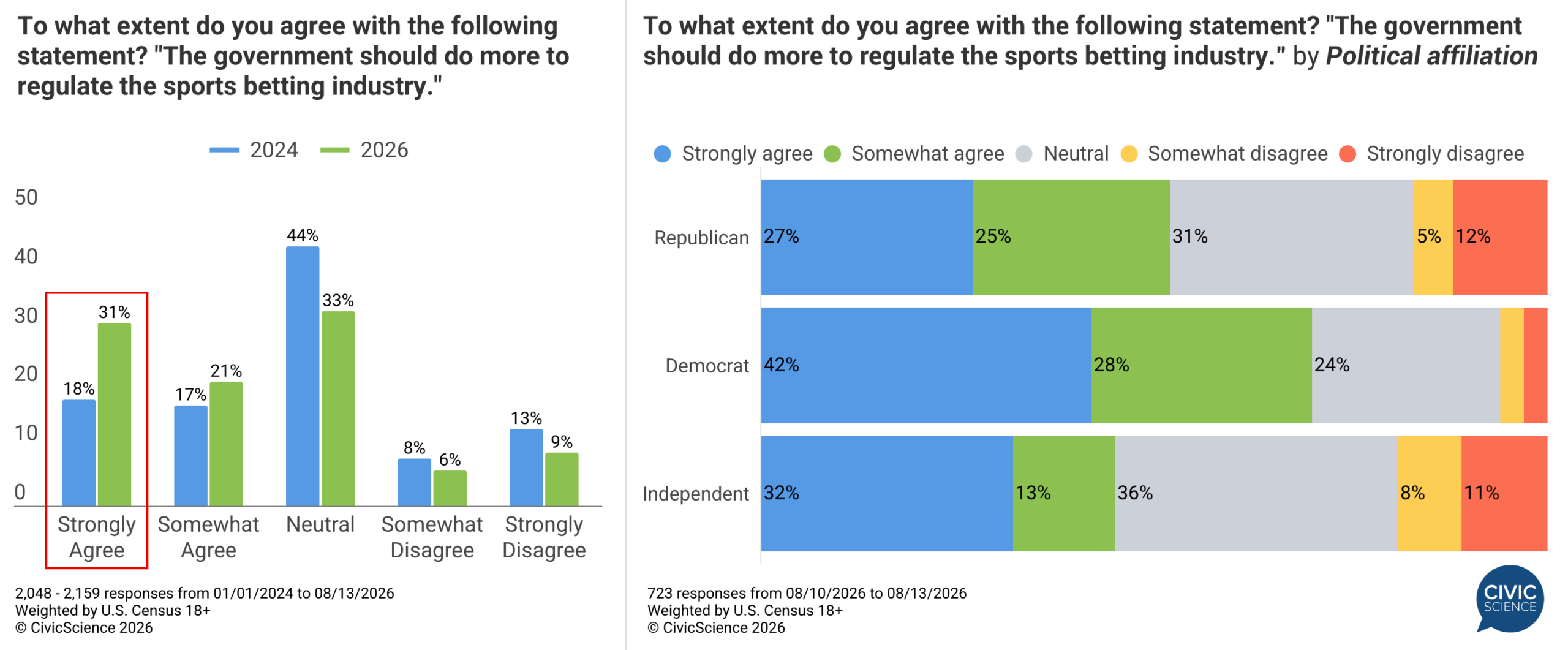
As sports betting becomes more common, questions about potential regulations are rising, too. More than half (52%) of U.S. adults now believe the government should do more to regulate the sports betting industry – a 17-percentage-point increase from 2024. Notably, the share who ‘strongly’ agree is up 72% from two years ago. Consequently, opposition to government oversight has shrunk drastically, with only 15% of adults remaining opposed to stricter regulation.
Additionally, there is rare alignment across the political spectrum around sports gambling regulations, with more than half of self-described Republicans and Democrats believing that the government should regulate the industry. Support for regulation is highest among Democrats at 70%, followed by Republicans at 52% and Independents at 45%. This level of support demonstrates that the desire for oversight transcends traditional party lines as the market expands.
Take Our Poll: Do you believe the benefits of sports betting do or do not outweigh the risks?