CivicScience engages directly with consumers, collecting over one million survey responses daily, to turn real-time insights into high-performing advertising campaigns. See how leading brands use CivicScience to drive campaign performance here.
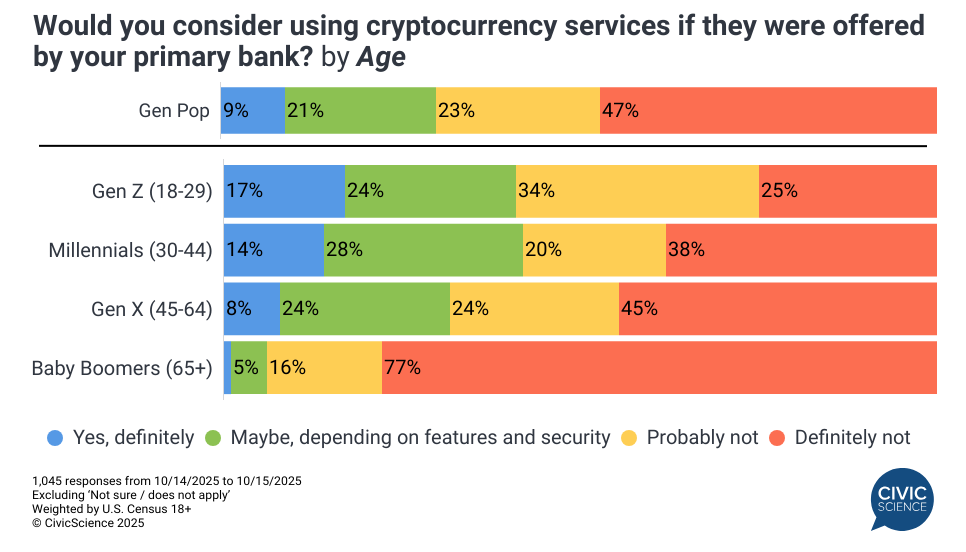
1. Three in ten respondents say they would consider using crypto services if their bank offered them, with interest strongest among Gen Z.
While more consumers told CivicScience they trust and/or have invested in cryptocurrency during the summer, consumer skepticism about its legitimacy lingers. This begs the question: How would consumers respond if their bank were to begin offering cryptocurrency services? Fresh CivicScience data reveal that while 3 in 10 respondents express excitement or interest in their bank providing crypto services, a larger portion—41%—feel concern or opposition. Notably, higher-income households show greater resistance to the idea.
When it comes to adoption interest, only 9% of consumers say they would ‘definitely use’ crypto services if their bank offered them, with an additional 21% open to the idea, depending on specific features and security measures. Seventy percent, meanwhile, say they would ‘probably’ or ‘definitely’ not use such services. Age plays a key role in openness: 77% of those aged 65 and older would ‘definitely not’ use crypto services at their primary bank, whereas this level of opposition drops sharply to just 25% among Gen Z adults, who are also the most likely to be current crypto investors.
Weigh In: In general, do you think cryptocurrency is a good investment or a bad investment?
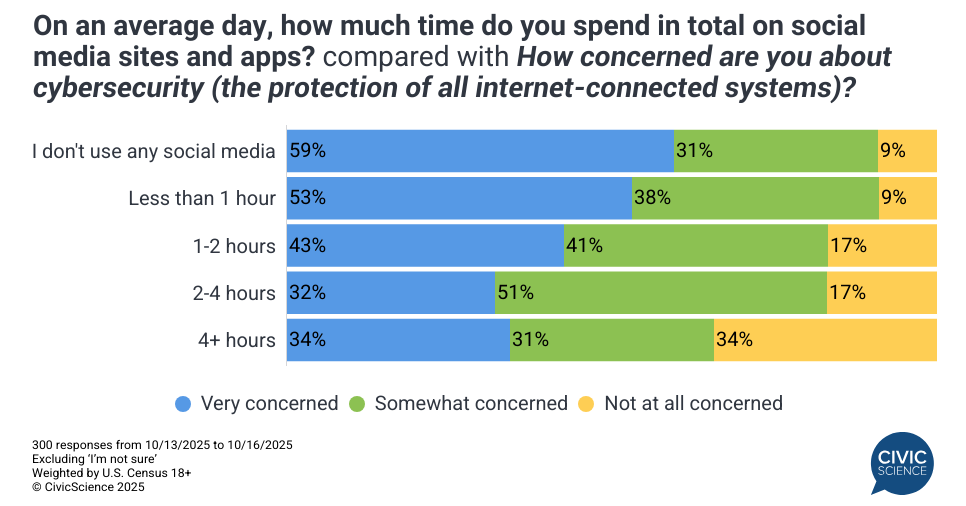
2. The strong majority of Americans are at least ‘somewhat’ concerned about cybersecurity, and this concern extends to all levels of social media usage.
While banks would certainly offer a more secure avenue for crypto investing, cryptocurrencies can often pose a threat to personal cybersecurity. The rising integration of AI technology in a variety of industries is also inspiring cybersecurity concerns, as is the recent AWS outage. According to a recent CivicScience survey, 88% of Americans express at least some concern about cybersecurity threats, with nearly half (47%) being ‘very’ concerned. Notably, individuals who use social media less report the highest levels of cybersecurity concern. Still, even among heavy social media users, 65% remain at least somewhat concerned, highlighting a near-universal unease about digital safety in an increasingly AI-driven world.
3. Many Americans find online learning helpful, but economic outlook plays a key role in willingness to pay for online courses.
As online education becomes increasingly mainstream, CivicScience survey data reveal nearly two-thirds of U.S. adults view online platforms such as LinkedIn Learning and Coursera as helpful resources for learning new professional skills or advancing their careers. Willingness to pay for online courses, however, is influenced by broader economic outlook. In an additional survey, 3 in 10 U.S. adults told CivicScience they are either ‘somewhat’ or ‘very’ willing to invest in an online course, with this inclination markedly higher among those with more positive or stable future outlooks on the economy. In contrast, those who anticipate worsening economic conditions show significantly less willingness to spend on such courses. This suggests that consumer confidence plays a crucial role in the growth potential of the online learning market.

Weigh In: When learning a new skill, would you rather take an in-person class or attempt to self-teach?