CivicScience has the world’s largest proprietary database of real-time declared intent, allowing brands to activate high-performing advertising that drives up to 80% better performance. See how our partners achieve superior marketing outcomes here.
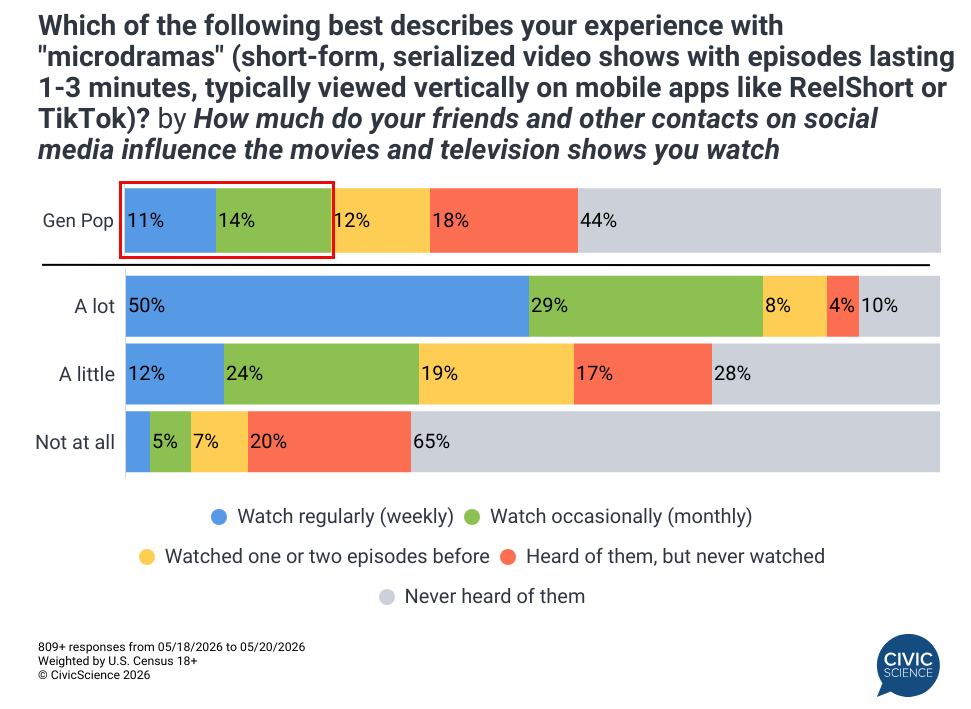
1. Roughly one-quarter of U.S. adults say they watch microdramas at least occasionally, with word of mouth in social networks playing a key role in their interest.
As consumer attention spans shorten and mobile-first video consumption dominates, “microdramas”—short-form, serialized vertical video shows with episodes lasting just 1 to 3 minutes—are rapidly emerging as a new and successful frontier in digital entertainment. While 44% of U.S. adults have never heard of the format, a notable 25% of the population already watches them ‘regularly’ or ‘occasionally.’
Word of mouth from friends and contacts on social media is a major driver of this format: a striking 79% of consumers whose friends and social media contacts heavily influence their media habits regularly or occasionally watch microdramas.
Take Our Poll: Do you think microdramas will become a major form of entertainment in the US?
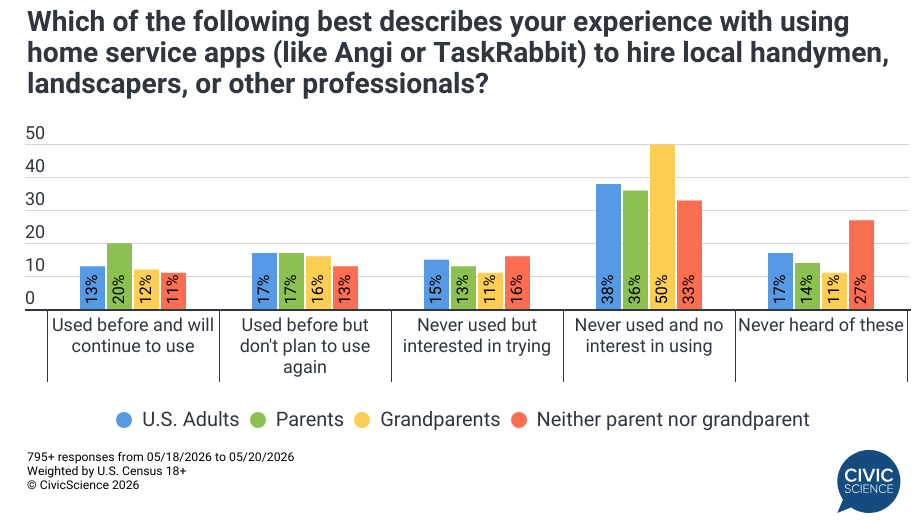
2. While home service apps like Angi maintain modest adoption and support among parents, significant hurdles remain as platforms battle high churn and an awareness gap.
Home service platforms (such as Angi – formerly Angie’s List – or TaskRabbit) have achieved modest, sustained adoption among U.S. adults, with 13% remaining loyal repeat users and another 15% expressing interest in trying them. However, user retention is an ongoing hurdle–17% of respondents have used these apps and platforms in the past, but do not plan to return.
The data also show a noteworthy correlation to parental status – the strongest recurring usage comes from consumers who are parents, while the most significant awareness gap for these platforms exists among consumers who are neither a parent nor a grandparent. Grandparents, meanwhile, are by far the least likely to be interested in these types of services.
Let Us Know: Have you ever used an online freelance marketplace service like TaskRabbit or Handy?
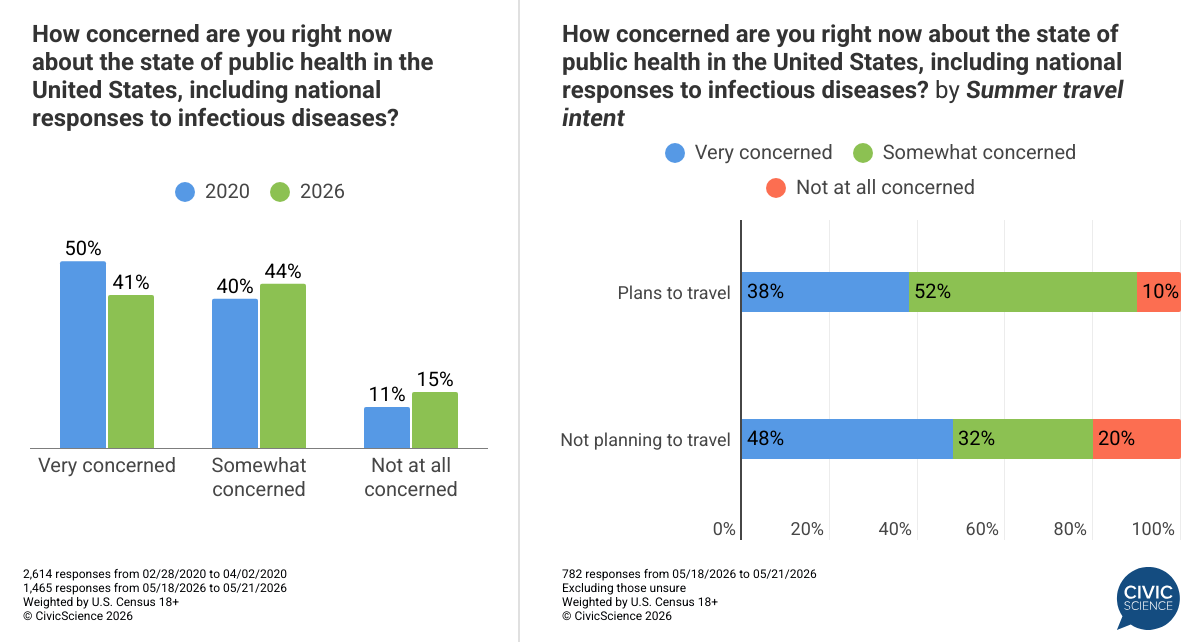
3. American concern about public health, including infectious disease response, is down from 2020 but remains a strong concern for many older adults.
While overall concern regarding the United States’ response to infectious diseases has dipped slightly since 2020, public health anxiety remains notably high, with two in five Americans reporting that they are still ‘very’ concerned about the state of public health. Those aged 65+ exhibit the highest level of worry by a wide margin, with nearly two-thirds of the demographic stating they are ‘very’ concerned. While Gen Z and Millennials express the lowest levels of intense concern, more than half of both younger generations still admit to being at least ‘somewhat’ concerned about public health issues in the U.S.
A look at public health concerns compared to summer travel plans reveals that nearly half of those who don’t plan to travel this summer are ‘very’ concerned about public health and the infectious disease response right now, 10 points higher than those who do plan to travel. That said, planned travelers are more likely to be concerned overall, suggesting that at least some Americans are willing to accept any potential concerns to keep summertime fun on track.