CivicScience has the world’s largest proprietary database of real-time declared intent, allowing brands to activate high-performing advertising that drives up to 80% better performance. See how CivicScience partners achieve superior marketing outcomes here.
1. Four in five Americans express concern for military veterans’ affairs, while nearly half are ‘dissatisfied’ with the care of active-duty and former service members.
The latest consumer-reported data from CivicScience show over 4 in 5 U.S. adults expressing at least some concern about the state of veterans’ affairs in the United States, with 42% ‘very’ concerned and 41% ‘somewhat’ concerned. Unsurprisingly, households that have some affiliation with the U.S. military report higher levels of strong concern (47%) than non-affiliated households (39%).
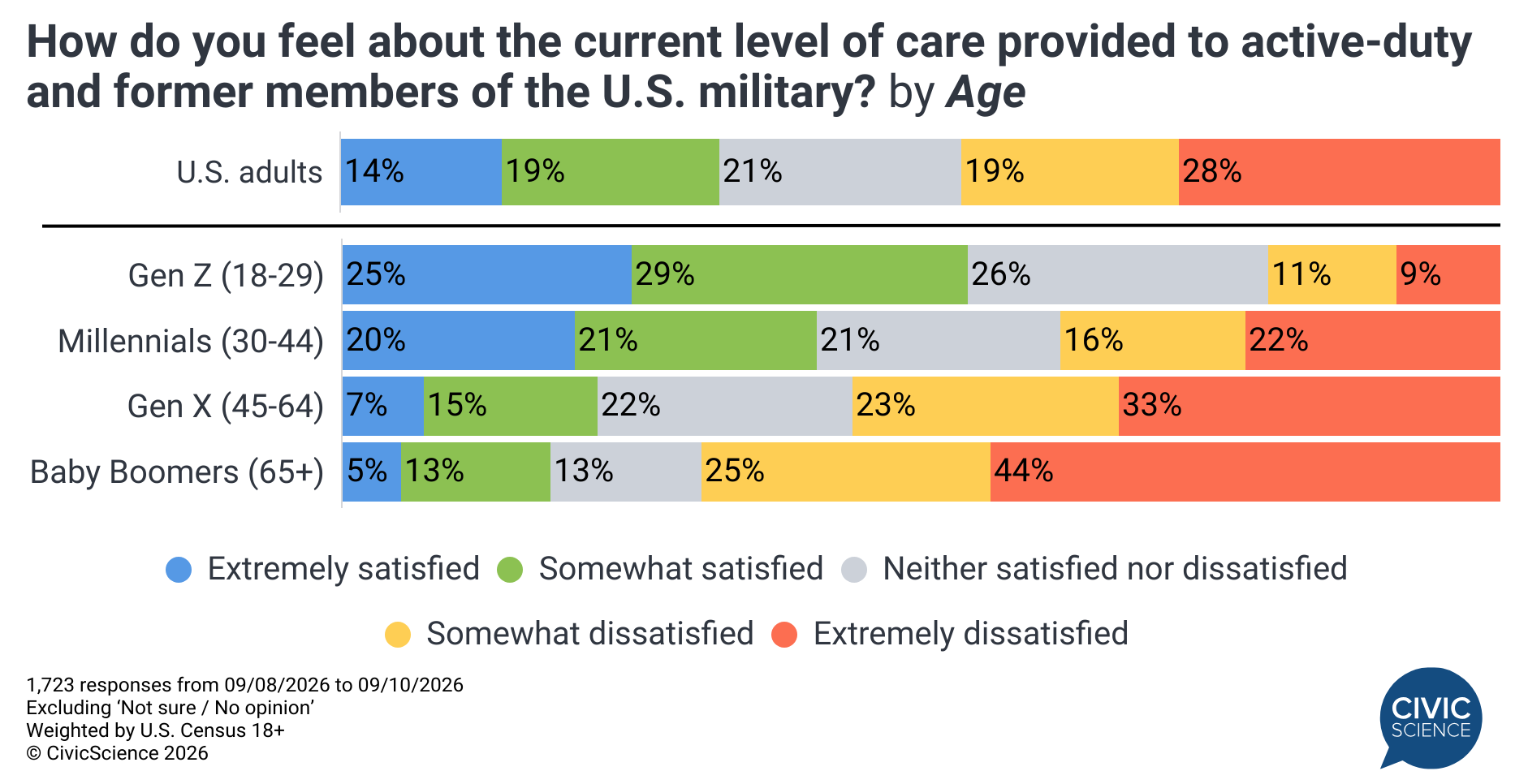
Amid recent news of conditions aboard a U.S. Navy ship at sea for over 200 days, overall satisfaction with the care provided to active-duty and former military members is negative. Nearly half (47%) of U.S. adults are dissatisfied, including 28% ‘extremely’ dissatisfied with the level of care. One-third, meanwhile, say they’re at least ‘somewhat’ satisfied. Level of satisfaction correlates with age, with older Americans expressing the strongest dissatisfaction. Baby Boomers aged 65+ lead the pack with 69% feeling dissatisfied, followed by Gen X at 56%.
2. The rising cost of extracurricular activities for kids is creating a barrier to entry for many parents.
Parents are being impacted by rising costs every day. Whether they’re thinking about shifting grocery runs or the cost of youth sports, budget concerns weigh heavily. But it’s not just sports that are putting a strain on wallets. A clear majority of parents find the overall cost of their children’s extracurricular activities at least ‘somewhat’ expensive, at 67% combined. Only 10% consider these activities to be ‘very’ affordable.
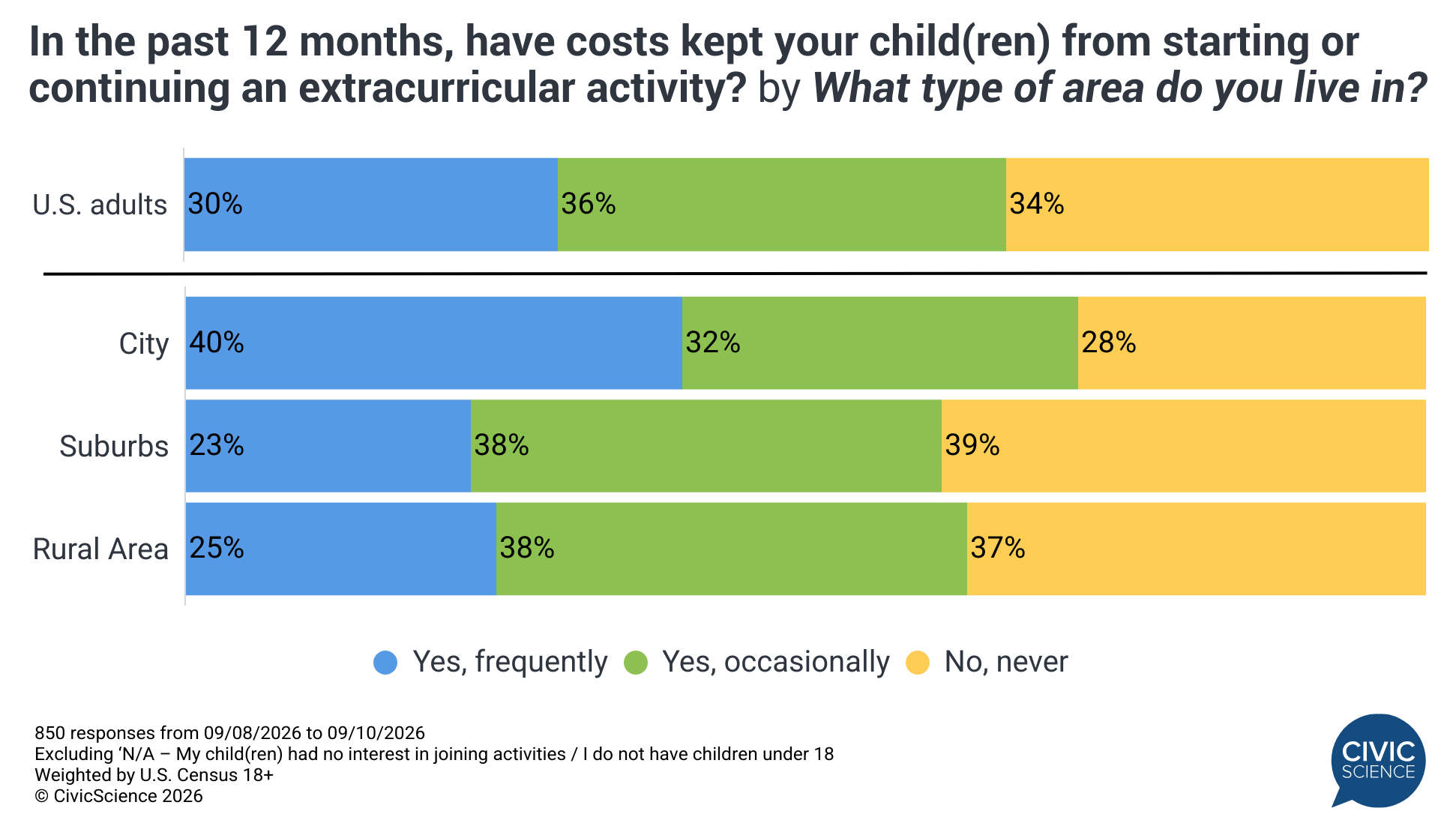
Data also indicate these rising costs are actively limiting participation, as the majority of parents say expenses have kept their children from starting or continuing an activity in the past 12 months. Among parents whose children are interested in an activity, 30% say this has been a frequent occurrence, whereas 36% say it’s an occasional limitation. Parents in cities face the greatest strain, with 40% saying they have had to cut back on activities ‘frequently’ due to cost, a 17-percentage-point difference from those in the suburbs. Those in the suburbs and rural areas, however, are more evenly split between those who have to cut back and those who do not, with the majority of respondents saying they only have to do it occasionally or not at all.
Take Our Poll: How do you feel about the quality of youth sports leagues in your area?
3. Local TV apps are Americans’ most trusted source for extreme weather alerts and notifications.
With 71% of U.S. adults reporting at least some concern about severe weather events affecting their area, it’s crucial for publishers to know where consumers look for real-time updates.
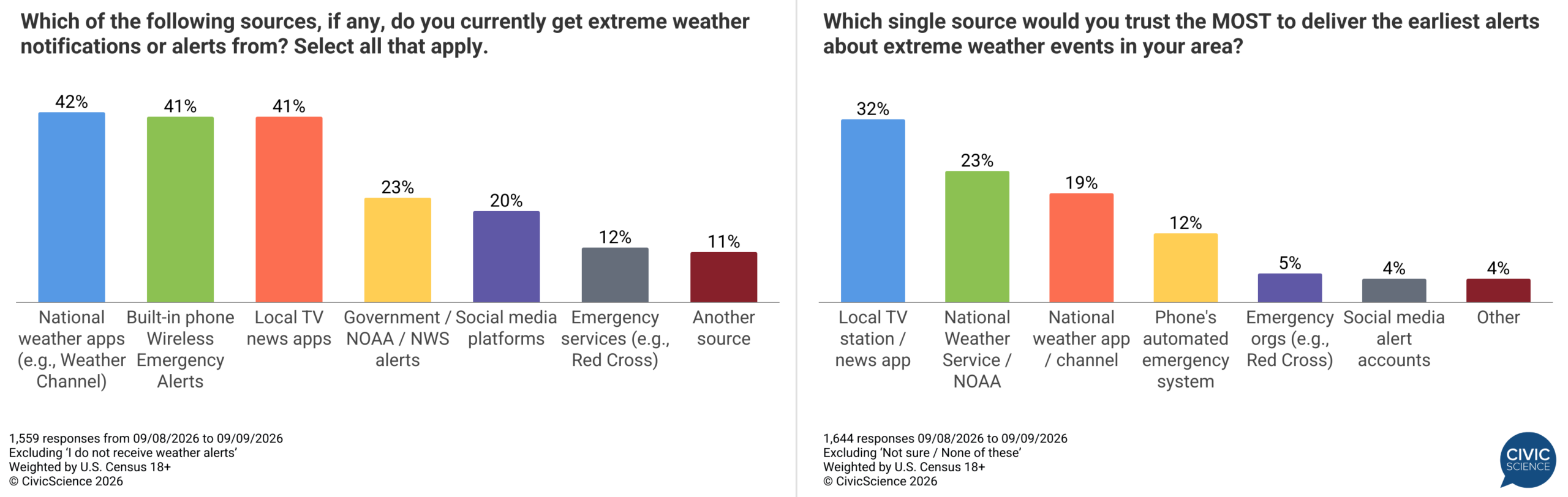
The latest CivicScience data show that consumers currently receive severe weather notifications and alerts from national weather apps (42%). Wireless Emergency Alerts and local TV news apps are both only a single percentage point behind as sources for weather alerts at 41%.
When asked which single source they trust most for early extreme weather alerts, nearly one-third (32%) of consumers favor their local TV stations/news apps, followed by the National Weather Service/NOAA (23%) and national weather app/channel (19%). Consistent with recent CivicScience data, trust in local TV news continues to scale sharply with age. Baby Boomers aged 65+ trust their local stations the most at 43%. Younger generations place greater reliance on national weather apps and automated phone systems, with 27% trusting a national weather app/channel and 19% trusting the National Weather Service / NOAA.
Let Us Know: How concerned are you about the possibility of severe weather in your area?