CivicScience has the world’s largest proprietary database of real-time declared intent, allowing brands to activate high-performing advertising that drives up to 80% better performance. See how CivicScience partners achieve superior marketing outcomes here.
1. Americans are changing their spending habits as tariffs and trade policies shift.
Whether it’s the new U.S. drone tariffs taking effect or the ongoing trade war with Canada, the ever-evolving trade landscape is taking its toll on Americans. The tariffs, coupled with the CivicScience Economic Sentiment Index’s first decline since March, paint a clear picture of consumer anxiety. When examining financial concern specifically about the impact of tariffs on household expenses, data show concern continues to rise – the share of U.S. adults reporting they’re ‘very’ concerned rising from 35% in 2023 to 45% so far in 2026.
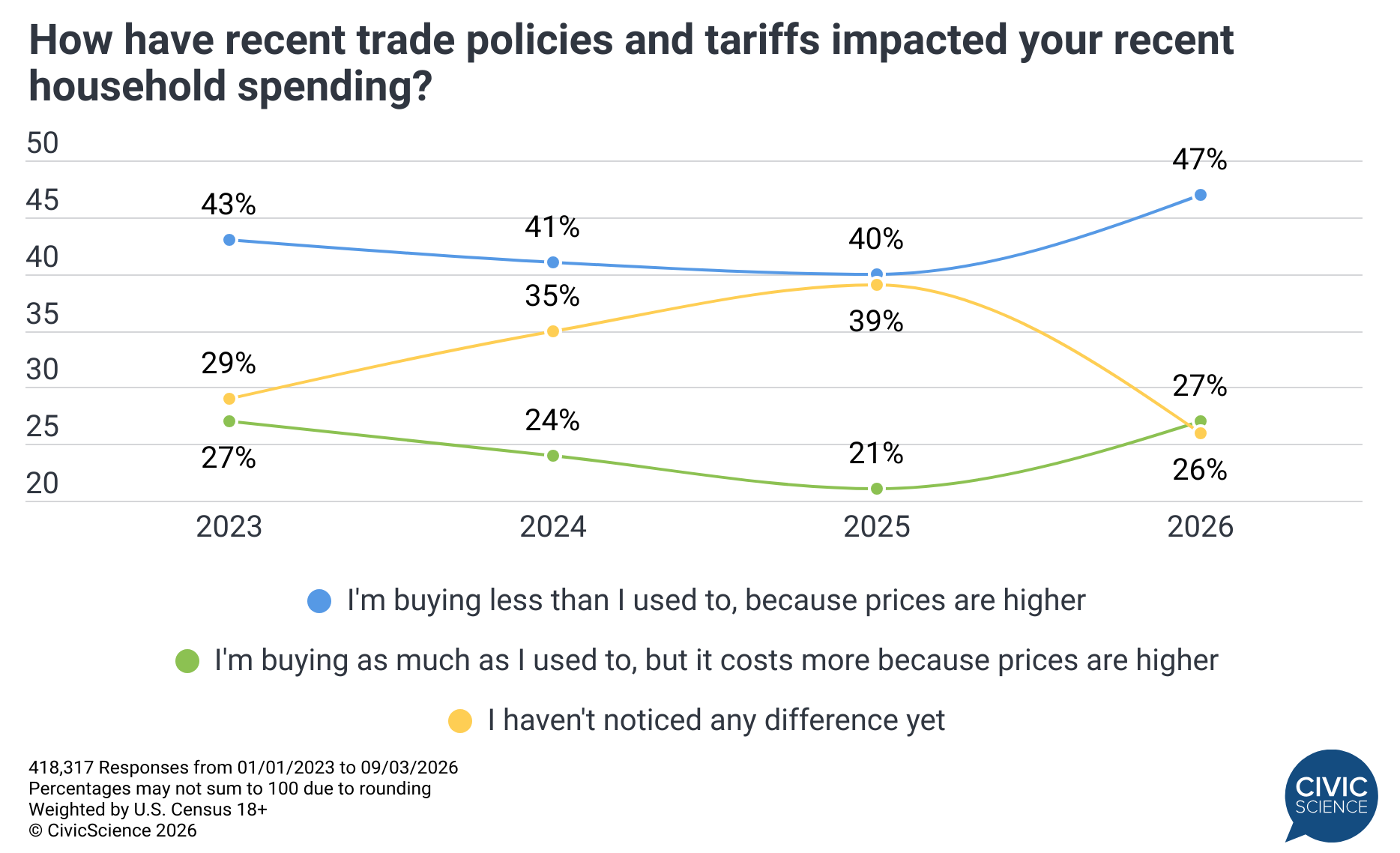
Additional consumer-declared data show this concern isn’t passive, it’s actively reshaping household spending. The proportion of Americans who say they are buying less due to higher prices rose seven percentage points from 2025, a similar rise as those who say they’re buying the same amount but it costs more (a six percentage point increase). Generationally, Gen X aged 45-64 report the highest rate of cutting back spending at 51%, closely followed by Baby Boomers 65+ (48%) while Gen Z aged 18-29 are least likely to have cut back (39%).
Take Our Poll: To what extent do you support or oppose the Trump administration’s tariffs on Canadian goods?
2. Nearly one-third of professionals read B2B newsletters regularly, with arts and financial sectors demonstrating the highest daily readership.
The latest consumer-reported data from CivicScience reveal that business-to-business (B2B) email newsletters reach a highly attentive audience, particularly among higher earners and satisfied workers. Nearly one third (29%) of U.S. adults receiving B2B newsletters ‘regularly’ read them, 40% read them ‘rarely’, and, despite receiving them, 31% ‘never’ read them.
However, engagement scales significantly with household income as 43% of professionals who earn over $100K ‘regularly’ read the newsletters they receive, compared to just 21% of those earning under $50K. Furthermore, job satisfaction also plays a crucial role in readership: Over half (56%) of ‘very’ happy employees regularly read B2B newsletters, whereas only 8% of ‘very’ unhappy employees do so.
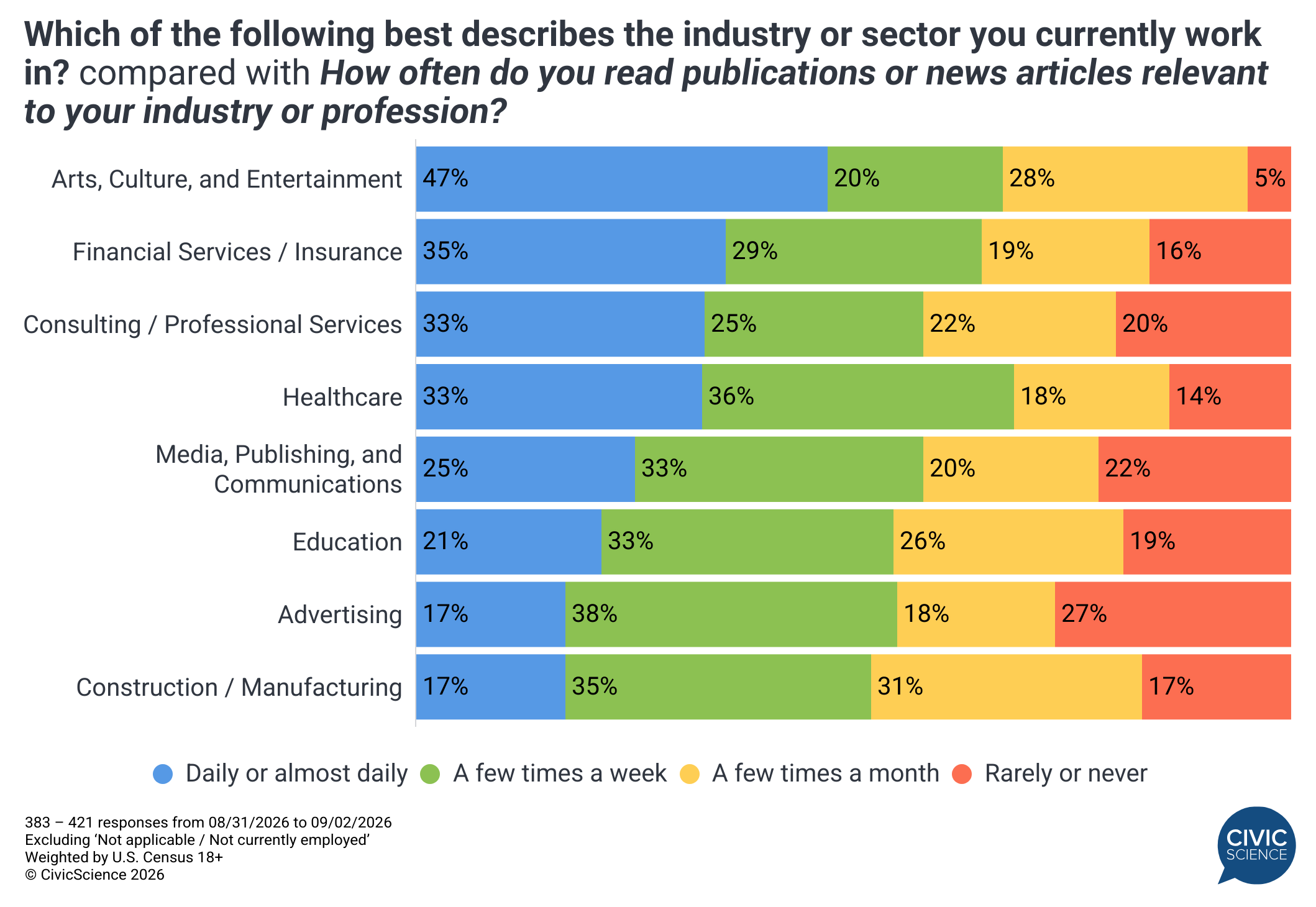
When it comes to industry news, consumption varies significantly across different employment sectors. Those in Arts, Culture, and Entertainment are nearly 3X as likely to read daily newsletters as those in Construction/Manufacturing or Advertising (47% vs. 17%). When accounting for weekly engagement (‘a few times a week’), Healthcare leads overall professional readership at 69% combined (33% ‘daily’, 36% ‘weekly’), while Advertising sees 38% reading weekly, and Construction/Manufacturing sees 35% reading weekly.
Let Us Know: Would you subscribe to a daily newsletter about entertainment news?
3. MySpace comeback favorable among Millennials and Gen Z
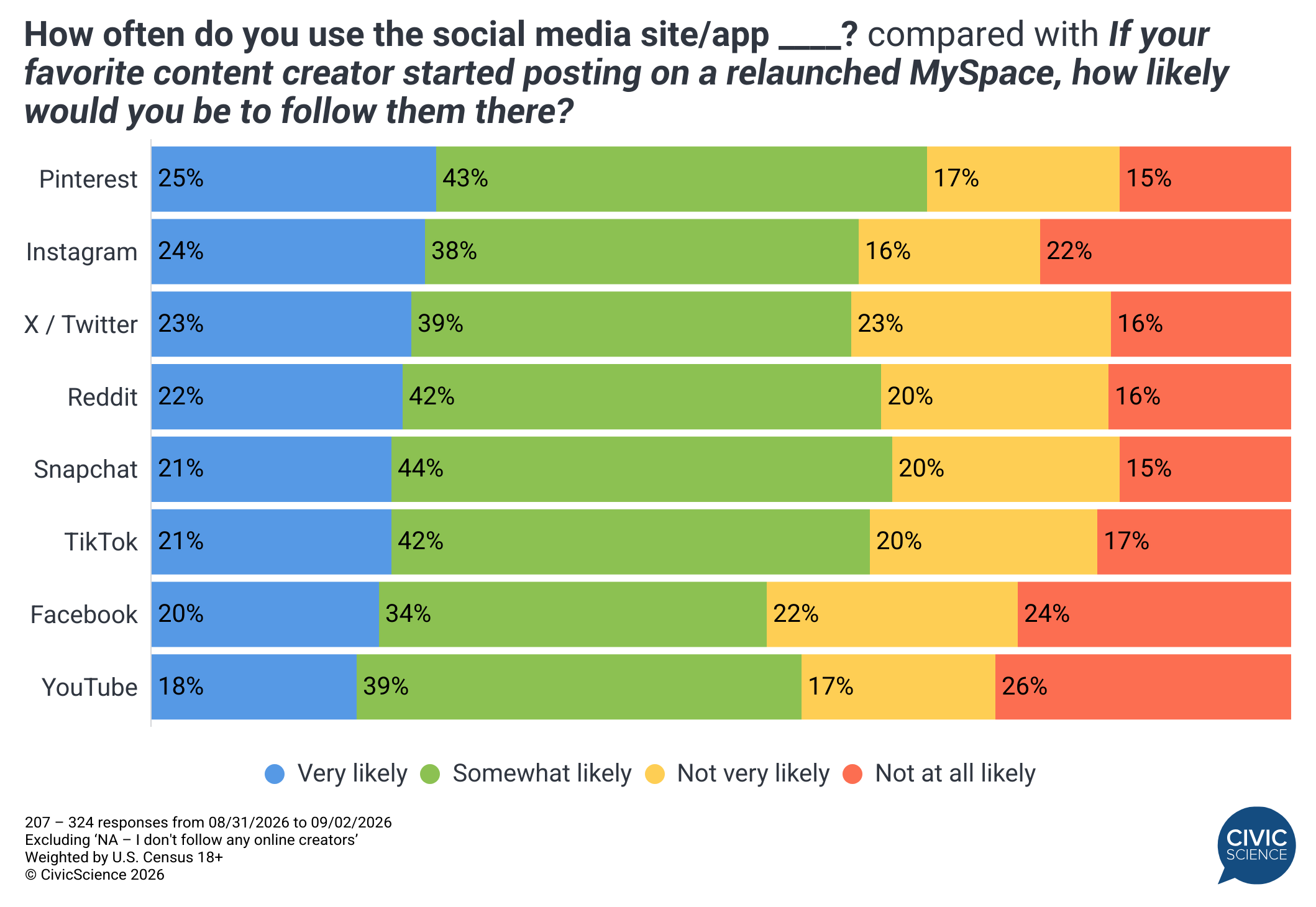
The days of ranking your top eight friends and carefully choosing the perfect profile song may not be over, as MySpace is rumored to be making a comeback. The potential for consumer migration shows promising signs, should the platform relaunch, as just under 1 in 5 (18%) U.S. adult respondents who follow content creators are ‘very’ likely to follow their favorite creators to a re-launched Myspace. An additional 32% are ‘somewhat’ likely to do so.
Millennials (30-44) show the most interest, with 23% ‘very’ likely to follow their favorite creators and 39% ‘somewhat’ likely. Nearly 3 in 5 (58%) of Gen Zers say the same – 24% saying they are ‘very’ likely and 34% ‘somewhat’ likely. Creator loyalty is highest among active users of Pinterest (25% ‘very’ likely), Instagram (24%), and X/Twitter (23%), demonstrating that cross-platform audience migration could be a key driver for the platform’s revival.