CivicScience has the world’s largest proprietary database of real-time declared intent, allowing brands to activate high-performing advertising that drives up to 80% better performance. See how our partners achieve superior marketing outcomes here.
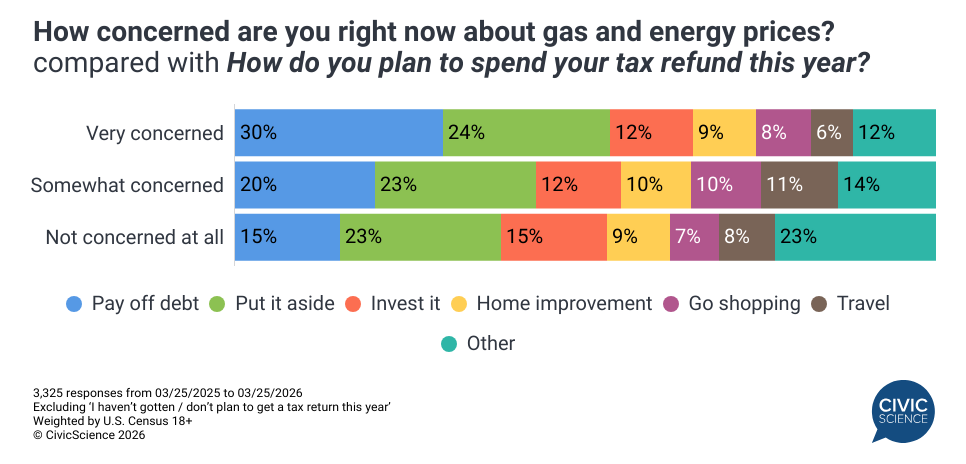
1. Amid the ongoing conflict in the Middle East, fears of rising gas prices are affecting tax refund plans this year.
With the April 15th filing deadline rapidly approaching, CivicScience data reveals how Americans who expect to receive or have already received a refund plan to use it by age. Gen Z adults (18-29) show the highest propensity for immediate consumption, with 25% planning to shop or travel, compared to 17% prioritizing saving. Conversely, Baby Boomers (65+) are the most fiscally conservative, as 34% intend to set their refund aside—the highest of any cohort—while only 2% plan to shop. Meanwhile, Millennials (30-44) and Gen X (45-64) focus on paying off debt (29% and 31% respectively), suggesting these “sandwich generations” feel the most pressure to clear balances rather than grow savings or indulge.
As the percentage of Americans who are ‘very’ concerned about gas and energy prices leaped from 42% to 52% since the beginning of March, these consumers are notably more likely to allocate their refund toward “survival” spending. Compared with their unconcerned counterparts, those highly worried about gas prices are less likely to plan to invest their refund or use it for travel; instead, they are twice as likely to prioritize debt repayment.
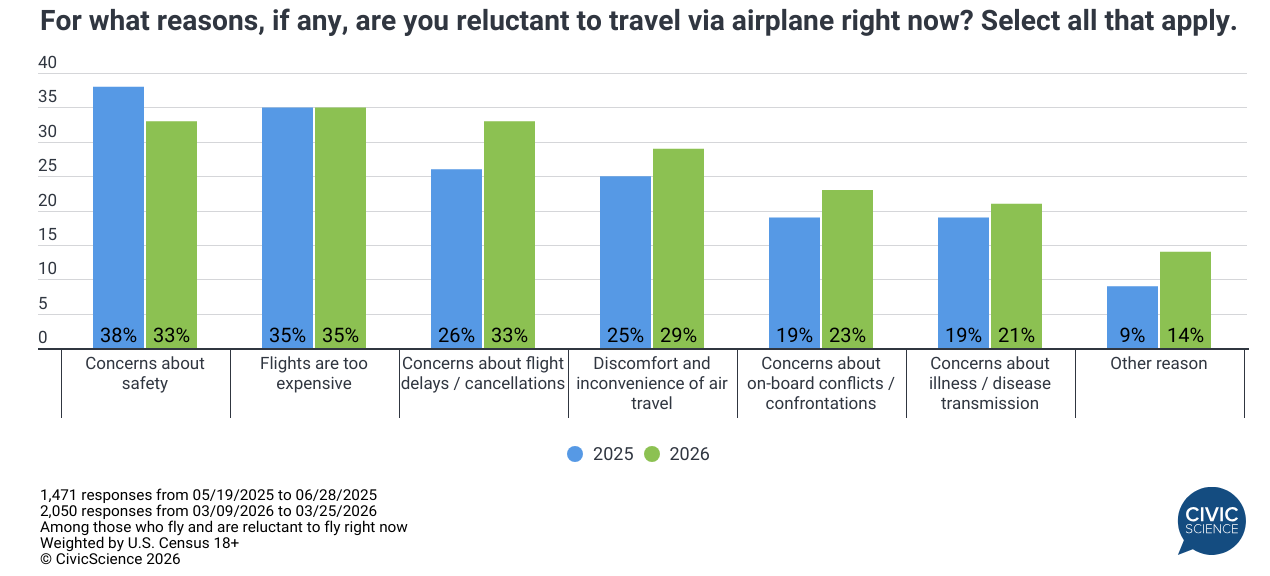
2. Ticket costs, concerns about flight delays, and general discomfort with air travel are driving an increasing reluctance to fly among Americans.
Following recent ICE deployments at some U.S. airports and a runway crash at LaGuardia Airport, CivicScience took a closer look at concerns about flying as spring travel ramps up. The latest data show that 65% of U.S. adults report being at least ‘somewhat’ concerned about ICE’s presence at some airports. Concerns are rising among those who aren’t planning to travel this spring, with non-travelers showing the highest percentage ‘very’ concerned, which could be why they’re not traveling this spring. However, broad concerns are nearly equal among travelers (69%) and non-travelers (71%).
Other concerns beyond ICE are also shaping a general reluctance to fly right now. Eighty-three percent of those who fly tell CivicScience they’re reluctant to fly for at least one of the reasons studied, an increase from 75% in early summer of 2025. Price concerns set the pace, but a growing percentage of flyers say they’re reluctant to fly right now because of concerns about flight delays, the discomfort and inconvenience of air travel, worries about onboard conflicts, and illness.
Take Our Poll: To what extent does flying stress you out?
3. Feelings of eco-anxiety continue to climb amid recent extreme weather, and it’s driving near-term environmentally friendly purchasing intent.
Following a string of recent extreme weather events—ranging from blizzards in the Northeast, tornadoes in the Midwest, record heat in the West, to flooding in Hawaii—21% of U.S. adults feel ‘very’ strong feelings of eco-anxiety so far this year. This marks a 40% increase from the percentage who said the same in 2024, while less than half (48%) now say they don’t feel any eco-anxiety, a decline from 57% in 2024. These emotional impacts are not uniform across the population; however, urban residents, Gen Z, and Millennials have emerged as the demographics most susceptible to climate-related distress.
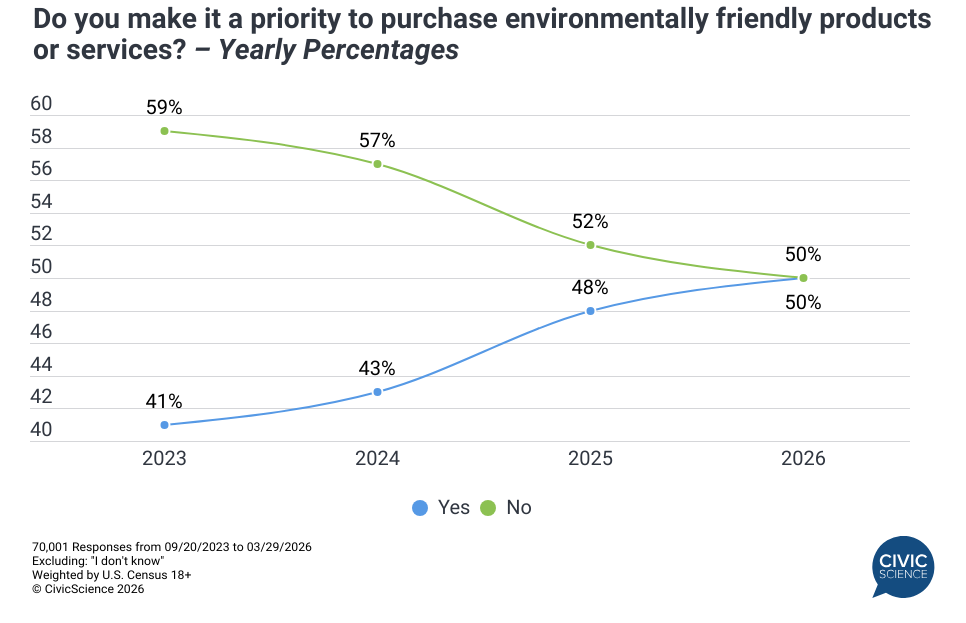
Additional consumer-reported data show that this rising environmental anxiety is shaping consumer purchasing. Consumers are increasingly likely to prioritize environmentally friendly products and services, with 50% of respondents now saying they do so (excluding ‘I don’t know’). Some of that prioritization is happening soon, specifically when it comes to making their living spaces more eco-friendly–49% of U.S. adults say they plan to spend on making their space more eco-friendly (e.g., solar panels, energy-efficient appliances/lighting, etc.) within the next six months, marking the highest yearly percentage observed by CivicScience.
Let Us Know: Do you think of yourself as an environmentally friendly consumer?