CivicScience has the world’s largest proprietary database of real-time declared intent, allowing brands to activate high-performing advertising that drives up to 80% better performance. See how our partners achieve superior marketing outcomes here.
Season 8 of Love Island USA came to an end on this past Sunday, but just because the villa has closed for the year doesn’t mean that the fans disappear. The fans who spent six weeks glued to one of the summer’s biggest entertainment events outside the World Cup make up a highly engaged, distinct consumer audience. To help brands stay connected during the off-season, CivicScience took a closer look at this crowd’s unique shopping habits and lifestyle preferences.
CivicScience data show that 25% of Americans watch the show at least occasionally, while 6% solely follow the drama on social media. Additional demographic insights reveal that men slightly outpace women in most-frequent viewership, as do Gen Z and those who earn less than $100K annually.
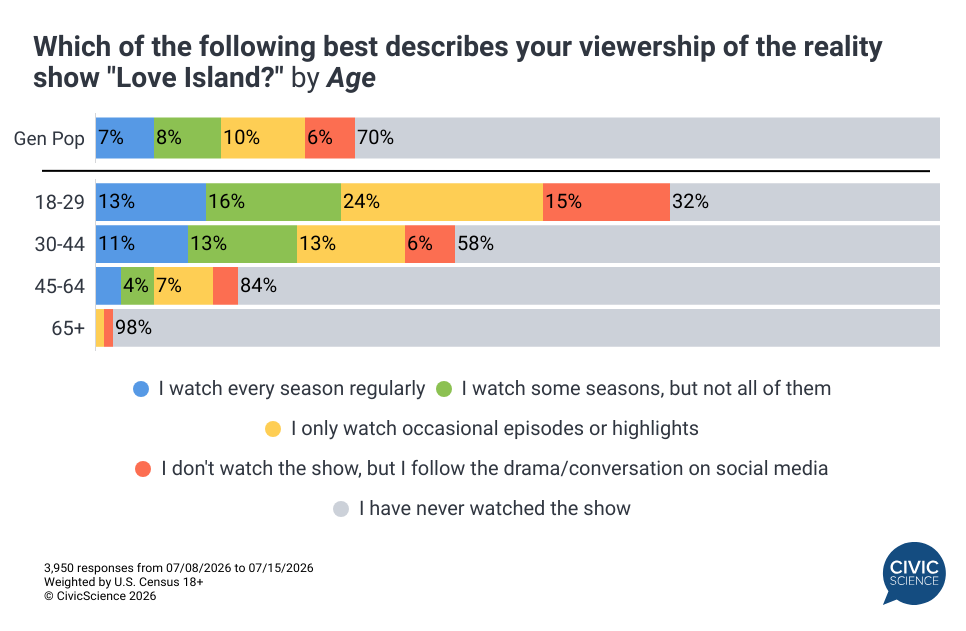
But their engagement doesn’t end just because the final episode has aired. Using consumer-declared data, CivicScience highlights how dedicated Love Island fans, those who tune in for ‘all’ and/or ‘some’ seasons of the show, stand out from the Gen Pop in ways that go well beyond the villa:
1. Love Island Fans are Online and Engaged
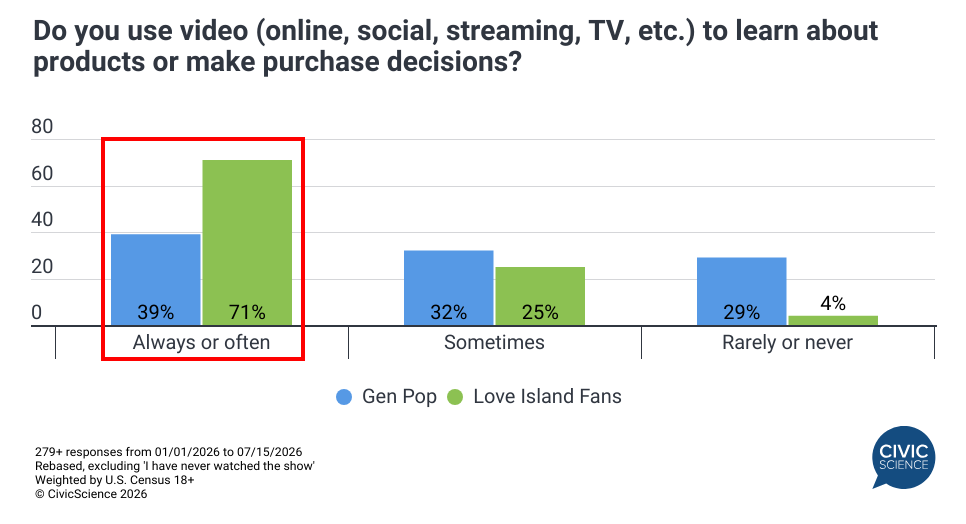
Love Island fans are more than twice as likely as the average American adult to be shopping online more than they usually do at this time of the year (71% vs 30%). They also over-index on using video to research products or make purchasing decisions, demonstrating that their comfort consuming video content extends beyond entertainment, making video an influential part of their shopping journey as well.
2. Brand Matters in the Beauty Aisle
Love Island fans stick with the beauty and wellness brands they trust. Sixty-six percent of Love Island fans prioritize brand name over price when shopping for health and beauty products, compared to 29% of Gen Pop who say the same. For this audience, sticking to trusted, premium names is worth the investment over risking an unknown brand just to save a few bucks.
3. Fast Casual Finds a Loyal Audience
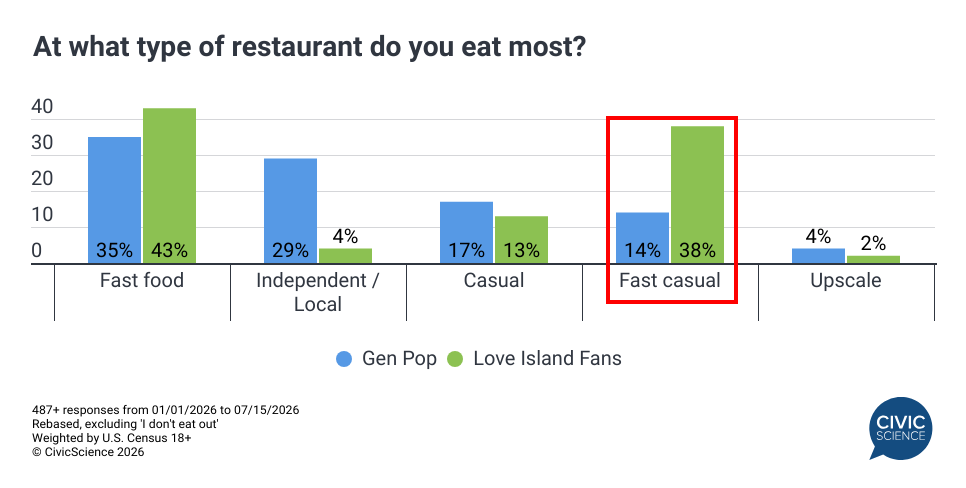
Don’t want to cook? Dedicated Love Island fans significantly outpace the Gen Pop in their preference for fast-casual restaurants (38% vs 14%), while being far less interested in local restaurants. And although fans won’t need to rush home to catch a near-nightly installment of the show anymore, the fact that convenience-oriented dining continues to appeal suggests that efficiency remains a part of their lifestyle even after the season ends.
4. Following the Drama and Their Finances
Although the show may get a reputation for being unserious, Love Island fans are more likely than the Gen Pop to have used financial aggregator apps for a full view of their finances. While 73% of the most frequent Love Island fans report using apps such as Plaid or YNAB for a 360-degree view of their finances, just 25% of the Gen Pop do the same. So, although fans may only dream of what they’d do with the show’s $100K cash prize, they remain more tuned into their current finances than the average American in the meantime.
5. Embracing a DIY Mindset
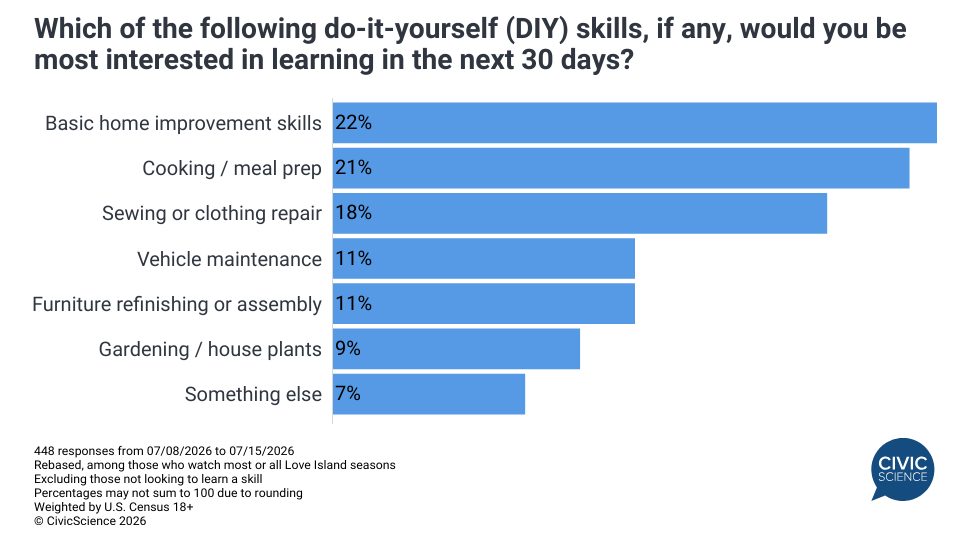
Tuning into the nightly drama in the villa gives Love Island fans the perfect opportunity to roll up their sleeves. More than half (57%) of Love Island aficionados are ‘very’ interested in learning a new do-it-yourself (DIY) skill in the next 30 days, more than twice the rate of the Gen Pop (23%). Among common DIY work, fans say they would be most interested in learning basic home improvement skills (22%) or cooking and meal prep (21%).
Love Island fans are more than just reality TV fans. They’re digitally invested, intentional spenders who are financially organized and ready to learn a new skill to improve their quality of life. And the momentum of these consumers is sure to ripple out, long after the reunion episode has aired.